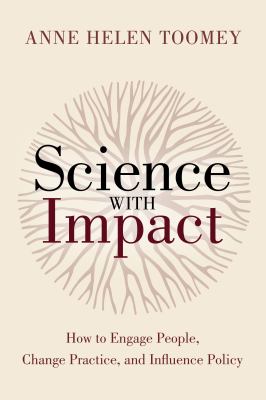
Toomey (Pace Univ.) uses approachable storytelling and thought-provoking questions to guide readers through her experiences and suggestions on how to make better choices to increase the impact of science on society. She does this through sharing accessible and enjoyable stories, both her own and others', that emphasize the real-world ways science communication can go right--or wrong. Examining the choices available and potential pitfalls along the way, Toomey discusses the roles of privilege and power on the impact of research throughout each step of the scientific method, including at the stages of developing questions, structuring a research plan, and peer review and scientific communication. She also touches on topics such as the effect of "parachute" research on communities; science literacy and the psychology of engaging with science; and examples of ways that scientists can engage in policy work. Toomey closes with calls to action to administrators to prioritize suggested behaviors that she has demonstrated work to improve scientific impact, and to scientists to remember to give credit to the nonscientists who are important to their lives and work. She provides well-researched, extensive footnotes and references for each chapter, and additional resources on the publisher's website. An engaging read for science students or scientists who need help thinking critically about how their work will impact others, or anyone looking for inspiration on how scientific communication could better serve society.Summing Up: Highly recommended. Upper-division undergraduates, graduate students, researchers, and professionals.