| Defining Corruption In The Ottoman Empire : Morality, Legality, And Abuse Of Power In Premodern Governance |
| | ISBN: 9780198916215 | Price: 140.00 | | |
| Volume: | Dewey: 956.1015 | Grade Min: | Publication Date: 2024-09-24 | |
| LCC: | LCN: DR486.E7 2024 | Grade Max: | Version: | |
| Contributor: Ergene, Boa A. | Series: | Publisher: Oxford University Press, Incorporated | Extent: 352 | |
| Contributor: | Reviewer: Anthony J. Papalas | Affiliation: emeritus, East Carolina University | Issue Date: May 2025 | |
| Contributor: | | | | |
 This study of corruption in the Ottoman Empire from the early 14th to the early 19th century is based mainly on state-generated records and accounts by Ottoman jurists and European and Ottoman authors who wrote before the Tanzimat reform era (1839-76). These sources regard abuses of power as widespread. The foremost malefactor was the judiciary, which countenanced nepotism, bribery, false witnesses, the sale of offices, rule-bending, and exorbitant legal fees, especially toward non-Muslims. In a society where there was only a vague difference between bribes and gifts, it was possible for men of low character to exploit the system. Harsh punishments were recorded, but it is not clear if the sultan or the imperial council ever enforced them. How did the Ottoman Empire flourish for nearly five centuries under such cronyism? Ergene (Univ. of Vermont) speculates that higher authorities tended to appoint God-fearing men to high positions. These principled Muslims were fair-minded, but they had immoral colleagues who paved the way for the great migrant suffering in Turkey in the modern era. This is a work of extraordinary scholarship based on impressive linguistic abilities.Summing Up: Highly recommended. Advanced undergraduates through faculty. |
| Late Ottoman Gaza : An Eastern Mediterranean Hub In Transformation |
| | ISBN: 9781316518199 | Price: 110.00 | | |
| Volume: | Dewey: 956.943 | Grade Min: | Publication Date: 2024-11-21 | |
| LCC: 2023-048449 | LCN: DS110.G3B46 2024 | Grade Max: | Version: | |
| Contributor: Ben-Bassat, Yuval | Series: | Publisher: Cambridge University Press | Extent: 200 | |
| Contributor: Buessow, Johann | Reviewer: Robert W. Zens | Affiliation: Le Moyne College | Issue Date: June 2025 | |
| Contributor: | | | | |
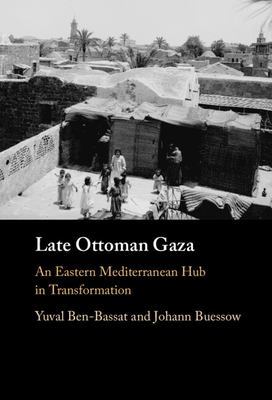 Although news of Gaza dominates today's headlines, the area has received little scholarly coverage of its history in English. Ben-Bassat (Univ. of Haifa, Israel) and Buessow (Ruhr Univ. Bochum, Germany), both scholars of Ottoman Palestine, fill this void with their latest work. The authors show that late Ottoman Gaza was the economic and transportation hub of southern Palestine, a center of Muslim religious education, a socially diverse community, and the site of increasing imperial and regional political turmoil following the British occupation of Egypt. Gaza, lacking a natural port, developed more like inland cities of the region than coastal port cities, such as Beirut and Jaffa. Of greatest interest here is the analysis of urban-rural relations, both economically and politically, and the systematic study of the neighborhoods that make up the city of Gaza. Drawing from a wealth of memoirs and archival material, especially from the Ottoman archives, Bassat and Buessow have produced a highly detailed and valuable study of the city and neighboring villages, complete with numerous maps and aerial images.Summing Up: Highly recommended. Advanced undergraduates through faculty. |
| Sacred Places Tell Tales : Jewish Life And Heritage In Modern Cairo |
| | ISBN: 9781512825886 | Price: 64.95 | | |
| Volume: | Dewey: 962.16004924 | Grade Min: | Publication Date: 2024-07-09 | |
| LCC: 2023-057039 | LCN: DS135.E42C357 2024 | Grade Max: | Version: | |
| Contributor: Meital, Yoram | Series: Jewish Culture and Contexts Ser. | Publisher: University of Pennsylvania Press | Extent: 368 | |
| Contributor: | Reviewer: JONATHAN D. SARNA | Affiliation: Brandeis University | Issue Date: March 2025 | |
| Contributor: | | | | |
 This pathbreaking, well-researched, and well-illustrated volume uses the history of Cairo's synagogues to portray the complex interplay between Egyptian society and Jews (Sephardim, Ashkenazim, and Karaites) from the late 19th century to the present. Meital (Ben Gurion Univ. of the Negev, Israel) employs "material history" methods to tell this story. Synagogues, as he sees them, form a "living archive" that rewrites Jewish history in modern Cairo, including its early 20th-century rise, its diversity, its collapse in the 1950s, and recent efforts to reclaim the city's Jewish heritage. He also recounts some of his own experiences as a historical consultant to the surviving Jewish community. Meital embeds Jewish history within Egyptian history and resists earlier Zionist-influenced narratives, though developments since October 7, 2023, seem to call into question some of this interpretation. A significant contribution to the modern history of Jews in Arab lands, Meital's scholarly volume complements Lucette Lagnado's popular The Man in the White Sharkskin Suit (2007) as a window into modern Jewish life in Egypt.Summing Up: Highly recommended. Advanced undergraduates through faculty. |
| The Armenian Woman, Minoritarian Agency, And The Making Of Iranian Modernity, 1860-1979 |
| | ISBN: 9781503629417 | Price: 75.00 | | |
| Volume: | Dewey: 305.420955 | Grade Min: | Publication Date: 2025-03-04 | |
| LCC: 2024-025737 | LCN: DS269.A75 | Grade Max: | Version: | |
| Contributor: Berberian, Houri | Series: | Publisher: Stanford University Press | Extent: 418 | |
| Contributor: Grigor, Talinn | Reviewer: Bahram Tavakolian | Affiliation: emeritus, Denison University | Issue Date: September 2025 | |
| Contributor: | | | | |
 This exemplary collaboration between Berberian (Univ. of California, Irvine), a historian, and Grigor (Univ. of California, Davis), an art historian, seamlessly demonstrates insightful feminist historiography, meticulous interdisciplinary research, and compelling interpretation and analysis. Focusing on organizational histories of Armenian women's groups between 1860 and 1979, the authors use a variety of resources, including art, photography, print media, personal and institutional documents, and interviews, to provide detailed examinations of salient settings, actors, and events that contributed to Iranian modernity. They clearly explain the contexts, interactions, and processes involving women's agency within emerging cultural patterns and societal changes. The book's centerpiece considers the role of the "Armenian Woman" union, founded in 1939 by high school students resisting closure of Armenian schools. These students and many of their matrilineal kin continued to serve the organization for more than 30 years and ushered in a "Golden Age" of Indigenous Irano-Armenian feminism. Their emphases on women's education, self-enlightenment, independence, and solidarity--including with non-Armenian Iranian women--reached their culmination in 1974 with the nationally and globally celebrated "Exhibition of Armenian Women's Historical Costumes," just a few years before many of the organizers were forced into self-exile by the Iranian Revolution.Summing Up: Highly recommended. General readers through faculty. |