| Bye Bye I Love You : The Story Of Our First And Last Words |
| | ISBN: 9780262049429 | Price: 32.95 | | |
| Volume: | Dewey: 302.224 | Grade Min: | Publication Date: 2025-02-11 | |
| LCC: 2024-002113 | LCN: P107.E73 2025 | Grade Max: | Version: | |
| Contributor: Erard, Michael | Series: | Publisher: MIT Press | Extent: 344 | |
| Contributor: | Reviewer: Edwin L. Battistella | Affiliation: emeritus, Southern Oregon University | Issue Date: July 2025 | |
| Contributor: | | | | |
 Erard (Radboud Univ., the Netherlands) offers a rare study of the first words of children and the last words of the terminally ill. Bye Bye I Love You is a cultural history of the two phenomena, exploring the parallels between the acquisition of communication and its slipping away. The first half of the book, chapters 1-6, critically reviews the work of linguists and psychologists studying child language, describing the difficulty of the concept "first word," both linguistically and socially. In addition to present-day literature on child language, Erard considers key historical studies of children's communication, including parents' diaries and different cultural practices regarding infancy. The second half of the book, chapters 7-12, is about language at the end of life. Erard again reviews key studies (among them Sir William Osler's "The Study of the Act of Dying") and interviews palliative care professionals, end-of-life doulas, speech-language pathologists, and others. Key to the book is Erard's discussion concerning cultural expectations of infants and of those close to death. Bye Bye I Love You is erudite, sensitive, and groundbreaking, and will leave readers pondering whether first and last words are ritualized events or idiosyncratic expressions of agency.Summing Up: Essential. All readers. |
| Going Tactile : Life At The Limits Of Language |
| | ISBN: 9780197778029 | Price: 99.00 | | |
| Volume: | Dewey: 362.4/10973 | Grade Min: | Publication Date: 2024-07-01 | |
| LCC: 2024-000732 | LCN: HV1597.E393 2024 | Grade Max: | Version: | |
| Contributor: Edwards, Terra | Series: Oxford Studies in the Anthropology of Language Ser. | Publisher: Oxford University Press, Incorporated | Extent: 168 | |
| Contributor: | Reviewer: Holly Caldwell | Affiliation: Chestnut Hill College | Issue Date: April 2025 | |
| Contributor: | | | | |
 Historically, the deaf community has relied on sighted interpreters to interact with the world. Such reliance became problematic for people of the DeafBlind community. In the 2010s, inspired leaders of the protactile movement created new tactile ways of communicating to bridge the gap generated by these "limits of language" (p. 32). In Going Tactile, Edwards (Univ. of Chicago) examines the social and historical forces that gave rise to the protactile movement in Seattle, Washington, and how its principles were later reinterpreted in Washington, D.C., once the movement spread. This ethnographic examination highlights how the movement became a collective project largely led for and by the DeafBlind community as they formed a "political alliance, aimed at pushing back against dominant norms that generated unnecessary barriers" (p. 47). The author's discussion of how language is (in)effectively used as a means of representing and navigating the world--and methods to improve such communication--is one of the book's greatest strengths. Drawing on 30 months of fieldwork and analyses of linguistic data, Going Tactile illustrates how, despite not sharing a common language or communication practice, the DeafBlind community created new forms of effective interaction through tactile expression.Summing Up: Highly recommended. Advanced undergraduates through faculty; professionals. |
| Misguided : Where Misinformation Starts, How It Spreads, And What To Do About It |
| | ISBN: 9780231205047 | Price: 160.00 | | |
| Volume: | Dewey: 302 | Grade Min: | Publication Date: 2025-07-08 | |
| LCC: 2024-059409 | LCN: HM1231.F33 2025 | Grade Max: | Version: | |
| Contributor: Facciani, Matthew | Series: | Publisher: Columbia University Press | Extent: 376 | |
| Contributor: | Reviewer: Tyler Manolovitz | Affiliation: Sam Houston State University | Issue Date: November 2025 | |
| Contributor: | | | | |
 While many books, articles, and think pieces explore misinformation, Misguided stands out for its approachability and exploration of deeper psychological and social forces. Rather than simply pointing out the problems with misinformation and advocating for "truth," Facciani (Univ. of Notre Dame) insightfully examines how and why misinformation permeates society, offering ways to confront this immense challenge. As Facciani compellingly explains, misinformation gains power through our identities (e.g., parent, contrarian, sports fan, etc.) and our fundamental need for social connection. When misinformation becomes intertwined with our social circles, it becomes increasingly influential. Similarly, the stronger our personal identities, the more likely we are to accept misinformation that reinforces them. The book begins by establishing the foundational concept of misinformation before exploring how identity shapes our beliefs and behaviors. Facciani supports his arguments with evidence while keeping his text accessible to a broad audience. Case studies examining COVID-19 misinformation and the anti-vaccine movement serve as particularly clear and relevant discussions. Misguided proves most valuable for its practical recommendations for combating misinformation in ourselves and others. By understanding our vulnerabilities, we can increase awareness and limit misinformation's power both individually and societally. This enlightening and actionable text is essential reading for navigating this age of misinformation.Summing Up: Essential. All readership levels. |
| Participatory Culture Wars : Controversy, Conflict, And Complicity In Fandom |
| | ISBN: 9781685970086 | Price: 85.00 | | |
| Volume: | Dewey: | Grade Min: | Publication Date: 2025-06-03 | |
| LCC: | LCN: | Grade Max: | Version: | |
| Contributor: Driessen, Simone | Series: Fandom and Culture Ser. | Publisher: University of Iowa Press | Extent: 248 | |
| Contributor: Jones, Bethan | Reviewer: John Rodzvilla | Affiliation: Emerson College | Issue Date: November 2025 | |
| Contributor: Litherland, Benjamin | | | | |
 Participatory Culture Wars expands the scope of fan studies to look at the aspects of fandom and participatory culture that fall outside of the view that fandoms primarily resist dominant narratives and return power to the hands of the audience. This collection of 11 essays addresses toxic fans, the relationship between conspiracy theories and fan theories, generational conflict within fandoms, foul-weather fans, gender stereotypes, and reactions against "blackwashing" in movies and television. Each essay focuses on a specific community and explores a specific conflict that has emerged within that community. For example, an essay on the #FreeBritney movement looks at those fans who are only engaged when Brittney Spears is going through mental and emotional struggles. Two essays also address the pressure on fans who grow apart from their fandom either through the adoption of new political and cultural values or through the dramatic political shifts of the creator, such as J. K. Rowling. This is an essential volume for fan studies collections, as the essays explore how fandoms contain multitudes of fans who each see their obsession from a different perspective, and how those fans have an evolving relationship to the object of their fandom and to other fans.Summing Up: Essential. All readership levels. |
| Seeing Red : Russian Propaganda And American News |
| | ISBN: 9780197696422 | Price: 99.00 | | |
| Volume: | Dewey: 303.3750973 | Grade Min: | Publication Date: 2024-06-04 | |
| LCC: 2024-015161 | LCN: HM1231.O2 2024 | Grade Max: | Version: | |
| Contributor: Oates, Sarah | Series: | Publisher: Oxford University Press, Incorporated | Extent: 232 | |
| Contributor: Ramsay, Gordon Neil | Reviewer: Michael S. Gorham | Affiliation: University of Florida | Issue Date: April 2025 | |
| Contributor: | | | | |
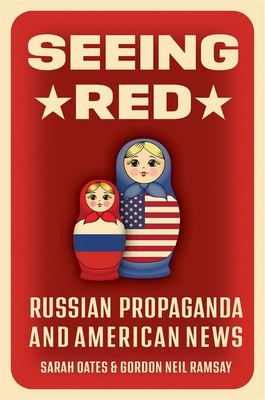 In this excellently researched and written book, the authors offer timely insight into how Russian "strategic narratives" infiltrate and spread in an American information sphere increasingly dominated and divided by walled gardens of politically homogeneous content. More specifically, they trace how pro-Putin propaganda about the US as a failed democracy and NATO-controlled neo-Nazis in Ukraine intersected with Trump's conspiracies regarding election rigging; a biased, liberal, "fake" media; and a reticence toward US military intervention on foreign soil to create a volatile, propaganda-driven echo chamber that continues to threaten American democratic institutions--most important among them a free and independent press. The authors combine strategic narratives, content analysis, and computational analysis to document the vulnerabilities in the US information sphere and Russian English-language media's methods for manipulating them. They demonstrate the types of narratives that were amplified in the primarily right-wing, pro-Trump information sphere during the 2020 US presidential election. In addition to offering a compelling account of the "information warfare" being waged both across and within geopolitical borders, the book gives readers the interpretative tools for recognizing how and when content crosses the boundaries from news to Newspeak.Summing Up: Highly recommended. General readers through faculty; professionals. |
| The American Mirage : How Reality Tv Upholds The Myth Of Meritocracy |
| | ISBN: 9780691267197 | Price: 27.95 | | |
| Volume: | Dewey: 791.45655 | Grade Min: | Publication Date: 2025-05-06 | |
| LCC: | LCN: | Grade Max: | Version: | |
| Contributor: Kim, Eunji | Series: Princeton Studies in Political Behavior Ser. | Publisher: Princeton University Press | Extent: 240 | |
| Contributor: | Reviewer: Ronald P. Seyb | Affiliation: Skidmore College | Issue Date: October 2025 | |
| Contributor: | | | | |
The distance between such rigorous and respected political commentators and scientists as Walter Lippmann, Philip Converse, Anthony Downs, and John Zaller and such diverting trifles as American Idol, Law and Order, Shark Tank, and The Apprentice might seem greater than half a league. However, in this readable, sharply observed, and engrossing volume, Kim (political science, Columbia Univ.) shows how political analysts' failure to appreciate the phenomenon of "news avoidance" has led them to draw the wrong conclusions about the drivers of public opinion. Referencing Walter Lippmann's still-relevant 1922 book Public Opinion, Kim argues that what Lippmann called "the myth of the omnicompetent citizen" continues to cause many political scientists to limit their search for "media effects" to Americans' consumption of political news. As Kim demonstrates through a combination of online and field experiments, most Americans cling to the liberal democratic promise of upward mobility through hard work and merit because that is what the entertainment industry promotes. These entertainment narratives can even supersede people's lived experiences with structural inequality and police misconduct. Kim deserves plaudits for reminding us that "democratic realists" are best equipped to illuminate the underpinnings of Americans' political attitudes.Summing Up: Highly recommended. All readership levels. |
| The Social Biome : How Everyday Communication Connects And Shapes Us |
| | ISBN: 9780300272147 | Price: 28.00 | | |
| Volume: | Dewey: 305 | Grade Min: | Publication Date: 2025-02-11 | |
| LCC: 2024-937390 | LCN: HM1166.M46 2025 | Grade Max: | Version: | |
| Contributor: Merolla, Andy J. | Series: | Publisher: Yale University Press | Extent: 256 | |
| Contributor: Hall, Jeffrey A. | Reviewer: Troy William Espe | Affiliation: University of Wisconsin-Stevens Point | Issue Date: August 2025 | |
| Contributor: | | | | |
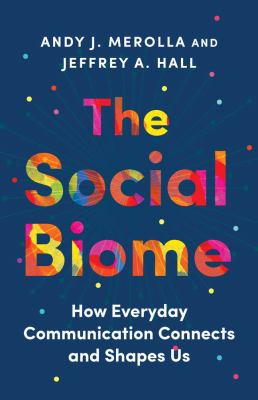 A vibrant social life can contribute to well-being and longevity. Yet, people are socializing less frequently, a decades-long trend exacerbated by the pandemic. In this relevant and engaging read, Merolla (Univ. of California) and Hall (Univ. of Kansas) extol the benefits of interacting with others. Socializing fulfills a core human need to belong, stirring emotions of safety and resiliency, but in the past 30 years or more, fraternizing has decreased steadily, stoking loneliness, distrust, and political polarization. The authors admit that relationships are messy, taxing, and potentially harmful. But, as outlined in chapter 7, small interactions, such as friendliness toward a store clerk or a whimsical text to a friend, can boost moods. The book addresses technology but skirts issues such as phone snubbing. The authors cite more than two dozen of their own studies as part of a 42-page bibliography. Although extensively researched, the writing flows with the lightness of a self-help book. The authors adeptly explain technical concepts while seamlessly introducing supporting studies.Summing Up: Highly recommended. All readership levels. |