| Blight : Fungi And The Coming Pandemic |
| | ISBN: 9781324007012 | Price: 28.95 | | |
| Volume: | Dewey: 616.96901 | Grade Min: | Publication Date: 2023-07-18 | |
| LCC: 2023-009948 | LCN: QR245.M658 2023 | Grade Max: | Version: | |
| Contributor: Monosson, Emily | Series: | Publisher: W. W. Norton & Company, Incorporated | Extent: 272 | |
| Contributor: | Reviewer: Zemirah G Ngow | Affiliation: University of California San Diego | Issue Date: February 2024 | |
| Contributor: | | | | |
 Monosson (Univ. of Massachusetts) presents in Blight a compelling and accessible work of ecology, delving into the delicate interconnectedness of the natural world. Monosson portrays how fungi affect (and are affected by) their physical surroundings and explains how these organisms are adapting through global warming, thereby affecting the creatures and plant cultures around the world. The text is well researched, documenting the work of scientists and researchers in life and health sciences, physicians working through novel health cases, and numerous government and conservation agencies working to establish and enforce global policies in these areas. Monosson's work is a carefully constructed reminder of the importance of protecting biodiversity and reducing habitat loss; responding quickly and diligently to perform rapid disease diagnostics; and taking a more proactive approach toward preservation when moving plants, animals, and people around the world. Readers interested in ecology, forestry, biology, conservation, and foreign trade will find this book an enjoyable, and informative, addition to their research.Summing Up: Highly recommended. All readership levels. |
| Seaweeds Of The World : A Guide To Every Order |
| | ISBN: 9780691228549 | Price: 32.00 | | |
| Volume: 4 | Dewey: 579.88 | Grade Min: | Publication Date: 2023-01-31 | |
| LCC: | LCN: QK570.2 | Grade Max: | Version: | |
| Contributor: Bothwell, John | Series: Guide to Every Family Ser. | Publisher: Princeton University Press | Extent: 240 | |
| Contributor: | Reviewer: Susan T Meiers | Affiliation: emerita, Western Illinois University | Issue Date: March 2024 | |
| Contributor: | | | | |
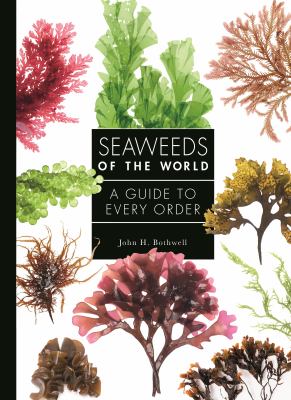 This concise and lavish volume is almost as good as a trip to the shore. Bothwell (phycology, Durham Univ., UK) provides a well-written, comprehensive, and informative summary of all the orders of seaweeds in the oceans for Chlorophyta, Rhodophyta, and Phaeophyceae. He provides a brief Introduction (morphology, evolution, endosymbiosis, etc.), summary of natural history (brief history of phycology, lifecycles and reproduction, geographic distribution, human uses for algae, human uses for seaweeds, and speciation and harmful algal blooms ["Seaweeds in the Anthropocene"]), and a two-page summary of each seaweed order (distribution map, etymology, taxonomy, shape and size descriptions, habitat preferences, lifecycle, and appropriate photographs, etc.). A glossary and list of bibliographic resources conclude the volume Those taking advanced phycology courses would find this a decent (though incomplete, obviously) substitute for a multiple-day field trip. It will provide much information on the diversity and evolution of the various algal taxa. Great care went into choosing photographs to exhibit habitat diversity, thalli variety, and related aspects of algal ecology and biology, so even non-phycologists will benefit from this volume.Summing Up: Highly recommended. All readers |
| The Beauty Of The Flower : The Art And Science Of Botanical Illustration |
| | ISBN: 9781789147803 | Price: 45.00 | | |
| Volume: | Dewey: 580.222 | Grade Min: | Publication Date: 2023-12-05 | |
| LCC: | LCN: QK98.15.H3 2023 | Grade Max: | Version: | |
| Contributor: Harris, Stephen A. | Series: | Publisher: Reaktion Books, Limited | Extent: 328 | |
| Contributor: | Reviewer: John C. Burns | Affiliation: Utah Tech University | Issue Date: May 2024 | |
| Contributor: | | | | |
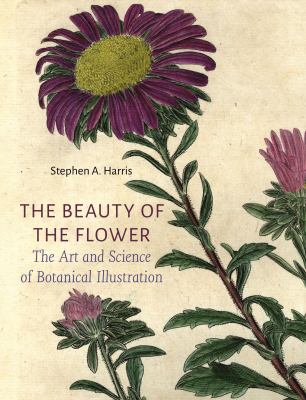 The great strength of this book is the way in which it conveys an understanding of the scientific purposes of botanical illustration through historical narrative. Using many examples and historical narratives, Harris (plant sciences and curator of the herbarium at the University of Oxford, UK) helps readers see the importance of detailed illustration to endeavors in science and the important roll the illustrations serve to preserve and record valuable interior and exterior anatomical and functional information visually. The author acknowledges that botanical illustration has the power to please the eye and adorn, but in this book he shifts focus to the scientific merits of this extremely useful art form. Harris never looses sight of the skill, talent, and technique botanical illustration artists possess, and the reader will gain an appreciation for the artist's collaborative role in scientific progress, dissemination, and preservation. Including many examples, color plates, an appendix of plant names, extensive detailed references, and an enriching list of further reading, this title is a grand addition to the literature. It will be welcomed by those in the arts as well as the life sciences and by enthusiasts.Summing Up: Essential. All readers. |
| The Biology Of Aquatic And Wetland Plants |
| | ISBN: 9781482232042 | Price: 119.95 | | |
| Volume: | Dewey: 581.7/6 | Grade Min: | Publication Date: 2023-04-26 | |
| LCC: 2022-050213 | LCN: QK102.E78 2023 | Grade Max: | Version: | |
| Contributor: Ervin, Gary N. | Series: | Publisher: Taylor & Francis Group | Extent: 394 | |
| Contributor: | Reviewer: Anna L. Jacobsen | Affiliation: California State University, Bakersfield | Issue Date: February 2024 | |
| Contributor: | | | | |
Aquatic and wetland plants form communities critical for ecosystem function and have global importance in nutrient cycling and sequestration. These systems harbor suites of plants with unique adaptations to their environment. They are also composed of species derived from diverse green plant lineages. These features make aquatic and wetland communities exemplars from which to present many general and important biological concepts. Ervin (Mississippi State Univ.) presents a thorough and thoughtfully composed aquatic botany text. Each chapter introduces a key topic; builds information in a manner particularly useful for educators and students; and concludes with a useful summary, review questions, and abundant references. Plant biology and evolutionary, ecological, and ecophysiological topics are covered throughout and in specialized chapters. Key concepts and terms are highlighted in bold, and a glossary supports the text. Numerous informative photographs, illustrations, and tables are included. Students, scholars, and land managers will likely find this well-written book a valuable text and/or reference, particularly if they are interested in freshwater aquatic and wetland plants.Summing Up: Highly recommended. Undergraduates through faculty; professionals. |