| Biggest Number In The World : A Journey To The Edge Of Mathematics |
| | ISBN: 9780861543052 | Price: 17.95 | | |
| Volume: | Dewey: 510.2 | Grade Min: | Publication Date: 2022-05-05 | |
| LCC: | LCN: QA99 | Grade Max: | Version: | |
| Contributor: Darling, David | Series: | Publisher: Oneworld Publications | Extent: 256 | |
| Contributor: Banerjee, Agnijo | Reviewer: Jerry Johnson | Affiliation: emeritus, Western Washington University | Issue Date: November 2022 | |
| Contributor: | | | | |
 A great number of books have been written about numbers, some focusing on very large numbers. So, what or how does this book add to the existing literature? Fortunately, a lot and in ways that are fun. As these popular math authors introduce and meander through the world of increasingly large numbers, they grab readers' attention and curiosity with historical insights, creative extensions, and meaningful connections. Beginning with Archimedes as a model, tutor Darling and math whiz Banerjee discuss large numbers from the perspectives of usage, notation, and motivation of future ideas. At times, readers are invited to join in the fun. The writing style is enjoyable, complementing the fun mathematics being developed through the text. Though some references are provided, the book needs an index--this lack makes keeping track of the many people and ideas being presented difficult for readers. Nonetheless, this reader challenges all readers interested in mathematics--at any level--to give this book a read. They will certainly discover some new ideas and insights.Summing Up: Highly recommended. Lower- and upper-division undergraduates. Graduate students, faculty, and professionals. General readers. |
| Putting Two And Two Together : Selections From The Mathologer File |
| | ISBN: 9781470460112 | Price: 39.00 | | |
| Volume: 141 | Dewey: 510 | Grade Min: | Publication Date: 2022-01-30 | |
| LCC: 2021-036494 | LCN: QA93.P654 2021 | Grade Max: | Version: | |
| Contributor: Polster, Burkard | Series: Miscellaneous Bks. | Publisher: American Mathematical Society | Extent: 270 | |
| Contributor: Ross, Marty | Reviewer: Roger Mark Fischer | Affiliation: Montana State University | Issue Date: September 2022 | |
| Contributor: | | | | |
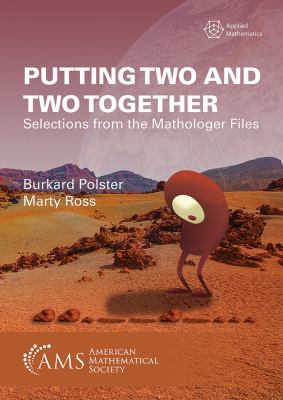 Polster and Ross (both, Monash Univ.) offer a delightful romp through a thoughtfully curated selection of 64 columns from their "Maths Masters" series, which appeared first in the Melbourne, Australia, newspaper The Age and later moved online. The columns are organized into seven theme-based groups: "Putting Two and Two Together" (number), "The Shape of Things to Come" (shape), "A Bloody Good Sport" (math in sport), "The House that Math Built" (architecture), "A Chance Encounter" (probability), "Final Frontiers"(space and time), and "On the Shoulders of Lesser Giants" (noteworthy persons from math history). Polster and Ross are enabled by a quirky sense of humor that permeates their writing and makes for a delightful read. Each chapter presents an interesting topic and ends with one or two "puzzles to ponder," making this text a worthy addition to any math teacher's desk collection. The book provides excellent reading for undergraduate mathematics majors and pre-service math teachers.Summing Up: Highly recommended. Lower- and upper-division undergraduates. Graduate students, faculty, and professionals. |
| The Mathematical Principles Of Natural Philosophy |
| | ISBN: 9781107020658 | Price: 307.00 | | |
| Volume: | Dewey: 531 | Grade Min: | Publication Date: 2021-03-04 | |
| LCC: | LCN: | Grade Max: | Version: | |
| Contributor: Newton, Issac | Series: | Publisher: Cambridge University Press | Extent: 790 | |
| Contributor: Leedham-Green, C. R. | Reviewer: Amy K. Ackerberg-Hastings | Affiliation: independent scholar | Issue Date: September 2022 | |
| Contributor: | | | | |
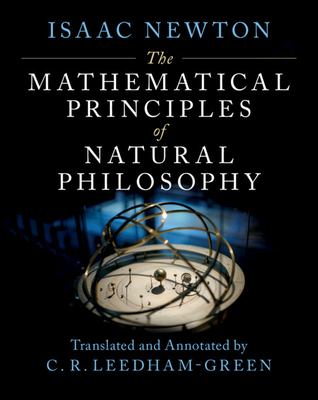 Although hundreds of articles and books have been written about Newton's Principia, only a few scholars have attempted complete translations into English of this landmark scientific work: Andrew Motte (1729, revised by Florian Cajori, 1934), I. B. Cohen and Anne Whitman (1999), Ian Bruce (online only, 2012), and now the retired algebraist C. R. Leedham-Green (Queen Mary Univ.). All the translations are markedly different, which makes this volume an essential investment for research libraries. Libraries with fewer resources likely will consider the novelty, utility, and validity of the editorial apparatus in their purchasing decisions. Features this reviewer found potentially useful for Principia neophytes include the appendixes introducing the mathematical content and style Newton employed. A historian of mathematics, she especially appreciated Leedham-Green's engagement with earlier translations and scholars such as Niccolo Guicciardini and Rob Iliffe. All potential audiences will doubtless find handy the marginal cross-references, the placement of substantive historical and mathematical notes next to the material they elucidate, and the translator's ongoing commentary about the challenges encountered in translating certain technical terms and other words and phrases from Latin. The book is carefully copyedited. Mathematica is the only software suggested for supplemental exploration.Summing Up: Highly recommended. All readers. |
| Uncertainty Analysis For Engineers And Scientists : A Practical Guide |
| | ISBN: 9781108478359 | Price: 106.00 | | |
| Volume: | Dewey: 003.54 | Grade Min: | Publication Date: 2021-01-07 | |
| LCC: 2020-019649 | LCN: Q375.M67 2021 | Grade Max: | Version: | |
| Contributor: Morrison, Faith A. | Series: | Publisher: Cambridge University Press | Extent: 370 | |
| Contributor: | Reviewer: John J. Meier | Affiliation: Pennsylvania State University | Issue Date: April 2022 | |
| Contributor: | | | | |
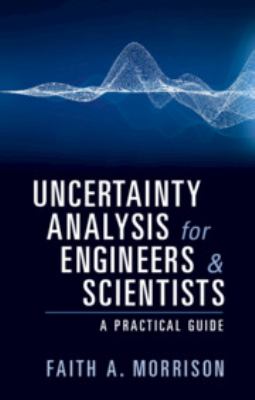 Morrison (Michigan Technological Univ.) offers a textbook mainly intended as a primer for engineering students and practicing engineers on the topic of error analysis. In using statistical tools, however, practitioners in all STEM fields must understand error analysis, though it is particularly important for those working in aerospace and chemical or mechanical engineering. This book explains how to calculate and communicate error levels from randomness, calibration, and readings. Along with sample problems, the text includes examples from laboratory equipment, offering both Excel and MATLAB solutions. Some understanding of calculus and differential equations will be helpful to readers. Four sample worksheets are included (though the print is somewhat small) to illustrate calculating the main types of error. Chapter 5 is devoted to error propagation. Morrison does an excellent job of explaining concepts using clear language and supporting examples. It is important to have this new book, since John Taylor's textbook is now over 20 years old (An Introduction to Error Analysis, 2nd ed., CH, Dec'97, 35-2173). Morrison's book seems suitable for use as a required or supplementary textbook in many undergraduate STEM courses. Of possible interest is that the ebook is available through the Cambridge Core interface for unlimited use, free of digital rights management impediments.Summing Up: Highly recommended. Lower- and upper-division undergraduates. Graduate students and professionals. Students in two-year technical programs. |