| Animals' Best Friends : Putting Compassion To Work For Animals In Captivity And In The Wild |
| | ISBN: 9780226601489 | Price: 29.00 | | |
| Volume: | Dewey: 590 | Grade Min: | Publication Date: 2021-03-23 | |
| LCC: 2020-036666 | LCN: QL85.K532 2021 | Grade Max: | Version: | |
| Contributor: King, Barbara J. | Series: | Publisher: University of Chicago Press | Extent: 280 | |
| Contributor: | Reviewer: Michael Schaab | Affiliation: emeritus, Maine Maritime Academy | Issue Date: June 2022 | |
| Contributor: | | | | |
 This latest book by King (emer., College of William and Mary) is as timely as it is informative. Although neither drawn to animals as pets nor a vegetarian, this reader found that King approaches her topic--considering animals as pets, in the wild, in zoos, on people's plates, and in research labs--in a way that speaks respectfully to all readers, regardless of how they may feel about nonhuman animals or vegetarianism. In previous work (How Animals Grieve, CH, Oct'13, 51-0889) King may have played somewhat on readers' emotions. This text clarifies that King's compassion for animals includes humans first and foremost. Though this position is pervasive throughout the book, it is most clearly evident in her restatement of "reducetarian aims." As a writer, King manages to maintain a degree of optimism, even when reporting on dire circumstances, leaving readers with a clear path to building compassionate action. This book offers much to think deeply about with regard to people's pervasive relationships with animals, which exist on many levels. King offers a path to deciding what readers might want to change about this kinship and how. Referencing throughout provides resources for further study and perspective on the research currently occurring in zoological and sociological circles.Summing Up: Highly recommended. All readers. |
| Chimpanzee Memoirs : Stories Of Studying And Saving Our Closest Living Relatives |
| | ISBN: 9780231553032 | Price: | | |
| Volume: | Dewey: | Grade Min: | Publication Date: | |
| LCC: | LCN: | Grade Max: | Version: | |
| Contributor: , | Series: | Publisher: Columbia | Extent: | |
| Contributor: | Reviewer: Lori Kay Sheeran | Affiliation: Central Washington University | Issue Date: October 2022 | |
| Contributor: | | | | |
The chapters of this timely book, focused on conservation and written by scientists with thousands of hours of experience with chimpanzees, aim to inspire actions needed to secure the survival of humankind's closest relative. Authors include many famous for lifelong studies of chimpanzees, and some are also range-country scholars whose familiarity with the human cultures surrounding chimpanzees provides unique and realistic perspectives on conservation issues. These deeply personal stories, recounting authors' initial interest as stimulated by books, zoo visits, and exciting documentaries, record each contributor's awakening to the natural world and to the special role the chimpanzees in it play. Compelling and evocative portraits document chimpanzee individuals who connected with scientists in ways that marked turning points in the scientists' understanding of chimpanzees and enriched the scientists' lives. The volume offers advice for those who aspire to study nonhumans, and the various chapters reflect the patience, persistence, and sense of wonder that a life spent with chimpanzees requires and naturally entails. For "the rest of us," each story provides a vivid account of what deeply knowing another species is like. Readers learn, too, that the decisions people make now will have consequences for the unfolding biodiversity crisis in the future.Summing Up: Highly recommended. All readers. |
| Loon Lessons : Uncommon Encounters With The Great Northern Diver |
| | ISBN: 9781517909406 | Price: 24.95 | | |
| Volume: | Dewey: 598.442 | Grade Min: | Publication Date: 2021-06-29 | |
| LCC: 2020-053628 | LCN: QL696.G33P37 2021 | Grade Max: | Version: | |
| Contributor: Paruk, James D. | Series: | Publisher: University of Minnesota Press | Extent: 256 | |
| Contributor: | Reviewer: John Kricher | Affiliation: emeritus, Wheaton College (MA) | Issue Date: June 2022 | |
| Contributor: | | | | |
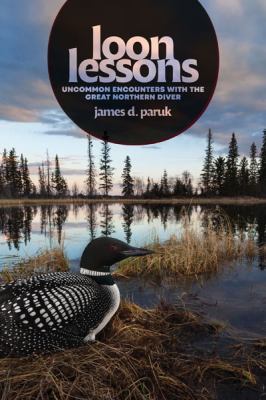 Loon Lessons is a charmingly written, engaging survey of the anatomy, evolution, ecology, breeding behavior, vocalizations, migration, wintering behavior, and conservation of the common loon (Gavia immer). Paruk (St. Joseph's College), a recognized expert and researcher on all aspects of common loon biology, has spent three decades devoted to the study of this species. His loon research has taken him to destinations throughout the loon's broad North American range, and he skillfully and succinctly does justice to his subject here. This book is both informative and entertaining, in all ways "a good read." Many view common loons as iconic symbols of isolated northern lakes, where their remarkable and varied yodels are heard throughout the breeding season. They are, however, much more interesting than their voices considered in isolation. The common loon lives its life in flight or on water, either freshwater lakes (for breeding) or saltwater bays and open coastal ocean (wintering). The bird cannot take flight from land and comes ashore at lake edges only to nest. Paruk's 12 thematic chapters, each including a further reading list, plus a concluding group of color plate illustrations beautifully communicate the natural history of the great northern diver.Summing Up: Highly recommended. All readers. |
| The Cambridge Handbook Of Animal Cognition |
| | ISBN: 9781108426749 | Price: 205.00 | | |
| Volume: | Dewey: 591.513 | Grade Min: | Publication Date: 2021-07-22 | |
| LCC: 2020-040229 | LCN: QL785.C17 2021 | Grade Max: | Version: | |
| Contributor: Kaufman, Allison | Series: Cambridge Handbooks in Psychology Ser. | Publisher: Cambridge University Press | Extent: 700 | |
| Contributor: Call, Josep | Reviewer: Jennifer A. Mather | Affiliation: University of Lethbridge | Issue Date: May 2022 | |
| Contributor: Kaufman, James | | | | |
 As expected of works in the publisher's "Handbook" series, this volume is large in size and scope. Presented in six parts--communication/language, memory/recall, social cognition, social learning and teaching, numeracy and quantitative thinking, and finally innovation and problem-solving (the largest section)--the text covers a broad range of cognitive abilities. Each part begins with a wide-ranging, thorough overview chapter; these are so good that they could stand alone as literature reviews. Papers in each part offer specialized coverage, down to a family or perhaps even a species, as in the articles on hummingbird memory, raven social cognition, and orangutan innovation, for example. Given the subject matter, it is not surprising that half the accounts are of mammals; of these, half concern primates. That said, it is pleasing to see four accounts of previously unrecognized cognitive abilities of fishes but disconcerting to find that invertebrates are all but ignored--readers will find only two papers on ants. Available new discoveries on cephalopod problem-solving and bee social cognition suggest that the invertebrates need to be better covered. Still, whether readers choose to focus on a narrow topical area or read more widely across the volume, there is a lot to learn about animal cognition from this monumental work.Summing Up: Highly recommended. Upper-division undergraduates. Graduate students and faculty. General readers. |
| The Parrot In The Mirror : How Evolving To Be Like Birds Made Us Human |
| | ISBN: 9780198846109 | Price: 28.99 | | |
| Volume: | Dewey: | Grade Min: | Publication Date: 2022-06-10 | |
| LCC: 2021-942678 | LCN: QL698.3 | Grade Max: | Version: | |
| Contributor: Martinho-Truswell, Antone | Series: | Publisher: Oxford University Press, Incorporated | Extent: 224 | |
| Contributor: | Reviewer: Joanna Burger | Affiliation: Rutgers, The State University of New Jersey, New Brunswick | Issue Date: December 2022 | |
| Contributor: | | | | |
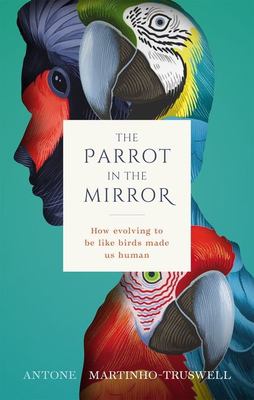 Martinho-Truswell (St. Paul's College, Sydney, Australia) offers a readable general account of evolution emphasizing evidence of convergences between birds and humans. "Parrots are our evolutionary mirror," he argues (p. 2), and humans can be seen as "birds without feathers" (p. 7). Humans have evolved many bird-like traits not shared with their primate ancestors. This reader found the argument overdrawn until realizing her own research grant applications often emphasize that "birds, like humans, rely primarily on visual and acoustic communication rather than olfaction." Some chapter highlights: primate and avian evolution (1); relative longevity of humans and parrots compared to other mammals of their size (3); the pejorative term bird brain ignores the huge computing power crammed into a tiny space (4); lifelong strategies of child-rearing vary among birds (4); learning to sing a species-appropriate song mirrors human language development (5); and birds can learn to sound human, dance, and in some famous cases use speech (6). Hence, looking at parrots is analogous, as suggested, to looking in a mirror. Martinho-Truswell, drawing on his own bird-learning research, reports lots of interesting animal behavior here. Readers may question some assertions but will learn a lot about the capabilities of the bird brain and body as well as their own.Summing Up: Highly recommended. Lower- and upper-division undergraduates. General readers. |
| We Are All Whalers : The Plight Of Whales And Our Responsibility |
| | ISBN: 9780226803043 | Price: 29.00 | | |
| Volume: | Dewey: 599.5/273 | Grade Min: | Publication Date: 2021-11-12 | |
| LCC: 2021-003573 | LCN: QL737.C423M667 2021 | Grade Max: | Version: | |
| Contributor: Moore, Michael J. | Series: | Publisher: University of Chicago Press | Extent: 224 | |
| Contributor: | Reviewer: John F. Organ | Affiliation: emeritus, University of Massachusetts Amherst | Issue Date: July 2022 | |
| Contributor: | | | | |
 This is the book all conservationists wish they could emulate. Through compelling personal narrative, Moore (Woods Hole Oceanographic Institution), a marine veterinarian, informs readers about the biology, life cycle, and human-caused threats that critically endanger the survival of North Atlantic right whales as a species. The book is easy to read, as the writing is superb and the narrative engaging, yet it is packed with facts and data. What may be most notable about this text is the author's sensitivity not only to the species he covers but also to all stakeholders in whale conservation, from indigenous hunters to commercial fishers. It is a thoughtful treatise that, through fact-based analysis, leads readers to confront the root of the problem--choices consumers make in a post-industrial society. This reviewer strongly commends the book to all readers, especially students and scholars in relevant disciplines. The book has obvious value to marine biologists and veterinarians, not to mention whale conservation organizations. However, all conservation practitioners and journalists will benefit from reading it. Moore offers a most outstanding example of communicating science to advance conservation.Summing Up: Essential. All readers. |