| Can Fish Count? : What Animals Reveal About Our Uniquely Mathematical Minds |
| | ISBN: 9781541620810 | Price: 30.00 | | |
| Volume: | Dewey: 156/.3 | Grade Min: | Publication Date: 2022-04-26 | |
| LCC: 2022-931977 | LCN: QL785.24.B88 2022 | Grade Max: | Version: | |
| Contributor: Butterworth, Brian | Series: | Publisher: Basic Books | Extent: 384 | |
| Contributor: | Reviewer: Ned W. Schillow | Affiliation: emeritus, Lehigh Carbon Community College | Issue Date: November 2022 | |
| Contributor: | | | | |
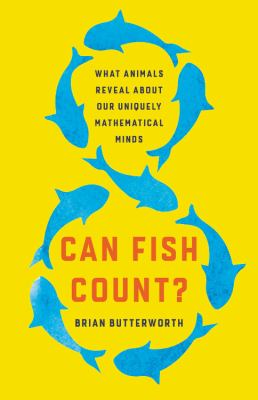 The title of this book points to its argument with a question: to what extent is numeracy inherent throughout the animal kingdom. Surprises abound. The first three chapters focus on humans, including Neanderthals, exploring the broad spectrum of innate number sense, counting ability, size comparison, and simple computation acumen exhibited by infants and toddlers. They also consider cultures that do not formalize arithmetic as such. Ties to archaeological findings are especially well presented. Cognitive neuropsychologist Butterworth (emer., University College London) then considers the various classes of vertebrates, including easily understood descriptions of experiments assessing the numerical abilities of each animal. Some research focuses on the natural abilities of animals; other studies provide insights into extended and sometimes impressive capabilities resulting from specialized training. The descriptions are accessible thanks to the author's clarity in writing, and diagrams interspersed throughout the text are quite useful in illustrating many of the experimental scenarios. Brief considerations of individual invertebrates and social insects, such as ants and bees, are also included. Even the question of whether some specialized plants possess a primitive number sense is addressed. Anyone interested in mathematics, animal behavior, or the scientific investigation of nature will find much to enjoy and ponder in this book.Summing Up: Highly recommended. All readers. |
| Deliberately Divided : Inside The Controversial Study Of Twins And Triplets Adopted Apart |
| | ISBN: 9781538132852 | Price: 46.00 | | |
| Volume: | Dewey: 362.7340855 | Grade Min: | Publication Date: 2021-11-08 | |
| LCC: 2021-042838 | LCN: HV875.2 | Grade Max: | Version: | |
| Contributor: Segal, Nancy L. | Series: | Publisher: Bloomsbury Publishing USA | Extent: 520 | |
| Contributor: | Reviewer: Bernard C. Beins | Affiliation: Ithaca College | Issue Date: July 2022 | |
| Contributor: | | | | |
 Twins are endlessly fascinating to the lay public and scientists alike, which is why researchers study them. In this work, psychologist Segal (California State Univ., Fullerton) details a longitudinal study of twins and triplets that raises troublesome ethical issues and leaves readers wondering how the investigators could have been allowed to conduct such research. The study, beginning around 1960, involved the deliberate separation of several sets of twins in the first year of their lives without notifying the adoptive parents that their child was a twin. The investigators subsequently made concerted efforts to conceal this fact, and access to information about the study and the people involved is still restricted. This outstanding volume describes the author's persistent efforts to overcome the roadblocks encountered at every step as she tried to uncover the details of the study. Segal adopts a sympathetic tone in describing the impact of the research on adopted twins who discover each other. At the same time, she pulls no punches in identifying the ethical issues that the researchers should have considered. This masterful book will appeal to readers interested in developmental psychology, research ethics, research methodology, personality, behavior genetics, and theories of psychology.Summing Up: Highly recommended. Lower- and upper-division undergraduates. Graduate students and faculty. General readers. |
| Freud's Patients : A Book Of Lives |
| | ISBN: 9781789144550 | Price: 30.00 | | |
| Volume: | Dewey: 150.19520922 | Grade Min: | Publication Date: 2021-11-03 | |
| LCC: | LCN: BF109.F74 | Grade Max: | Version: | |
| Contributor: Borch-Jacobsen, Mikkel | Series: | Publisher: Reaktion Books, Limited | Extent: 304 | |
| Contributor: | Reviewer: Michael Uebel | Affiliation: University of Texas | Issue Date: August 2022 | |
| Contributor: | | | | |
 Borch-Jacobsen (comparative literature, Univ. of Washington), a renowned scholar of psychoanalysis, presents brief accounts of the lives of 38 patients who underwent psychoanalysis with Sigmund Freud. The current book, translated from the French work published in 2011, expands from the original 31 biographies and corrects errors based on further archival research. Most of the biographical portraits demonstrate the abject failure of psychoanalysis to address the patients' core symptoms, let alone cure them. One of Freud's most famous patients, Sergius Pankejeff (1887-1979), whom Freud nicknamed "the Wolf Man," denied the claim that he was cured and went so far as to state that ". . . instead of doing me some good, psychoanalysis did me harm" (p. 173). Pankejeff's verdict is one found frequently in the largely tragic portraits of the patient biographies presented here. Borch-Jacobsen summarizes: "with a few ambiguous exceptions, such as the treatments of Ernst Lanzer, Bruno Walter and Albert Hirst, Freud's cures were largely ineffectual, when they were not downright destructive" (p. 9). This well-documented book will be instructive for scholars and general readers interested in separating historical fact from psychoanalytic mythology. It is essential reading for practitioners who may be contemplating training in clinical psychoanalysis.Summing Up: Highly recommended. Lower- and upper-division undergraduates. Graduate students, faculty, and professionals. General readers. |
| Frontier Struggles : Rollo May And The Little Band Of Psychologists Who Saved Humanism |
| | ISBN: 9781629221304 | Price: 59.95 | | |
| Volume: | Dewey: 150.2 | Grade Min: | Publication Date: 2021-09-21 | |
| LCC: 2021-354839 | LCN: BF204.S354 2021 | Grade Max: | Version: | |
| Contributor: Schlett, James | Series: | Publisher: University of Akron Press, The | Extent: 235 | |
| Contributor: | Reviewer: Bernard C. Beins | Affiliation: Ithaca College | Issue Date: February 2022 | |
| Contributor: | | | | |
 Most people recognize the important role clinical psychologists play in today's mental health counseling. But as author and poet Schlett writes here, this role was not foreordained. Rather, psychologists waged a significant multiyear battle against the American Medical Association (AMA) and the American Psychiatric Association (APA) in New York to gain the legal standing that would enable accredited psychologists to provide psychotherapy as independent professionals. This volume is strikingly effective in documenting the turf wars that ensued when psychiatrists tried (and failed) to keep psychology subordinate to and under the control of physicians in mental health treatment. The author shows that, as one would expect in a dynamic involving psychology, medicine, law, and politics, the path to legislation was not straightforward and the outcome was uncertain. Behind-the-scenes battles proliferated as the less powerful psychology community tried to overcome the resistance of the significant forces represented by the AMA and APA. This well-written, engaging book describes the birth of the profession of clinical psychology and the importance of the clash between psychoanalytic and humanistic perspectives as a critical subtext throughout the fight. Schlett very effectively shows how a small band of psychologists revolutionized the modern structure of mental health care.Summing Up: Highly recommended. Lower- and upper-division undergraduates. Graduate students, faculty, and professionals. |
| Hatred : Understanding Our Most Dangerous Emotion |
| | ISBN: 9780190084448 | Price: 28.99 | | |
| Volume: | Dewey: 152.4 | Grade Min: | Publication Date: 2020-11-06 | |
| LCC: 2020-006630 | LCN: BF575.H3B76 2020 | Grade Max: | Version: | |
| Contributor: Brogaard, Berit | Series: | Publisher: Oxford University Press, Incorporated | Extent: 400 | |
| Contributor: | Reviewer: Randolph R. Cornelius | Affiliation: Vassar College | Issue Date: January 2022 | |
| Contributor: | | | | |
 Written by a distinguished philosopher and author of several previous works (e.g., Seeing and Saying, CH, Mar'19, 56-2710, and On Romantic Love, CH, Jul'15, 52-5796), this powerful book examines the emotion of hatred at the nexus of analytic philosophy and social psychology, among other disciplines. The book consists of two separate but intertwined parts. The first is a meticulous parsing of the many meanings and uses of hatred as directed toward individuals, with the notion that the most toxic form of hate is deeply dehumanizing. The second is an application of the author's finely detailed dissection of hatred to the problem of group-directed hatred, that is, the kind of hatred that sometimes becomes violent. One of the most important strands of the author's dissection of group-directed hate is her argument that certain types of hate speech should be regarded as causing harm for which the speaker is legally liable. The book comes at a particularly opportune political moment, as much of the world is experiencing upsurges in group-directed hatred. The author's analysis of this form of hatred and, particularly, her suggestions for how to address it make this book indispensable.Summing Up: Essential. Lower-division undergraduates through faculty; professionals; general readers. |
| Moral Acrobatics : How We Avoid Ethical Ambiguity By Thinking In Black And White |
| | ISBN: 9780190057657 | Price: 45.99 | | |
| Volume: | Dewey: 170 | Grade Min: | Publication Date: 2021-01-13 | |
| LCC: 2020-047363 | LCN: BJ1012 | Grade Max: | Version: | |
| Contributor: Rochat, Philippe | Series: | Publisher: Oxford University Press, Incorporated | Extent: 192 | |
| Contributor: | Reviewer: Randall E. Osborne | Affiliation: Texas State University | Issue Date: October 2022 | |
| Contributor: | | | | |
 Rochat (Emory Univ.) offers a slim but powerful volume, both fascinating and frightening. This reader was reminded of Gordon Allport's concept of the proprium, which might loosely be defined as a developmental process of arriving at inward personal unity. In this text, Rochat explores how despite inconsistencies between one's own actions and thoughts, one still feels unified. An extremely important element of that sense of unity is the "moral acrobatics" of the title: given certain ethical twists and turns, people can feel comfortable with all manner of personal inconsistencies because they twist and interpret other people, situations, and their own actions to avoid or mask inconsistent realities. Chapter 4 on value creation and moral comfort zones will likely open the eyes of many readers. In this important work, Rochat addresses issues of fairness, love, belongingness, blind spots, stereotypes, attribution errors, and more. Although his discussion of how and why moral acrobatics occur is important, his views on how to address moral inconsistencies and their connections to violent human behavior are especially significant. This reader teaches a course on prejudice, discrimination, and hate, and finds that this work would make a powerful addition to the materials used in the existing course.Summing Up: Highly recommended. All readers. |
| Much Like Us : What Science Reveals About The Thoughts, Feelings, And Behaviour Of Animals |
| | ISBN: 9781108838498 | Price: 24.99 | | |
| Volume: | Dewey: 591.5 | Grade Min: | Publication Date: 2022-05-05 | |
| LCC: 2022-006798 | LCN: QL785.M83 2022 | Grade Max: | Version: | |
| Contributor: Sachser, Norbert | Series: | Publisher: Cambridge University Press | Extent: 200 | |
| Contributor: Bilger, Ruby | Reviewer: Joanna Burger | Affiliation: Rutgers, The State University of New Jersey, New Brunswick | Issue Date: December 2022 | |
| Contributor: | | | | |
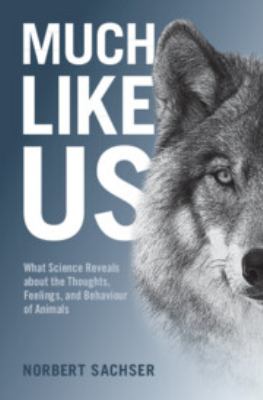 The seemingly endless diversity of animal behavior fascinates many readers who see parallels between humans and animals and also attracts those who cherish human uniqueness. This book alerts readers that animal behavior has important lessons to impart. Overall, behavior has evolved to enhance reproductive success. In his first chapter, Sachser (Univ. of Munster) describes recent progress in animal behavior studies, juxtaposing the primarily European ethology school against the more American psychological school. Until the mid-20th century, accepted dogma was that animal behavior was innate and genetically predetermined. Animals did not and could not "think." Since then, a paradigm shift in behavioral biology emphasizes gene-environment interactions, animal personalities and cognition, developmental plasticity, and lifelong learning. Animals experience and express emotions and manifest personality at the individual, group, and species levels. These essays examine human/animal differences and similarities and the universal importance of sociality, stress, play, and new learning. Certain animals can learn to solve complex problems, play games, innovate, and make and modify tools. According to Sachser, the more we humans study with open eyes and mind, the more the conceptual gap between "us and them" will close. The text is accessible and also illuminating, thoughtful, and thought-provoking, including descriptions of many interesting experiments. Cited references are listed at the back.Summing Up: Highly recommended. All readers. |
| Partial Truths : How Fractions Distort Our Thinking |
| | ISBN: 9780231201384 | Price: 100.00 | | |
| Volume: | Dewey: 153.42 | Grade Min: | Publication Date: 2022-05-10 | |
| LCC: 2021-039876 | LCN: BF441.Z55 2022 | Grade Max: | Version: | |
| Contributor: Zimring, James C. | Series: | Publisher: Columbia University Press | Extent: 256 | |
| Contributor: | Reviewer: Michael Gochfeld | Affiliation: emeritus, Rutgers Robert Wood Johnson Medical School | Issue Date: December 2022 | |
| Contributor: | | | | |
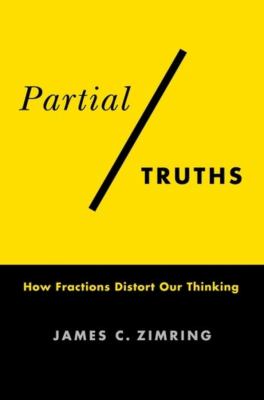 Zimring (Univ. of Virginia School of Medicine) examines the many instances in which misunderstanding and misusing fractions, rates, and percentages abound, pointing out that there are numerator people who count cases and denominator people who worry about rates. Mistaking correlation for causation is partly the result of rampant misuse and misunderstanding of fractions, percentages, and rates. Is a 10 percent increase more or less than a 50 percent increase? It depends. The ratio of COVID-19 deaths to cases was a measure of treatment, not of public health or contagiousness. Known for his defense of science in his previous work, What Science Is and How It Really Works (CH, Apr'20, 57-2579), Zimring devotes several chapters to indictments of using fractions to mislead, misdirect attention, and influence elections or investments. Coverage includes fractions in general (grade-school arithmetic), perceptions, confirmation bias, cherry-picking data, evolution vs. creation, criminal prosecutions, justifying wars, debunking New Age beliefs, and ways the public, media, and even scientists can misunderstand how hypothesis testing can misrepresent probability. Finally, Zimring asks, "Can we solve the problem of perception?" and "Should we even try?" The book is easy to read, has entertaining examples, and no math is required. This book should be required reading for all.Summing Up: Highly recommended. All readers. |
| The Cambridge Handbook Of Lifespan Development Of Creativity |
| | ISBN: 9781108485098 | Price: 200.00 | | |
| Volume: | Dewey: 153.35 | Grade Min: | Publication Date: 2021-11-25 | |
| LCC: 2021-029988 | LCN: BF408 | Grade Max: | Version: | |
| Contributor: Russ, Sandra W. | Series: Cambridge Handbooks in Psychology Ser. | Publisher: Cambridge University Press | Extent: 750 | |
| Contributor: Hoffmann, Jessica D. | Reviewer: Stephen T. Schroth | Affiliation: Towson University | Issue Date: October 2022 | |
| Contributor: Kaufman, James C. | | | | |
 Creativity fascinates many from various disciplines, including the arts, education, business, psychology, and others. Russ (Case Western Reserve Univ.), Hoffmann (Yale Univ.), and Kaufman (Univ. of Connecticut) have gathered 25 essays from some 45 contributors in addition to themselves, offering various perspectives on how to best encourage and support creativity across the lifespan. The book is organized into five parts, covering, respectively, core concepts, development (infancy through old age), modes of enhancement (various media and cultures), environments and contexts (classrooms, museums), and special populations. The chapters examine a variety of pertinent topics, such as definitions of creativity, ways of supporting creativity, how creativity presents at particular points across the lifespan and in different cultures, how specific environments support creativity, and how groups with different needs express creativity. Although it is a first-rate reference work, this volume could easily be used a class textbook, either stand-alone or with other texts. It is a marvelous complement to Kaufman's earlier Cambridge Handbook of Creativity, edited with Robert Sternberg, (CH, May'11, 48-5383); the Cambridge Handbook of the Neuroscience of Creativity, edited by Rex Jung and Oshin Vartanian (CH, Jul'18, 55-4287); and Creative Approaches to Problem Solving, by Scott Isaksen, Brian Stead-Dorval, and Donald Treffinger, now it its third edition.Summing Up: Essential. All readers. |