| Abalone : The Remarkable History And Uncertain Future Of California's Iconic Shellfish |
| | ISBN: 9780870719882 | Price: 22.95 | | |
| Volume: | Dewey: 594.3209794 | Grade Min: | Publication Date: 2020-05-01 | |
| LCC: 2019-054126 | LCN: QL430.5.H34V55 2020 | Grade Max: | Version: | |
| Contributor: Vileisis, Ann | Series: | Publisher: Oregon State University Press | Extent: 296 | |
| Contributor: | Reviewer: Frank T. Manheim | Affiliation: George Mason University | Issue Date: March 2021 | |
| Contributor: | | | | |
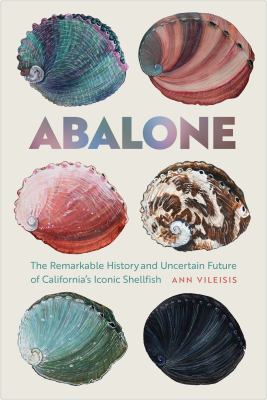 This book provides a gracefully written, meticulously documented history (including 37 pages of notes) of California's celebrated but now endangered abalone, a gastropod whose powerful foot attaches its protective shell to rocks. Author and independent scholar Vileisis (whose earlier Kitchen Literacy, CH, Apr'08, 45-4343, argued the need to recover knowledge about food) begins with the abalone's origin some 70 million years ago, then reviews its importance in Native American culture through thousands of years. The first nonnative fishers of abalone were the Chinese, who sought abalone as a luxury for nobility in their homeland. Vileisis also describes the mineralogical structure of the shell, a feature that accounts for its strength and remarkable iridescence. Most of the book is devoted to details of the rise and fall of this sought-after shellfish, from the 19th century to the present. The WWII-period hunting of sea otters, abalone's chief predator, created a boom in abalone consumption. During the 1950s, California magazines featured recipes for abalone stews, chowders, and even abalone "burgers." However, the development of scuba equipment and human overexploitation, along with disease and ocean warming, have reduced many species to near extinction. More recent decades are described in terms of controversies over state regulations to protect abalone and attempts to repopulate various endangered abalone species.Summing Up: Highly recommended. All readers. |
| Barn Owls : Evolution And Ecology |
| | ISBN: 9781107165755 | Price: 71.00 | | |
| Volume: | Dewey: 598.97 | Grade Min: | Publication Date: 2020-03-26 | |
| LCC: 2019-008026 | LCN: QL696.S85R68 2019 | Grade Max: | Version: | |
| Contributor: Roulin, Alexandre | Series: | Publisher: Cambridge University Press | Extent: 314 | |
| Contributor: | Reviewer: Chad E. Buckley | Affiliation: Illinois State University | Issue Date: January 2021 | |
| Contributor: | | | | |
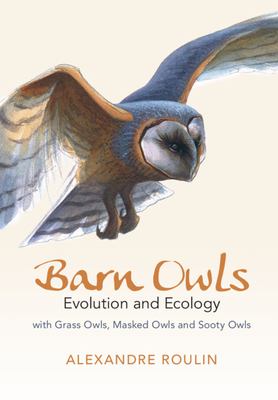 Barn owls, with their heart-shaped facial discs, are one of the most recognizable of owl species, although most people have probably seen them only in pictures. Along with a few other closely related species, they are cosmopolitan, found in many regions around the globe, and often associated with humans. Roulin (biology, Univ. of Lausanne) has conducted research on barn owls for 30 years, resulting in 240 published research papers. Here he examines what has made these owls so successful and discusses aspects of their biology, including morphology and physiology, natural history, behavior, conservation, and evolution of their plumage patterns. Barn owls have some unusual characteristics that make them attractive model organisms for research: acute hearing, ability to fly almost silently, high reproductive potential, asynchronous hatching of chicks coupled with peaceful sibling interactions, plumage variability, and high population fluctuations. This volume is profusely illustrated and includes reproductions of paintings and drawings, photographic images, and charts. A "Further Reading" section at the end of each division includes references to scholarly literature. Written in a less formal style than is typical of academic works without sacrificing the scholarly focus, this book will appeal to all readers and is essential for academic libraries supporting biology programs.Summing Up: Essential. All readers. |
| Chimpanzee : Lessons From Our Sister Species |
| | ISBN: 9781107118591 | Price: 117.00 | | |
| Volume: | Dewey: 599.885 | Grade Min: | Publication Date: 2020-08-20 | |
| LCC: | LCN: | Grade Max: | Version: | |
| Contributor: Hunt, Kevin D. | Series: | Publisher: Cambridge University Press | Extent: 592 | |
| Contributor: | Reviewer: Lori Kay Sheeran | Affiliation: Central Washington University | Issue Date: July 2021 | |
| Contributor: | | | | |
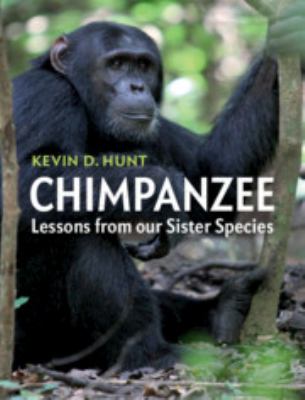 Chimpanzees have been systematically studied in nature for more than 60 years, and diverse scholars have gathered reams of chimpanzee data spanning hundreds of years. Of all the primates, the chimpanzee is perhaps easiest for humans to imagine truly knowing. Because chimpanzees are special among mammals as humankind's closest living relatives, the extent of existing chimpanzee-focused scholarship has made providing a comprehensive account of the species difficult, yet that goal is accomplished in this volume. Topics range from subjective descriptions of chimpanzees to detailed analyses of their osteology, physiology, social dynamics, ecology, and evolution (to name a few). The volume provides a synthesis of classic and current literature, which will help readers learn what experts think now and where their ideas came from. Each chapter is illustrated with black-and-white figures, tables, and maps, and vivid color plates also are included. Chapters are topically focused and accessibly written with sources at each chapter's end, and headers make finding specific information efficient. This design enables readers to consult the text selectively even as the volume's entirety provides a holistic characterization of what being a chimpanzee means.Summing Up: Highly recommended. All readers. |
| Great Adaptations : Star-nosed Moles, Electric Eels, And Other Tales Of Evolution's Mysteries Solved |
| | ISBN: 9780691195254 | Price: 27.95 | | |
| Volume: | Dewey: 591.4 | Grade Min: | Publication Date: 2020-09-15 | |
| LCC: 2021-279334 | LCN: QH366.2.C386 2020 | Grade Max: | Version: | |
| Contributor: Catania, Kenneth | Series: | Publisher: Princeton University Press | Extent: 224 | |
| Contributor: | Reviewer: Joanna Burger | Affiliation: Rutgers, The State University of New Jersey, New Brunswick | Issue Date: May 2021 | |
| Contributor: | | | | |
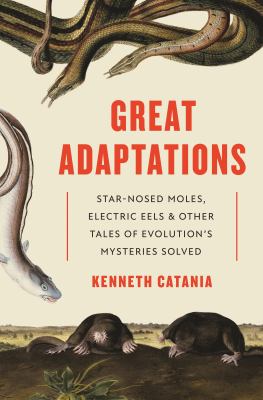 Catania's educational formation, travels, mastery of laboratory technologies, relationship with mentors, and unique subjects provide the raw material for a voyage of discovery in this interesting account of a life of scientific nature study that began with a job at the National Zoo. From mapping the sensory cortex of the star-nosed mole's brain to tactile receptors in its fleshy tentacles, to illustrating the unique behavioral capabilities of the electric eel, tentacled snake, water shrew, and jewel wasp, each species description reveals a compelling story of evolutionary adaptations in anatomy, physiology, and/or behavior. Catania (Vanderbilt Univ.) aptly conveys his wonderment at finding out how an organism interacts with its environment, a project that became his life's work. Each example is traced from Catania's first recognition of the problem of how to explain the phenomenon to posing the questions that led to finding answers, a process that has often required elaborate and imaginative experimentation. Most stories relate the investigation of the sensory structures of an animal's brain in relation to its behavior. These are "not your father's" everyday nature stories; rather, they focus on the author's own process of discovery: the "backstory." Meanwhile the text is composed in accessible lay language and illustrated by stunning photographs, with links to supporting video.Summing Up: Highly recommended. All readers. |
| Spatial Analysis In Field Primatology : Applying Gis At Varying Scales |
| | ISBN: 9781107062306 | Price: 128.00 | | |
| Volume: | Dewey: 599.80452664 | Grade Min: | Publication Date: 2021-02-18 | |
| LCC: | LCN: QL737.P9S688 2020 | Grade Max: | Version: | |
| Contributor: Dolins, Francine | Series: | Publisher: Cambridge University Press | Extent: 460 | |
| Contributor: Shaffer, Christopher | Reviewer: Christopher A Badurek | Affiliation: SUNY Cortland | Issue Date: December 2021 | |
| Contributor: Hickey, Jena | | | | |
 With 60 percent of wild primates expected to soon be at risk of extinction or already in decline, scientists are using geotechnology to increase understanding of their spatial behavior and range. The outgrowth of a workshop on GPS use for primatologists, this inspiring volume is edited by leaders in the various applications of GIS to primatology. Part 1 introduces GPS to primatologists, providing a refreshing consideration of both data quality and ethical use. Parts 2 and 3 cover GPS and GIS analysis at small and large scales, including several studies of range and travel networks in geographic settings across the tropics, and introduces techniques of agent-based modeling. Overall, the editors provide an excellent primer on GPS and GIS fundamentals that deftly expands to include research findings using more advanced methods. This resource covers applications of GPS and GIS directly relevant to readers from many areas of conservation biology who already use or want to use telemetry, GPS, or GIS analysis. This reviewer recommends the volume to any interested reader: it is not just for primatologists and will be an excellent reference for all researchers and students with biogeography, wildlife management, or technical GIS interests.Summing Up: Highly recommended. All readers. |
| The Complex Lives Of British Freshwater Fishes |
| | ISBN: 9780367440329 | Price: 48.99 | | |
| Volume: | Dewey: | Grade Min: | Publication Date: 2020-05-28 | |
| LCC: | LCN: | Grade Max: | Version: | |
| Contributor: Everard, Mark | Series: | Publisher: Taylor & Francis Group | Extent: 355 | |
| Contributor: Perks, Jack | Reviewer: Kip R. Thompson | Affiliation: Missouri State University | Issue Date: June 2021 | |
| Contributor: | | | | |
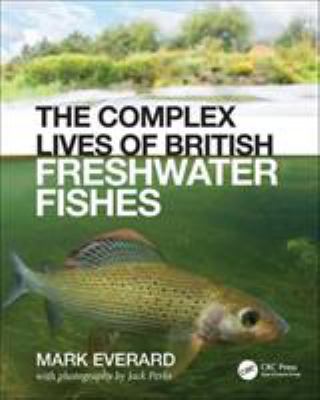 A welcome addition to the available number of books on fish, Everard's work adopts a non-technical approach to describing the fish of Britain. Straightforward descriptions bring the species into view, along with information on other regions where the same fish are found, the aquatic ecosystems where they flourish, and various conservation efforts that have sought to protect them. Everard specifically avoids jargon and scientific names to the extent possible in the text, offering a glossary of such terms to help interested readers as needed. The text is presented in 14 chapters, each addressing a specific topic to engage the perspective of the true amateur, thus: "What Have Freshwater Fishes Ever Done for Us?" (chapter 3); "Knowing Your Way Round a Fish" (chapter 4); and "Sex Lives of the British Freshwater Fishes" (chapter 7). Chapter 10 charmingly illuminates the mysteries associated with European eels in both science and popular culture. Featuring stunning color photographs contributed by Jack Perks as well as color distribution maps, this book will make a great reference not only for fisheries researchers and professionals, but also for anyone interested in the freshwater habitats of Britain. It would also be attractive to readers with a more general interest in the natural history and conservation of aquatic ecosystems.Summing Up: Highly recommended. All readers. |
| Unique : The New Science Of Human Individuality |
| | ISBN: 9781541698888 | Price: 30.00 | | |
| Volume: | Dewey: | Grade Min: | Publication Date: 2020-09-29 | |
| LCC: 2020-024904 | LCN: BF697.L53566 2020 | Grade Max: | Version: | |
| Contributor: Linden, David J. | Series: | Publisher: Basic Books | Extent: 336 | |
| Contributor: | Reviewer: Jean-Baptiste Leca | Affiliation: University of Lethbridge | Issue Date: July 2021 | |
| Contributor: | | | | |
 For decades, traditional biological and psychological research has focused on central tendencies in phenotypic traits, with a quest for average, species-typical, or sex-typical physiological and behavioral patterns. From this perspective, inter-individual variation and outliers have long been ignored because they were considered statistical noise of little intrinsic interest. Starting from the fundamental tenet of Darwinian evolution that individual differences are pronounced and relevant to fitness, this book takes the opposite approach. Readers are asked one of the deepest questions in organismal science: how do individuals become unique? Linden (Johns Hopkins Univ.) goes beyond the outdated, misleading, flawed, and sterile "nature-versus-nurture" debate. Instead, he draws on various domains (e.g., gender, sexual orientation, personality, intelligence, race, food selection, and disease) to teach the molecular mechanisms through which heredity, experience, and developmental randomness interact to make each human unique. Linden's elegant, jargon-free writing style contributes to making the complex processes underlying (epi)genetics, trait heritability, and neuroplasticity simple. Readers will learn about the developmental pathways, environmental constraints, and cultural influences involved in human individuality. Armed with this book, readers can surely develop a solid understanding of how and why everyone is different.Summing Up: Highly recommended. All readers. |