| A History Of Emotion In Western Music : A Thousand Years From Chant To Pop |
| | ISBN: 9780190061753 | Price: 130.00 | | |
| Volume: | Dewey: 780.0152 | Grade Min: | Publication Date: 2020-09-28 | |
| LCC: | LCN: ML3830.S696 2020 | Grade Max: | Version: | |
| Contributor: Spitzer, Michael | Series: | Publisher: Oxford University Press, Incorporated | Extent: 456 | |
| Contributor: | Reviewer: Martin D. Jenkins | Affiliation: Wright State University | Issue Date: September 2021 | |
| Contributor: | | | | |
 Having previously published Metaphor and Musical Thought(CH, Sep'04, 42-0214), among other works, Spitzer (Univ. of Liverpool, UK) now turns his attention to theories of emotion in music. Given how much people talk about music's power to convey, or evoke, specific emotions, it is a wonder that such a book has not appeared before now. Spitzer addresses the topic masterfully, laying out in the first part, "The Theory," a philosophical explication of emotion and how it can be identified in music. He then explores the five primary emotions in music: happiness, anger, sadness, love, and fear. In the book's second part, "The Narrative," Spitzer examines particular examples throughout history, from Gregorian chant to video-game music. The prose can be dense, so familiarity with philosophical concepts of emotion is required. But this book is an important foray into the place of music in the human experience. Studies of emotion have been permeating recent scholarship in other disciplines in (and beyond) the humanities, and this volume will help the field of music studies catch up.Summing Up: Essential. Upper-division undergraduates through faculty; professionals. |
| Beethoven : A Life In Nine Pieces |
| | ISBN: 9780300254587 | Price: 39.00 | | |
| Volume: | Dewey: 780.92 | Grade Min: | Publication Date: 2020-10-26 | |
| LCC: 2020-940897 | LCN: ML410.B4T87 2020 | Grade Max: | Version: | |
| Contributor: Tunbridge, Laura | Series: | Publisher: Yale University Press | Extent: 288 | |
| Contributor: | Reviewer: Bruce J. Murray | Affiliation: Miami University | Issue Date: July 2021 | |
| Contributor: | | | | |
 The year 2020 marked the 250th anniversary of Beethoven's birth, and it yielded all manner of books, articles, and recordings. (Many planned public events were also scheduled but had to be canceled in light of the pandemic.) One could hardly expect something new and distinctive, no matter the vastness of the output, on such a venerable subject, yet here it is! Tunbridge (Univ. of Oxford, UK) presents Beethoven's story in what could be called slices, each of the nine leading to and encircling a specific composition, attached to a specific idea. This is no gimmick--just the opposite. Reading the whole recalls the experience of reading through Beethoven's letters; it would be difficult to argue that the course of Beethoven's life was determined by anything much except the music. Tunbridge's writing is vivid, so evocative of time and place as to be almost cinematic. She utilizes source material both familiar and unfamiliar to draw some conclusions not heard before, and these are convincing. Maynard Solomon's Beethoven (CH, Jun'68; 2nd rev. ed., CH, Jan'99, 36-2676), which is written in a more standard format, remains the classic biography on Beethoven. The present volume, ingenious and somehow inevitable (rather like a Beethoven piece), is for everyone who cares about Beethoven's music.Summing Up: Essential. Lower-division undergraduates through faculty; general readers. |
| Gems Of Exquisite Beauty : How Hymnody Carried Classical Music To America |
| | ISBN: 9780190842796 | Price: 89.00 | | |
| Volume: | Dewey: 782.270973 | Grade Min: | Publication Date: 2020-10-15 | |
| LCC: 2020-013326 | LCN: ML3111.4.M47 2020 | Grade Max: | Version: | |
| Contributor: Mercer-Taylor, Peter | Series: | Publisher: Oxford University Press, Incorporated | Extent: 448 | |
| Contributor: | Reviewer: Paul D. Sanders | Affiliation: The Ohio State University at Newark | Issue Date: December 2021 | |
| Contributor: | | | | |
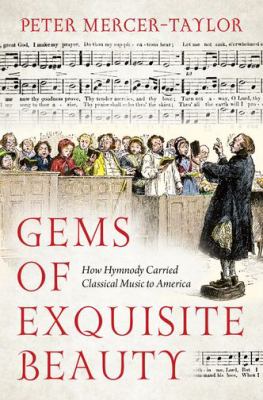 Mercer-Taylor (Univ. of Minnesota) explores melodies by classical composers adapted to hymn tunes in antebellum America--including numerous selections from oratorios, masses, operas, and instrumental works by Gluck, Haydn, Mozart, Beethoven, Weber, et al. After reviewing the early history of psalmody in the colonies, the author looks at environs where such hymns were sung: churches, singing schools, singing societies, and even private homes. Early tune books by Arthur Clifton (1819) and Lowell Mason (1822) set the stage for an explosion of interest beginning in the 1840s. The creative process of adapting classical melodies is discussed in careful detail. Mercer-Taylor begins with "translations" of tunes that required only minor changes, and goes on to consider adaptations from larger classical works, including masses and oratorios. These required more significant changes. Hymn writers often borrowed select phrases from the original, condensed them, and added new material in similar style. A brief epilogue compares this adaptive process to the quotation of classical tunes in modern popular songs, commercials, and ring tones. An extensive companion website offers recordings and scores for more than 260 hymn tunes, making this erudite study accessible to a wide audience.Summing Up: Highly recommended. Upper-division undergraduates through faculty; professionals; general readers. |
| Music By Max Steiner : The Epic Life Of Hollywood's Most Influential Composer |
| | ISBN: 9780190623272 | Price: 39.99 | | |
| Volume: | Dewey: 781.542092 | Grade Min: | Publication Date: 2020-05-14 | |
| LCC: 2019-058681 | LCN: ML410.S8163S65 2020 | Grade Max: | Version: | |
| Contributor: Smith, Steven C. | Series: Cultural Biographies Ser. | Publisher: Oxford University Press, Incorporated | Extent: 496 | |
| Contributor: | Reviewer: Stanley Clyde Pelkey | Affiliation: University of Kentucky | Issue Date: November 2021 | |
| Contributor: | | | | |
 Born in Vienna to a prominent family of theatrical producers, Max Steiner (1888-1971) was a pioneering Hollywood composer who built one of the most successful musical careers in US film history. An Emmy-nominated writer, journalist, and producer, Smith traces Steiner's training in musical theater, his transition to film composing, his successes during the 1930s through the 1960s, and his influence in Hollywood across the 26 chapters of this well-researched and engrossing book. The exceptional chapters on Steiner's family, childhood, and formative years illuminate the composer's aesthetics, personal and professional relationships, and financial missteps as an adult. Smith also surveys the many films for which Steiner composed scores. In addition to offering perspective on the artistic, business, and interpersonal contexts from which the films and Steiner's scores emerged, Smith also considers Steiner's collaborations with orchestrators, directors, producers, and studio heads. The final three chapters are sensitively written: Steiner's career ends, his family is torn apart, and his life winds to a close, but his legacy is firmly established. A rich set of photos, film stills, and reproductions of original manuscript scores grace this excellent biography.Summing Up: Essential. Lower-division undergraduates through faculty. |
| Poulenc : A Biography |
| | ISBN: 9780300226508 | Price: 38.00 | | |
| Volume: | Dewey: 780.92 | Grade Min: | Publication Date: 2020-06-09 | |
| LCC: 2020-931416 | LCN: ML410.P787N5 2020 | Grade Max: | Version: | |
| Contributor: Nichols, Roger | Series: | Publisher: Yale University Press | Extent: 352 | |
| Contributor: | Reviewer: Stanley Clyde Pelkey | Affiliation: University of Kentucky | Issue Date: January 2021 | |
| Contributor: | | | | |
 Francis Poulenc (1899-1963), one of the composers known as Les Six, sought to express the "French temperament" of "charm and delight" (p. 1) through his compositions and piano performances. Nichols (an authority on modern French music) explores the composition, musical characteristics, and reception of Poulenc's songs, concertos, and operatic masterpiece Dialogues des Carmelites, and considers Poulenc's professional collaborations (particularly with singer and confidant Pierre Bernac) and the poets whom he most admired and whose words he set to music (e.g., Guillaume Apollinaire). Poulenc's aesthetics and that of the broader community of 20th-century French composers form another principal aspect of the book. Nichols discusses Poulenc's anxieties regarding his reputation in comparison to those of Pierre Boulez and Olivier Messiaen, his reviews and essays on music, and his professional relationships with Erik Satie, Igor Stravinsky, and fellow members of Les Six. Poulenc's assessment of his colleagues' compositions and theirs of his (discussed in chapter 3) are especially insightful. Nichols addresses the impact of the composer's recurring bouts of depression and intimate relationships with men and women but provides only a relatively brief account of the composer's childhood and formative years. But even so this is an excellent biography, and it will send readers to listen again to Poulenc's music.Summing Up: Essential. Upper-division undergraduates through faculty; general readers.. |
| Representing Russia's Orient : From Ethnography To Art Song |
| | ISBN: 9780190051365 | Price: 89.00 | | |
| Volume: | Dewey: 781.629171 | Grade Min: | Publication Date: 2020-12-08 | |
| LCC: 2020-016406 | LCN: ML300.4.I77 2020 | Grade Max: | Version: | |
| Contributor: Issiyeva, Adalyat | Series: AMS Studies in Music Ser. | Publisher: Oxford University Press, Incorporated | Extent: 432 | |
| Contributor: | Reviewer: Donna Arnold | Affiliation: University of North Texas | Issue Date: November 2021 | |
| Contributor: | | | | |
 This book was published in the American Musicological Society's prestigious "AMS Studies in Music Series." The author emigrated from Kazakhstan to Canada, where she has taught at McGill, Carleton, and Concordia Universities. A musicologist trained in both the Western European tradition and ethnomusicology, Issiyeva addresses a topic that has received little scholarly attention: how music from Asian realms that Russia conquered in the 19th century--such as Kazakhstan and the Caucasus region--influenced Russian music, especially 19th-century classical composers. Issiyeva focuses particularly on Alexander Aliab'ev and the group known as the "mighty five," Milii Balakirev, Modest Mussorgsky, Cesar Cui, Nicolas Rimsky-Korsakov, and Alexander Borodin. In their quest for a national identity in their works, these composers incorporated folk music from the Asian regions, but broader considerations also played a role--for example, how Russian intellectuals and leaders regarded the conquered territories and their people in various eras of Russian history. Numerous musical examples and illustrations, along with meticulous documentation, enrich this monumental study. Its detailed historical and cultural background material extends the book's value well beyond the parameters of music per se.Summing Up: Essential. Upper-division undergraduates through faculty. |
| Rural Rhythm : The Story Of Old-time Country Music In 78 Records |
| | ISBN: 9780190091187 | Price: 44.99 | | |
| Volume: | Dewey: 782.42164209041 | Grade Min: | Publication Date: 2021-03-01 | |
| LCC: 2020-042458 | LCN: ML3477.R87 2021 | Grade Max: | Version: | |
| Contributor: Russell, Tony | Series: | Publisher: Oxford University Press, Incorporated | Extent: 336 | |
| Contributor: | Reviewer: Ronald D. Cohen | Affiliation: emeritus, Indiana University Northwest | Issue Date: November 2021 | |
| Contributor: | | | | |
 Russell has long been one of the foremost scholars of country music history. The current volume is perhaps his most fascinating. The 78 chapters cover a wide range of recordings--one per chapter--in rough chronological order, beginning with Fiddelin' John Carson's 1923 "The Little Old Log Cabin in the Lane," considered the first hillbilly release, and ending in 1940. Chapters not only provide detailed information on the songs and performers but also numerous illustrations, including the record label and a helpful list of references; there is also a list of CD reissues of the songs and information about whether they are available on Spotify and/or YouTube. Some of the songs are famous, such as Jimmie Rodgers singing "Blue Yodel" (1928), whereas others are rare and have never been reissued, such as Bob Skiles Four Old Tuners's "Rye Waltz" (also 1928). Russell covers a wide range of instrumental styles, from solo violin to the Carter Family trio and Bob Wills's large Texas swing band. There is also much detail on the songwriters and country music radio shows. This is a gold mine for all who are interested in popular music.Summing Up: Essential. Lower-division undergraduates through faculty; general readers. |
| The Meaning Of Soul : Black Music And Resilience Since The 1960s |
| | ISBN: 9781478008699 | Price: 102.95 | | |
| Volume: | Dewey: 781.644 | Grade Min: | Publication Date: 2020-08-14 | |
| LCC: 2019-057426 | LCN: ML3537.L67 2020 | Grade Max: | Version: | |
| Contributor: Lordi, Emily J. | Series: Refiguring American Music Ser. | Publisher: Duke University Press | Extent: 232 | |
| Contributor: | Reviewer: Sandra Jean Graham | Affiliation: Babson College | Issue Date: October 2021 | |
| Contributor: | | | | |
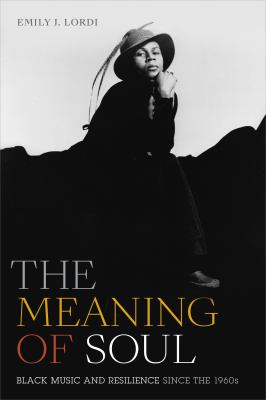 The Meaning of Soul is a revisionist analysis of 1960s and 1970s soul and of the present-day post-soul era. Lordi (English, Vanderbilt Univ.) theorizes soul as a "logic" for enacting resilience by displaying "the redemptive possibilities of black suffering" (p. 46). This capacious definition moves well beyond the typically masculinist codification of soul as message-oriented, secularized gospel. Lordi's theory of soul logic re-places women's and queer voices in its history and illustrates a way to link the heterogeneous voices of that era. A vital chapter on the historiography of journalistic, literary, and academic writings launches the rationale for her approach, which she validates with extraordinary interpretations of recordings and live performances from a wide range of artists. Core chapters focus on performative techniques typically marginalized in treatments of soul: falsetto, false endings, ad libs, and covers of white songs. The book closes with a consideration of the current soul revival--what Lordi calls "Afropresentist" art--as the "unfulfilled future of a radical past" (p. 154). Lordi's love for soul music, vibrant writing, and analytical acumen coalesce in a book that is difficult to put down. Readers are unlikely to hear soul music the same way ever again.Summing Up: Essential. Lower-division undergraduates through faculty; professionals; general readers. |
| The Solfeggio Tradition : A Forgotten Art Of Melody In The Long Eighteenth Century |
| | ISBN: 9780197514085 | Price: 110.00 | | |
| Volume: | Dewey: 782.0423 | Grade Min: | Publication Date: 2020-10-12 | |
| LCC: 2020-017866 | LCN: MT44.B4 2020 | Grade Max: | Version: | |
| Contributor: Baragwanath, Nicholas | Series: | Publisher: Oxford University Press, Incorporated | Extent: 432 | |
| Contributor: | Reviewer: William E. Grim | Affiliation: Strayer University | Issue Date: December 2021 | |
| Contributor: | | | | |
 This is a fascinating and extremely original study of the 18th-century practice of solmization, that is, the use of syllables to represent the notes of a musical scale (e.g., do-re-mi, etc.), and how solmization (solfeggio in Italian, solfege in French) impacted not only musical education but also musical composition in the 18th century. Baragwanath (Univ. of Nottingham, UK) examined hundreds of largely unpublished solfeggio exercise books in order to understand how budding musicians were trained in the late 17th and 18th centuries. The historical method of music education that Baragwanath has uncovered is a far cry from that of the 20th and 21st centuries, in which solfeggio plays almost no role. Part of the author's thesis is that the facility with which 18th-century composers were able to write original compositions stems in large part from their thorough grounding in solfeggio. The author makes a very convincing case, especially in the chapter "Solfeggio and Partimento" in which he demonstrates that the ability to create the missing voices above figured and unfigured basses has its roots in solfeggio practices that extend back to 11th-century music theorist Guido d'Arezzo.Summing Up: Essential. Lower-division undergraduates through faculty. |
| The Sound Of Hope : Music As Solace, Resistance And Salvation During The Holocaust And World War Ii |
| | ISBN: 9781476670560 | Price: 39.95 | | |
| Volume: | Dewey: 780.89924 | Grade Min: | Publication Date: 2020-06-25 | |
| LCC: 2020-017547 | LCN: ML3776.B76 2020 | Grade Max: | Version: | |
| Contributor: Brown, Kellie D. | Series: | Publisher: McFarland & Company, Incorporated Publishers | Extent: 318 | |
| Contributor: | Reviewer: Paul D. Sanders | Affiliation: The Ohio State University at Newark | Issue Date: May 2021 | |
| Contributor: | | | | |
 Brown (Milligan Univ.) shares powerful historical accounts of eight musicians whose work during the Holocaust and WW II encouraged hundreds of others as they faced daily brutalities and even death. In chapter 1, Brown provides critical information on the rise of the Third Reich, and in the chapters that follow, she presents the stories of violinist Alma Rose; conductor Herbert Zipper; pianist Alice Herz-Sommer; composers Wladyslaw Szpilman, Oliver Messiaen, and Dimitri Shostakovich; Margaret Dryburgh and the women POWs in the "vocal orchestra" of Sumatra; and Bronislaw Huberman, who founded the Palestine Symphony Orchestra, now the Israel Philharmonic Orchestra. Remarkably, six of the musicians outlived the oppression of the Holocaust and the war, with Herz-Sommer achieving the age of 110. (Rose died in 1944 at Auschwitz-Birkenau, and Dryburgh died in 1945 in a Japanese internment camp in Sumatra.) Each chapter provides rich background--drawn from letters, diaries, memoirs, and other sources--on the musicians and the atrocities they faced. As readers progress from Auschwitz to the Warsaw Ghetto to Manila and beyond, they will be reminded of the hope and inspiration these musicians provided and the power of music during one of the darkest periods of human history.Summing Up: Highly recommended. Lower-division undergraduates through faculty and professionals; general readers. |
| Whose Blues? : Facing Up To Race And The Future Of The Music |
| | ISBN: 9781469660356 | Price: 99.00 | | |
| Volume: | Dewey: 781.64309 | Grade Min: | Publication Date: 2020-10-19 | |
| LCC: 2020-015417 | LCN: ML3521.G95 2020 | Grade Max: | Version: | |
| Contributor: Gussow, Adam | Series: | Publisher: University of North Carolina Press | Extent: 332 | |
| Contributor: | Reviewer: David V. Moskowitz | Affiliation: University of South Dakota | Issue Date: July 2021 | |
| Contributor: | | | | |
 With Whose Blues? Gussow (English and southern studies, Univ. of Mississippi), an authority on the blues, adds to his extensive and noteworthy scholarship on the genre, including Beyond the Crossroads: The Devil and the Blues Tradition (CH, Apr'18, 55-2795). Divided into 12 "bars," or chapters, Whose Blues? addresses longstanding issues surrounding the blues and race. Incorporating some previously published scholarship, Gussow foregrounds canonical works from blues luminaries such as W. C. Handy, Langston Hughes, and Zora Neale Hurston, among others. Gussow also does due diligence in dispelling myths long associated with the early days of the blues. His research on the early blues was exhaustive, and he succeeds in revealing several long-accepted baseline "facts" as more myth than history. Above all, Gussow does a yeoman's job of mixing discussions of decades-long changing race relations with the emergence and development of the blues. Throughout, Gussow's reach is impressive as he incorporates discussion of the emergence of the blues into discourse on contemporary standouts such as Samantha Fish and Corey Harris.Summing Up: Essential. Lower-division undergraduates through faculty; professionals; general readers. |