| A Miscarriage Of Justice : Women's Reproductive Lives And The Law In Early Twentieth-century Brazil |
| | ISBN: 9781503610477 | Price: 130.00 | | |
| Volume: | Dewey: 362.19820098153 | Grade Min: | Publication Date: 2020-01-14 | |
| LCC: 2019-019673 | LCN: RG963.B62R68 2020 | Grade Max: | Version: | |
| Contributor: Roth, Cassia | Series: | Publisher: Stanford University Press | Extent: 376 | |
| Contributor: | Reviewer: Bonnie A. Lucero | Affiliation: University of Houston-Downtown | Issue Date: August 2021 | |
| Contributor: | | | | |
 A Miscarriage of Justice is an impeccably researched feminist history of reproduction that centers the lives and deaths of women in the Brazilian capital of Rio de Janeiro during the early 20th century. As Roth (Univ. of Georgia) shows, this was a momentous time in Brazil's history with the abolition of slavery in 1888 and establishment of the first republic immediately following in 1889. Within this context, physicians, lawmakers, and politicians saw heightened value in women's reproduction vis-a-vis the Brazilian state, since women had the ability to conceive and birth future citizens and laborers, but also held the power to refuse. The result was a parallel medicalization of pregnancy and childbirth and expansion of surveillance and criminalization of abortion and infanticide. Whereas previous studies tend to discuss maternal and infant health independent of fertility control, Roth convincingly demonstrates how interconnected these two spheres were for understanding women's relationship with the state. By employing an integrated methodology, she carefully analyzes how women negotiated these state interventions in their reproduction. Ultimately, by using fertility control as a lens to understand these interactions, Roth reveals how motherhood became central to women's citizenship claims.Summing Up: Highly recommended. Lower-division undergraduates through professionals. |
| Caribbean Migrations : The Legacies Of Colonialism |
| | ISBN: 9781978814509 | Price: 150.00 | | |
| Volume: | Dewey: 972.9 | Grade Min: 13 | Publication Date: 2020-12-18 | |
| LCC: 2020-009850 | LCN: F2169 | Grade Max: | Version: | |
| Contributor: Birkenmaier, Anke | Series: Critical Caribbean Studies | Publisher: Rutgers University Press | Extent: 312 | |
| Contributor: Birkenmaier, Anke | Reviewer: Frederick H. Smith | Affiliation: North Carolina A & T State University | Issue Date: December 2021 | |
| Contributor: Vargas-Ramos, Carlos | | | | |
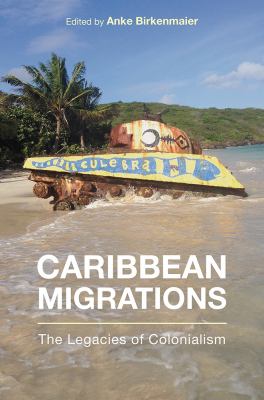 European colonialism and the neocolonial policies of the US have shaped patterns of Caribbean migration. This study explores how colonialism marginalized Caribbean peoples in the broader global economy and fostered unique transnational identities for migrants living in the US and in the countries of former European colonizers. The 16 essays in this extensive volume address Caribbean migration from the perspective of multiple scholarly disciplines, and incorporate the "alternative" voices of artists, musicians, poets, and performers to highlight community formation and resistance to dominant ideologies abroad. Hurricanes, Cold War policies, and poverty are among the many forces spurring migration. Caribbean social media and popular culture have eased the ambiguous status of Caribbean migrants abroad and redefined concepts of citizenship in ways that highlight the clash of Caribbean and colonial principles. The essays emphasize the geo-strategic ambitions of the US in the Spanish-speaking Caribbean, especially Puerto Rico. However, the theoretical breadth of the volume sheds new light on migration throughout the Caribbean region, as well as the formation of transnational identities in other parts of the world. This study is a must read for Caribbean studies specialists and postcolonial scholars.Summing Up: Highly recommended. Lower-division undergraduates through faculty; general readers. |
| Disruptive Archives : Feminist Memories Of Resistance In Latin America's Dirty Wars |
| | ISBN: 9780252043536 | Price: 110.00 | | |
| Volume: | Dewey: | Grade Min: | Publication Date: 2020-12-14 | |
| LCC: 2020-030516 | LCN: HQ1460 | Grade Max: | Version: | |
| Contributor: Macmanus, Viviana Beatriz | Series: Dissident Feminisms Ser. | Publisher: University of Illinois Press | Extent: 218 | |
| Contributor: | Reviewer: Carlos A Hernandez | Affiliation: California State University, Northridge | Issue Date: October 2021 | |
| Contributor: | | | | |
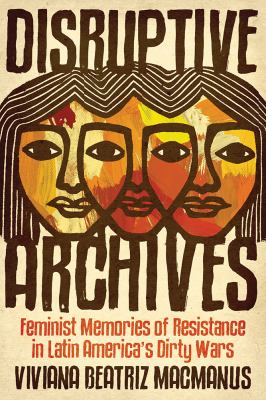 In Disruptive Archives, MacManus (Occidental College) presents an examination of women's erased memories of gendered violence during the dirty war-period in Mexico and Argentina. MacManus challenges the androcentric narrative of the dirty war (a narrative often controlled by either the state or the male leadership of the left) and places women at the epicenter of the historical process, inserting them into the revolutionary struggle. In addressing women's absence from histories of resistance during the dirty war-period in Latin America, she fills a lacuna in the literature. The study is groundbreaking in terms of methodology. The author uses a convincing assortment of archival research, oral histories, interviews, human rights reports, literature, and film to illuminate complicated and poignant narratives of loss, violence, and trauma. She also highlights the paradox of social justice struggles in the 1960s and 1970s: externally, social movements attempted to eradicate inequality, but internally the movement's all-male leadership replicated a gendered system of oppression, excluding women from the decision-making process. Disruptive Archives affirms the power of women's storytelling and memory as they participate as actors, narrators, and politically militant protagonists.Summing Up: Highly recommended. Upper-division undergraduates through faculty; general readers. |
| Ethnic Entrepreneurs, Crony Capitalism, And The Making Of The Franco-mexican Elite |
| | ISBN: 9780817320805 | Price: 54.95 | | |
| Volume: | Dewey: 330.972081 | Grade Min: | Publication Date: 2021-01-12 | |
| LCC: 2020-027482 | LCN: HC135.G25 2021 | Grade Max: | Version: | |
| Contributor: Galindo, Jos | Series: | Publisher: University of Alabama Press | Extent: 240 | |
| Contributor: | Reviewer: Daniel Newcomer | Affiliation: East Tennessee State University | Issue Date: August 2021 | |
| Contributor: | | | | |
 Galindo (Univ. Veracruzana, Mexico) adds significantly to the history of business and capitalism in Mexico. His study traces the practice of crony capitalism, wherein success relies on the relationships between entrepreneurs and politicians, through Mexico's national history. Galindo focuses on the activities of French immigrants arriving as early as 1815, particularly the descendants of Adrian Jean. Originally favored due to their white, Catholic, and Latin origins, the Jeans created an economic empire ranging from cotton textiles to the powerful Televisa broadcasting network. Galindo innovatively uses social analysis software to trace the Jean family's social links over the years and gauge the extent to which such ties impacted business success. Networking enabled the Jeans to survive the decline of the textile industry as well as the post-revolutionary state's political practices to secure opportunities in novel areas such as banking and housing. The author maintains that although collusion represented a crucial element of early capitalism in many countries, Mexico never developed institutions enabling it to move beyond cronyism. Drawing on impressive research from 15 Mexican archives, this excellent study will interest scholars in many fields.Summing Up: Highly recommended. Advanced undergraduates through faculty; professionals. |
| Scammer's Yard : The Crime Of Black Repair In Jamaica |
| | ISBN: 9781517909970 | Price: 108.00 | | |
| Volume: | Dewey: 364.16/3097292 | Grade Min: | Publication Date: 2020-10-27 | |
| LCC: 2020-020413 | LCN: HV6699.J25L49 2020 | Grade Max: | Version: | |
| Contributor: Lewis, Jovan Scott | Series: | Publisher: University of Minnesota Press | Extent: 216 | |
| Contributor: | Reviewer: Marietta Morrissey | Affiliation: emerita, University of Toledo | Issue Date: October 2021 | |
| Contributor: | | | | |
 Combining rich ethnographic data with timely theoretical arguments, Lewis (Univ. of California, Berkeley) explores how a trio of young Jamaican men practice the "lottery scam" as a means of supporting themselves and their families in a setting with few economic opportunities. The scam involves phone calls, mostly to older Americans. They are told that they have been awarded large sums of money contingent upon paying a fee. The mechanics of the scam, including the acquisition of call lists, differing Jamaican and US legalities, and the economic impact on the scam victims, are ably presented through the experiences and perceptions of Lewis's three informants. Equally compelling is Lewis's analysis of scamming in the context of Jamaica's staggering international debt, related structural adjustments, and substantial foreign investment in business process outsourcing through particular call centers. Lewis contends that the "sufferation" of Jamaicans through slavery, emancipation, and colonial and postcolonial racism requires repair, although individual responses such as scamming bring neither benefits to the larger community nor lasting prosperity to its practitioners. This impressive work deftly weaves together and advances important theoretical constructs, which deepen readers' understanding of this research.Summing Up: Highly recommended. Advanced undergraduates through faculty. |