| Empire Of Letters : Writing In Roman Literature And Thought From Lucretius To Ovid |
| | ISBN: 9780190915407 | Price: 115.00 | | |
| Volume: | Dewey: 870.9/001 | Grade Min: | Publication Date: 2019-02-04 | |
| LCC: 2018-014534 | LCN: PA6003.F735 2018 | Grade Max: | Version: | |
| Contributor: Frampton, Stephanie Ann | Series: | Publisher: Oxford University Press, Incorporated | Extent: 224 | |
| Contributor: | Reviewer: Max Leo Goldman | Affiliation: Denison University | Issue Date: January 2020 | |
| Contributor: | | | | |
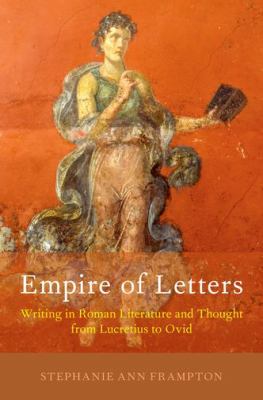 The guiding idea of this book is that the materiality of writing deeply influenced Roman ways of thinking. Frampton (MIT) therefore starts with what is known about the history of the book in Greece and Rome, the alphabet, and the nature of Roman schooling. She then explores figures of thought based on the materiality of writing in Lucretius and Manilius and the well-known figures of memory. Finally, she turns to the Roman poetry book and how poets, particularly Catullus, Horace, and Ovid, deploy the image of the book to mediate their relationship with their audience. Particularly noteworthy is Frampton's focus on the specific technology and materiality of writing, which forms an indispensable context not only for understanding the writers of the late Republic and the Augustan period (the focus of this study) but also for later writers. Written in an accessible style, with abundant references to earlier scholarship, this book constitutes an ideal first step for students interested in the history of writing in Rome, and will be especially welcome to students and scholars of Roman literature.Summing Up: Highly recommended. Upper-division undergraduates through faculty. |
| Herodotus And The Question Why |
| | ISBN: 9781477318324 | Price: 55.00 | | |
| Volume: | Dewey: | Grade Min: | Publication Date: 2019-07-15 | |
| LCC: | LCN: | Grade Max: | Version: | |
| Contributor: Pelling, Christopher | Series: | Publisher: University of Texas Press | Extent: 384 | |
| Contributor: | Reviewer: Francis A Grabowski | Affiliation: Rogers State University | Issue Date: April 2020 | |
| Contributor: | | | | |
 Recording history may predate Herodotus, yet Herodotus is rightly considered the "father of history." The science of historical writing--the systematic investigation of historical events--began with him. But what was Herodotus's method, and from what did he derive it? Pelling (honorary fellow, Univ. of Oxford, UK) presents a careful analysis of Herodotus's historical method, focusing in particular on how the conceptual assumptions and expectations of his audience may have influenced Herodotus's historical narrative. The result is a study that focuses more on how Herodotus conceptualized the events recorded in his history--and how he explained them--than on the events themselves. Readers seeking a summary critical analysis of the contents of Herodotus's Histories will want to look elsewhere. However, those interested in Herodotus's approach to recording history and his mode of historical explanation will find Pelling's book an engaging work of consummate scholarship. Documentation is robust, and the endnotes demonstrate Pelling's firm grasp of both traditional and contemporary scholarship. The book also includes a list of passages from Herodotus and other classical authors referred to in the text.Summing Up: Essential. Upper-division undergraduates through faculty. |
| Laughing Atoms, Laughing Matter : Lucretius' De Rerum Natura And Satire |
| | ISBN: 9780472131808 | Price: 89.95 | | |
| Volume: | Dewey: 871.01 | Grade Min: | Publication Date: 2020-02-14 | |
| LCC: 2019-035009 | LCN: PA6484.G45 2020 | Grade Max: | Version: | |
| Contributor: Gellar-Goad, T. H. M. | Series: | Publisher: University of Michigan Press | Extent: 290 | |
| Contributor: | Reviewer: Joseph S. Louzonis | Affiliation: St. Francis College, Brooklyn, NY | Issue Date: October 2020 | |
| Contributor: | | | | |
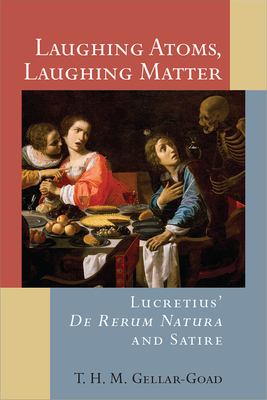 The cause of Lucretian scholarship is admirably served by the addition of this imaginatively and amusingly voiced addition to the growing corpus of literature on this most challenging of the ancient Latin poets. Originally a doctoral dissertation, this innovative, comprehensive treatment expands on an only occasionally noted aspect of the famous Epicurean didactic poem: its satirical content and purpose. Gellar-Goad's analysis ably supports a literary reexamination that enshrines De Rerum Natura within the recognized Roman satirical canon--not simply as an exemplar of satirical attitude but expressly as an influential, major contributor within the catena of the historical development of satura, a genre primarily represented by the poetic exertions of Lucilius, Horace, Juvenal, and Persius. Impeccably researched and accompanied by an exhaustive panoply of scholarly citations (conveniently offered as actual footnotes), this is a remarkable and magisterial contribution to Lucretian scholarship. With the armature of profound erudition and a perspicacious dissection of the satirical dimensions of a text heretofore historically appreciated most often within the narrow limits of a traditionally defined didactic genre, this book leads its audience to another dynamic level of reading Lucretius, a level where satiric laughter indeed does matter and commands attention.Summing Up: Essential. Upper-division undergraduates through faculty. |