| A Hundred Acres Of America : The Geography Of Jewish American Literary History |
| | ISBN: 9780813589701 | Price: 150.00 | | |
| Volume: | Dewey: 810.98924 | Grade Min: 11 | Publication Date: 2018-12-06 | |
| LCC: 2018-011675 | LCN: PS153 | Grade Max: | Version: | |
| Contributor: Hoberman, Michael | Series: | Publisher: Rutgers University Press | Extent: 198 | |
| Contributor: | Reviewer: Jonathan N. Barron | Affiliation: The University of Southern Mississippi | Issue Date: May 2019 | |
| Contributor: | | | | |
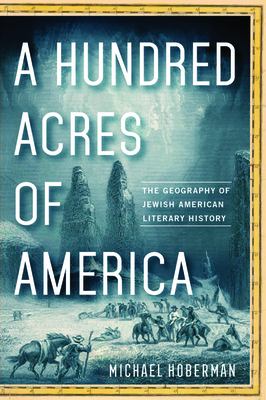 This aptly titled book breaks new ground. In the conclusion, Hoberman (Fitchburg State Univ.) writes, he "addresses a history not so much of physical encounters as of the broader cultural implications of those encounters." Specifically, he devotes a chapter each to "the frontier, the city, the small town, and the suburb" and to these landscapes adds two more: the shtetls of Eastern Europe left behind and the "contemporary experience in the Land of Israel." Combined, these six locales, Hoberman argues in the introduction, enable Jewish American writers "to test assumptions, challenge hegemonies, and assert agency." As an example, the frontier chapter rewards readers by recovering both little-known writers, such as Solomon Nunes Carvalho and I. J. Benjamin, and understudied genres of travel narrative and chronicle. Hoberman argues that these writers "wrote against the grain of popular conceptions of the Far West as a savage no man's land that awaited the violence-bearing and taming dominance of lone heroes." Unfortunately, the chapter does not engage the millennia-old issue of Galut (exile) in Judaism and Jewish culture, nor does Hoberman offer a theoretical probing of the sublime as it relates to Judaism and Jewish culture. These missed opportunities appear throughout the six chapters, but so do rewards. The book is innovative and important.Summing Up: Highly recommended. Upper-division undergraduates through faculty. |
| Chaucer : A European Life |
| | ISBN: 9780691160092 | Price: 39.95 | | |
| Volume: | Dewey: 821.1 | Grade Min: | Publication Date: 2019-04-09 | |
| LCC: 2018-948733 | LCN: PR1905 | Grade Max: | Version: | |
| Contributor: Turner, Marion | Series: | Publisher: Princeton University Press | Extent: 624 | |
| Contributor: | Reviewer: Shannon Gayk | Affiliation: Indiana University | Issue Date: September 2019 | |
| Contributor: | | | | |
 Organized around place rather chronologically, Turner's literary biography of Chaucer offers an encyclopedic survey of the world in which the poet circulated and developed his unique poetic perspective and voice. From the spaces of his early life in London and at court, to the sites of his European travels, to the more metaphorical places explored in his poetry, the Chaucer that emerges from this study is decidedly urban and cosmopolitan, well connected to a wide range of communities both local and international, and politically and bureaucratically savvy as he navigates the massive political and economic changes of the latter half of the 14th century. Turner (Jesus College, Univ. of Oxford, UK) reads Chaucer's poetry in light of these experiences, demonstrating how they contributed to the development of his distinctive poetic voice, which came to emphasize movement and dynamism, diversity and difference, multiplicity of perspectives and voicings, process, networks, surfaces, and thresholds. Chaucer's "spatial poetics" (p. 365) thus informs and is informed by the actual spaces he moved among over the course of his life. This accessible, impressively researched biography will be valuable to those interested in the poetry, politics, or social world of the late Middle Ages.Summing Up: Highly recommended. Lower-division undergraduates through faculty; general readers. |
| Failures Of Feeling : Insensibility And The Novel |
| | ISBN: 9781503606807 | Price: 120.00 | | |
| Volume: | Dewey: | Grade Min: | Publication Date: 2018-12-18 | |
| LCC: 2018-009022 | LCN: PR830.E46L44 2018 | Grade Max: | Version: | |
| Contributor: Lee, Wendy Anne | Series: | Publisher: Stanford University Press | Extent: 248 | |
| Contributor: | Reviewer: Jacob Risinger | Affiliation: The Ohio State University | Issue Date: September 2019 | |
| Contributor: | | | | |
 The affective turn that has swept through the humanities and social sciences has given scholars of 18th-century literature and philosophy a home court advantage. As Lee (New York Univ.) puts it in the introduction to this remarkable book, "Every philosopher of the Enlightenment was also a theorist of affect." Lee's breakthrough move is to turn this preoccupation on its head by focusing on how insensibility and its short-circuiting of affect paradoxically incites both passionate investment and narrative itself. From impassive sovereigns to marble-hearted protagonists arrayed in "affective chainmail," 18th-century novelists could not resist the way in which insensibility disrupted easy ideals of gender and sympathy even as it destabilized the expectation that novels should disclose the rich volatility of any character's interior existence. Lee traces insensibility from "the unlikely stock figure of the prude" to Austen's Sense and Sensibility and Melville's "Bartleby, the Scrivener"--from Samuel Richardson's Clarissa Harlowe to George Eliot's Gwendolen Harleth. Along the way, she blends philosophical erudition and a series of razor-sharp readings with an uncommon wit that ratifies the absolute centrality of insensibility in the novel but also in the world.Summing Up: Essential. Lower-division undergraduates through faculty. |
| Inventing Edward Lear |
| | ISBN: 9780674971158 | Price: 29.95 | | |
| Volume: | Dewey: 700.92 | Grade Min: | Publication Date: 2018-11-30 | |
| LCC: 2018-015474 | LCN: PR4879.L2Z75 2019 | Grade Max: | Version: | |
| Contributor: Lodge, Sara | Series: | Publisher: Harvard University Press | Extent: 448 | |
| Contributor: | Reviewer: Miriam Elizabeth Burstein | Affiliation: SUNY College at Brockport | Issue Date: July 2019 | |
| Contributor: | | | | |
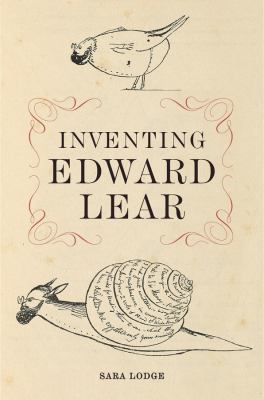 Training an academic sensibility on literary nonsense can have unfortunate results, but Lodge (Univ. of St. Andrews, UK) brings to this wide-ranging study of Edward Lear (1812-88) a combination of erudition and enthusiasm. Lodge is a specialist in 19th-century English culture and literature, and here she covers the entire range of Lear's career, analyzing not only his familiar nonsense verse and art for children, but also his musical settings, natural history illustrations, and landscape paintings. Throughout, Lodge emphasizes how Lear's aesthetics--in both serious and comic modes--rely heavily on busting open assumptions about category differences. Love affairs happen across species; illustrated birds seem to be scrutinizing the scientific viewer; Lear's painting Beachy Head (1862) "dramatically alienates England" by linking it to the Arctic. Lear's language itself, with its coinages, onomatopoeias, and puns, refuses to settle nicely. Similarly, Lear's frustration with orthodox Christianity manifests itself in his playful subversions of catechetical and biblical language. Arguably, Lodge's most groundbreaking work in this volume resides in her recuperation of Lear as a musician and performer and in her willingness to take Lear's Pre-Raphaelitism seriously. In addition to copious black-and-white illustrations and color plates, the text is supported by a companion website, edwardlearsmusic.com, which features clearly recorded performances (voice/piano) of many songs referenced in the text.Summing Up: Essential. Upper-division undergraduates through faculty. |
| John Donne In Context |
| | ISBN: 9781107043503 | Price: 117.00 | | |
| Volume: | Dewey: 821.3 | Grade Min: | Publication Date: 2019-03-21 | |
| LCC: 2018-052008 | LCN: PR2248.J625 2019 | Grade Max: | Version: | |
| Contributor: Schoenfeldt, Michael | Series: Literature in Context Ser. | Publisher: Cambridge University Press | Extent: 394 | |
| Contributor: | Reviewer: Jesse David Sharpe | Affiliation: LeTourneau University | Issue Date: September 2019 | |
| Contributor: | | | | |
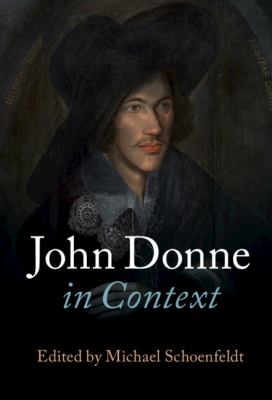 Some 400 years separate us from Donne (1572-1631), so the references in his poetry and prose have become obscure. And because Donne already has a reputation as a difficult poet, addressing this problem is all the more pressing. Schoenfeldt (Univ. of Michigan, Ann Arbor) does it well. He did a wonderful job of assembling top scholars working in Donne studies today. Most of the essays run to fewer than 15 pages, and each is dedicated to a different aspect of Donne's writings or world. Poetry, prose, and sermons are covered, and the topics include, among many other things, law, medicine, education, money, and sexuality. Taken together the essays do an outstanding job of fleshing out early modern England. From the excellent timeline that introduces the life of Donne through the suggested further readings at the end of the volume, everything in this book is worth reading and considering. This is a welcome and vital addition to Donne scholarship.Summing Up: Essential. Lower-division undergraduates through faculty; general readers. |
| Literature's Children : The Critical Child And The Art Of Idealization |
| | ISBN: 9781472577191 | Price: 160.00 | | |
| Volume: | Dewey: 809.89282 | Grade Min: | Publication Date: 2019-02-21 | |
| LCC: 2018-058748 | LCN: PN1009.5 | Grade Max: | Version: | |
| Contributor: Joy, Louise | Series: Bloomsbury Perspectives on Children's Literature Ser. | Publisher: Bloomsbury Publishing Plc | Extent: 256 | |
| Contributor: | Reviewer: Lisa Maxwell Arter | Affiliation: Southern Utah University | Issue Date: August 2019 | |
| Contributor: | | | | |
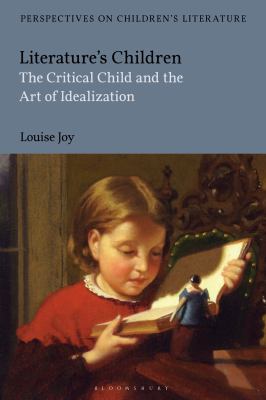 Joy's valuable addition to the scholarship on children's literature offers enough critical analysis and expertise to make the book seem like an edited collection from a range of experts. In each chapter of Literature's Children, she unveils another element of her compelling argument for child as active critic. Joy's claim, in the introduction, that "child readers are active, curious, independent, questioning thinkers" should not surprise anyone who has worked with young minds. The author does an excellent job of supporting her position that scholarship on children's literature should cease viewing child readers as merely passive consumers of adult writers' wisdom or indoctrinating oppression. As Joy demonstrates, children construct meaning in much more complex ways than the binary options much of children's literature scholarship allows: innocence versus ignorance, popularity versus quality, didactic versus aesthetic. Though every chapter provides evidence-rich support for Joy's argument, of particular note is "On Being (Bored)." Joy provides the perfect marriage of developmental and educational psychology and reminds readers of the importance of boredom for building creativity, patience, and vital coping strategies. Critically robust enough for seasoned scholars yet easily understandable for those new to the subject, this volume will be indispensable for everyone who studies or teaches children's literature.Summing Up: Essential. Upper-division undergraduates through faculty and professionals; general readers. |
| Literature, American Style : The Originality Of Imitation In The Early Republic |
| | ISBN: 9780812250374 | Price: 79.95 | | |
| Volume: | Dewey: 810.935873 | Grade Min: | Publication Date: 2018-08-21 | |
| LCC: 2018-002988 | LCN: PS195.N35T39 2018 | Grade Max: | Version: | |
| Contributor: Tawil, Ezra | Series: | Publisher: University of Pennsylvania Press | Extent: 272 | |
| Contributor: | Reviewer: Gary Douglas MacDonald | Affiliation: Virginia State University | Issue Date: July 2019 | |
| Contributor: | | | | |
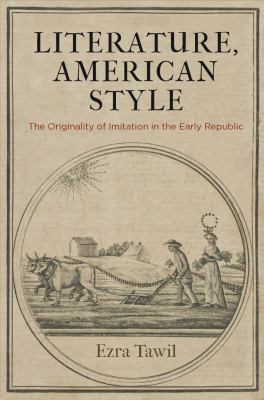 Tawil (Univ. of Rochester) argues that aspects of literary style that have been cited as characteristic of American literature derive from and actively engage with European literary traditions that consider similar issues. Tawil addresses a range of iconic early authors, including Noah Webster, Michel-Guillaume-Saint-Jean de Crevecoeur, Charles Brockden Brown, Hannah Webster Foster, and Royall Tyler. From Webster's linguistic reform of the English language to American authors' versions of sentimental fiction, Tawil demonstrates that the very texts that posit original American stylistic qualities also derive from, imitate, or respond to European sources. This book deeply enriches and gives nuance to understanding of those texts, expanding the cultural influences to which they respond. The impressive breadth of knowledge and punctilious textual analysis results in a book that is both creative and convincing. The writing style is simple, clear, and direct.Summing Up: Highly recommended. Upper-division undergraduates through faculty. |
| Lyrical Liberators : The American Antislavery Movement In Verse, 1831-1865 |
| | ISBN: 9780821422793 | Price: 80.00 | | |
| Volume: | Dewey: 811.30803552 | Grade Min: | Publication Date: 2018-04-20 | |
| LCC: 2017-053683 | LCN: PS595.S65L97 2018 | Grade Max: | Version: | |
| Contributor: Pelaez, Monica | Series: | Publisher: Ohio University Press | Extent: 400 | |
| Contributor: | Reviewer: Andrew C Jenkins | Affiliation: College of Central Florida | Issue Date: January 2019 | |
| Contributor: | | | | |
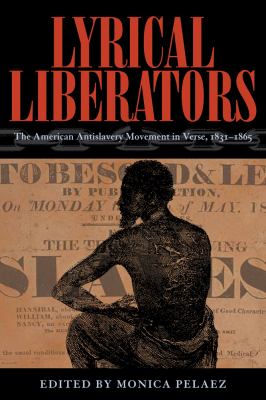 Drawing from eight prominent antislavery publications, Pelaez (English, St. Cloud State Univ.) has compiled a stirring anthology of antebellum and wartime verse--what she calls "agitator" verse. The volume distinguishes itself from kindred anthologies--The Poetry of Slavery: An Anglo-American Anthology, 1764-1865, ed. by Marcus Wood (CH, Sep'04, 42-0170); Amazing Grace: An Anthology of Poems about Slavery, 1660-1810, ed. by James Basker(CH, May'03, 40-5065)--by focusing solely on the recovery of poetry found in American abolitionist periodicals of the immediate pre-war and war periods. After broadly introducing the corpus and contexts, Pelaez presents 13 chronologically arranged thematic units of poetry, each with its own introduction, footnotes, and end notes. In the introduction the author claims that the selections offer a "quintessential overview of the various discourses" that captured the public's attention and resonated within the moral, rhetorical, and political skirmishes fought in the press, but she offers only four sentences on the criteria for the inclusion or representativeness of the 161 poems beyond thematic affinity. However, this collection's merit--the stunning and still-raw power of voices once lost or neglected speaking on the topics of fugitives, death, motherhood, equality, freedom, and war--and its usefulness in a broad range of disciplines make it indispensable.Summing Up: Essential, Lower-division undergraduates through faculty; general readers. |
| Pan-african American Literature : Signifyin(g) Immigrants In The Twenty-first Century |
| | ISBN: 9780813592787 | Price: 150.00 | | |
| Volume: | Dewey: 810.9896073 | Grade Min: 11 | Publication Date: 2018-09-14 | |
| LCC: 2017-033670 | LCN: PS153 | Grade Max: | Version: | |
| Contributor: Li, Stephanie | Series: | Publisher: Rutgers University Press | Extent: 190 | |
| Contributor: | Reviewer: Adele Sheron Newson-Horst | Affiliation: Morgan State University | Issue Date: March 2019 | |
| Contributor: | | | | |
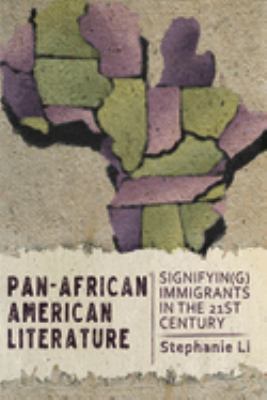 In writing this book, Li (Indiana Univ., Bloomington) had two interrelated goals: to explore the intertextual relationship between new pan-African American writers and the African American literary tradition and to advance the idea that the dominant 21st-century narrative is that of state-sanctioned violence against the black body. In her powerful introduction, Li interrogates Toni Morrison's assertion that immigrants to the US must learn racial estrangement to complete their assimilation. The view of the black body as alien has powerful ramifications for new African immigrants. In the book's five chapters, Li explores how recently immigrated African writers--Dinaw Mengestu, Chimamanda Ngozi Adichie, Yaa Gyasi, Helen Oyeyemi, NoViolet Bulawayo, et al.--mediate race in their encounters with the US. In analyzing these writers' works, Li demonstrates their intertextual elements. Interestingly, Li maintains that for these authors, blackness is a learned state of being based on understanding of US history. African writers posit the novel as the central literary form to unfold the history that informs the present of their characters' American realities. Li grapples with the resistance narrative, ancestral re-memories, invisibility, and the burden of blackness caught between multiple identities. Fresh, urgent, and balanced, this book concludes with a call to political action inspired by Barack Obama's Dreams from My Father (CH, Feb'96, 33-3527).Summing Up: Essential. Lower-division undergraduates through faculty; general readers. |
| Phillis Wheatley Chooses Freedom : History, Poetry, And The Ideals Of The American Revolution |
| | ISBN: 9781479879250 | Price: 44.00 | | |
| Volume: | Dewey: 811/.1 B | Grade Min: | Publication Date: 2018-09-11 | |
| LCC: 2017-054988 | LCN: PS866.W5Z56 2019 | Grade Max: | Version: | |
| Contributor: Barker-Benfield, G. J. | Series: | Publisher: New York University Press | Extent: 240 | |
| Contributor: | Reviewer: Alison Tracy Hale | Affiliation: University of Puget Sound | Issue Date: May 2019 | |
| Contributor: | | | | |
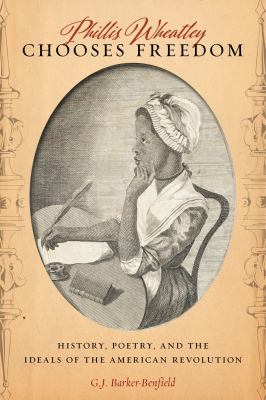 In this meticulous study, Barker-Benfield (emer., history, SUNY Albany) reanimates an essential transatlantic context for Wheatley's life and work: an international network of prominent abolitionists and Evangelical Christians whose enthusiasm led them, in 1774, to offer her marriage to a Christianized African man and a voyage to West Africa. Those familiar with Wheatley's biography will know that she refused this invitation, despite the urging of powerful American ministers and English Methodists affiliated with Wheatley's famous English patron, Selena Hastings, Countess of Huntingdon. Fewer readers will be familiar with the complex interconnections among colonial American, English, and African Christians working to end the slave trade, emancipate American slaves, and Christianize Africans in Africa. Wheatley, an acclaimed poet and voice for Christian Africans across the Atlantic, formed the nexus of their ambitious plans. Barker-Benfield first looks at how Wheatley came to the attention of such prominent figures as the Reverend Samuel Hopkins of Rhode Island and John Thornton, head of the Countess of Huntingdon's English Methodist group. Later chapters explore the "revolutionary" impulses that undergirded Wheatley's refusal to return to Africa in such a subordinate position, linking Wheatley's personal autonomy to the political expressions of her poetry.Summing Up: Highly recommended. Upper-division undergraduates through faculty. |
| Reimagining The Middle Passage : Black Resistance In Literature, Television, And Song |
| | ISBN: 9780814213650 | Price: 129.95 | | |
| Volume: | Dewey: 810.9/896073 | Grade Min: | Publication Date: 2018-04-21 | |
| LCC: 2017-055652 | LCN: PS153.N5G72 2018 | Grade Max: | Version: | |
| Contributor: Green, Tara T. | Series: Black Performance and Cultural Criticism Ser. | Publisher: Ohio State University Press | Extent: 210 | |
| Contributor: | Reviewer: Theresa L. Stowell | Affiliation: Adrian College | Issue Date: January 2019 | |
| Contributor: | | | | |
 Green (Univ. of North Carolina, Greensboro) sets out to explore the way artists who are descended from African slaves have presented "the historical and symbolic meaning and legacy of the Middle passage." As the author acknowledges, this book joins works such as Orlando Patterson's Slavery and Social Death: A Comparative Study (CH, Feb'83), Abdul JanMohamed's The Death-Bound-Subject: Richard Wright's Archaeology of Death (CH, Dec'05, 43-2045), and Annisa Janine Wardi's Water and African American Memory: An Ecocritical Perspective (CH, May'12, 49-4936). Green analyzes imaginings of the Middle Passage in works by such established figures as Olaudah Equiano, Alex Haley, Charles Johnson, Jewell Parker Rhodes, and Richard Wright, and also in contemporary work, such as HBO's Treme and Spike Lee's documentary films. Green's specific focus on the symbolism of water (from the Middle Passage itself to Hurricane Katrina) and the idea of forgiveness makes this book an original and significant addition to the study of the psychological and resistance effects of the forced migration to which slaves were subjected.Summing Up: Highly recommended. Upper-division undergraduates through faculty. |
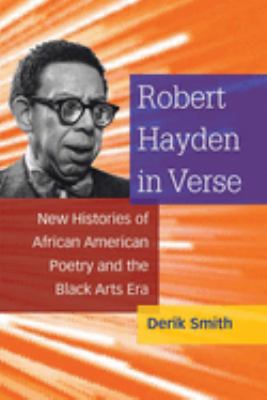
| Robert Hayden In Verse : New Histories Of African American Poetry And The Black Arts Era |
| | ISBN: 9780472073931 | Price: 89.95 | | |
| Volume: | Dewey: 813/.52 | Grade Min: | Publication Date: 2018-08-22 | |
| LCC: 2018-014316 | LCN: PS3515.A9363Z93 2018 | Grade Max: | Version: | |
| Contributor: Smith, Derik | Series: | Publisher: University of Michigan Press | Extent: 328 | |
| Contributor: | Reviewer: Betty Taylor Thompson | Affiliation: Texas Southern University | Issue Date: June 2019 | |
| Contributor: | | | | |
|
| Shades Of Gray : Writing The New American Multiracialism |
| | ISBN: 9780803296817 | Price: 65.00 | | |
| Volume: | Dewey: 810.9/352905 | Grade Min: | Publication Date: 2018-12-01 | |
| LCC: 2018-016616 | LCN: PS231.R32M45 2018 | Grade Max: | Version: | |
| Contributor: Mckibbin, Molly Littlewood | Series: Borderlands and Transcultural Studies | Publisher: University of Nebraska Press | Extent: 348 | |
| Contributor: | Reviewer: Thomas P. Riggio | Affiliation: emeritus, University of Connecticut | Issue Date: April 2019 | |
| Contributor: | | | | |
 In this groundbreaking study of multiracialism, McKibbin (Columbia College, Chicago) explores recent criticism and contemporary autobiography and fiction. She does so within a historical framework that goes back to the writings about interracial marriage and multiracial identity of Frederick Douglass and W. E. B. Du Bois, among others. McKibbin's broad argument is that in the 21st century a major shift is occurring in narratives of multiracialism. She provides close and illuminating analyses of books by Danzy Senna, Rebecca Walker, Emily Raboteau, Rachel M. Harper, and Heidi Durrow. McKibbin limits her discussion to black-and-white interrelationships, but she also shows how ethnicities, especially Jewish and Hispanic identities, challenge traditional concepts of whiteness and blackness. She sees this new perception as a liberation from older ideas about race: for example, it questions conventional theories about being white and also monoracial blackness ideals of black pride movements. The author understands the political implications of her subject, and she explores President Obama's role in the reformation of concepts of mixed-race individuals. This provocative book is cautious in its claims, acknowledging that current awareness is still in its early stages and has not yet been fully incorporated into the nation's general consciousness.Summing Up: Essential. Upper-division undergraduates through faculty. |
| The Correspondence Of Henry D. Thoreau |
| | ISBN: 9780691170589 | Price: 150.00 | | |
| Volume: 28 | Dewey: 818.309 | Grade Min: | Publication Date: 2018-11-13 | |
| LCC: 2012-043255 | LCN: PS3053.A3 | Grade Max: | Version: | |
| Contributor: Thoreau, Henry David. | Series: Writings of Henry D. Thoreau Ser. | Publisher: Princeton University Press | Extent: 720 | |
| Contributor: Hudspeth, Robert N. | Reviewer: Gary Douglas MacDonald | Affiliation: Virginia State University | Issue Date: April 2019 | |
| Contributor: Witherell, Elizabeth Hall | | | | |
 This is the second volume (of a projected three) of The Correspondence of Henry D. Thoreau, released in Princeton's extraordinary, multivolume scholarly edition "The Writings of Henry D. Thoreau." When completed, the Correspondence will be the first complete scholarly edition of Thoreau's letters since 1958. Volume 1 of the correspondence (CH, Feb'14, 51-3120) covered the years from 1834 to 1848; volume 2 includes letters written and received from 1849 to 1856, a period when Thoreau published and revised major works, including Walden (1854), A Week on the Concord and Merrimack Rivers (1849), and "Resistance to Civil Government" (1849). The correspondence includes 246 letters, more than half of which were written by Thoreau, and 43 letters published for the first time. The letters are accompanied by general, historical, and textual introductions, and every letter is illuminated by meticulous yet unimposing annotations that identify relevant persons, explain current issues, and note even literary allusions. The scholarship is superb. The collection is a cornucopia for Thoreau scholars: among its many treasures are Thoreau's lyrical and profound exchanges with his friend Harrison Gray Otis Blake, dozens of exchanges in which Thoreau endeavors to manage his career as an author and lecturer, and a lengthy assessment of Walt Whitman's writing.Summing Up: Essential. Upper-division undergraduates through faculty. |
| The Dark Fantastic : Race And The Imagination From Harry Potter To The Hunger Games |
| | ISBN: 9781479800650 | Price: 98.00 | | |
| Volume: 13 | Dewey: 813/.8766093552 | Grade Min: | Publication Date: 2019-05-21 | |
| LCC: 2018-042917 | LCN: PS374.F27T475 2019 | Grade Max: | Version: | |
| Contributor: Thomas, Ebony Elizabeth | Series: Postmillennial Pop Ser. | Publisher: New York University Press | Extent: 240 | |
| Contributor: | Reviewer: Patti J. Kurtz | Affiliation: Minot State University | Issue Date: November 2019 | |
| Contributor: | | | | |
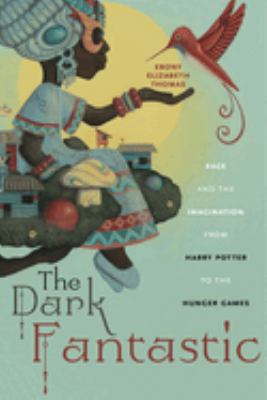 The need for diversity in literature for children and young adults extends to the need for literary criticism focused on this diversity (or the lack of it). Thomas (Univ. of Pennsylvania) offers an excellent analysis of the portrayal of black female characters in speculative fiction, and she points out "an imagination gap" for black readers, who can only rarely imagine themselves as the character on the page. A creative blend of autoethnography, literary analysis, and counter-storytelling, this volume is intriguing, accessible, and raises important questions that will likely generate additional research on this topic. Thomas focuses her lens on characters in several of the most popular speculative fiction stories, including The Hunger Games, Harry Potter, Merlin, and The Vampire Diaries, and she looks at both the written text and the film/television versions of these stories. In examining how these characters reflect the ways black girls are treated in the real world, Thomas demonstrates how far literature for young people still has to go to provide a mirror for all readers. A must read, especially for current and future educators.Summing Up: Highly recommended. Lower-division undergraduates through faculty and professionals; general readers. |
| The Life Of Saul Bellow : Love And Strife, 1965-2005 |
| | ISBN: 9781101875162 | Price: 40.00 | | |
| Volume: | Dewey: 813/.52 B | Grade Min: | Publication Date: 2018-11-06 | |
| LCC: 2017-053381 | LCN: PS3503.E4488Z7355 | Grade Max: | Version: | |
| Contributor: Leader, Zachary | Series: | Publisher: Knopf Doubleday Publishing Group | Extent: 784 | |
| Contributor: | Reviewer: Stephen Miller | Affiliation: Texas A&M University | Issue Date: April 2019 | |
| Contributor: | | | | |
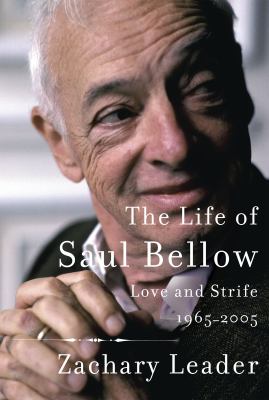 Leader (Univ. of Roehampton, UK) is an extremely accomplished critic and biographer, and this is the second volume of his two-volume biography of Bellow (v. 1, CH, Sep'15, 53-0109). This volume begins when the across-the-board success of Bellow's Herzog (1964) lifted the novelist's income from the high five figures to steadily increasing six figures. Though Leader did not know Bellow personally, his knowledge of the novelist is exhaustive, and he masterfully shows how the erudite Bellow turned the persons and events of his multistage, circus-like personal, amorous, and professional lives into the characters and actions of his novels. Bellow was tortured by the many entanglements brought on by his wide circle of family, friends, spouses, lovers, and acquaintances, but Leader demonstrates how Bellow's iron-clad work discipline, to which all else in his life ceded, brought forth what many consider the most important body of fiction produced by an American in the second half of the 20th century. Leader makes clear how many in Bellow's life were wounded by his behavior, but also how many could not escape his intermittent charm and, with time, his aura of being a man and a writer who counted and for whom allowances had to be made.Summing Up: Essential. Lower-division undergraduates through faculty; general readers. |
| The Outside Thing : Modernist Lesbian Romance |
| | ISBN: 9780231188166 | Price: 60.00 | | |
| Volume: | Dewey: 810.992066 | Grade Min: | Publication Date: 2019-05-28 | |
| LCC: 2018-048954 | LCN: PS153.L46R63 2019 | Grade Max: | Version: | |
| Contributor: Roche, Hannah | Series: Gender and Culture Ser. | Publisher: Columbia University Press | Extent: 272 | |
| Contributor: | Reviewer: Roark Mulligan | Affiliation: Christopher Newport University | Issue Date: November 2019 | |
| Contributor: | | | | |
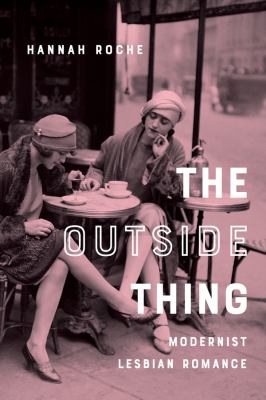 Roche (Univ. of York) explores lesbian themes within traditional, modern romances. Her title comes from Gertrude Stein lecture titled "An American and France" (1936), in which Stein described herself as "outside," geographically and sexually: an expatriate and a lesbian. Divided into three sections, The Outside Thing focuses on the lives and works of three writers: Stein, Radclyffe Hall, and Djuna Barnes. Part 1 (the first two chapters) develops a theory of romance by analyzing Stein's first novel, Q.E.D. (1903), and by chronicling the relationship of Stein and Alice B. Toklas. Part 2 (chapters 3 and 4) follows a similar pattern, first analyzing Hall's novel The Well of Loneliness (1928) as more than a traditional romance, then exploring the personal relationship of Hall and Evguenia Souline. The final two chapters scrutinize bisexual themes in Djuna Barnes's fiction and journalism; the second of these is dedicated to Barnes's novel Nightwood (1936). Throughout the volume, illustrations aptly complement Roche's cultural and biographical investigations. Employing extensive archival research and a groundbreaking theoretical approach, Roche cogently argues that modernists such as Stein, Radclyffe, and Barnes crafted heterosexual narratives (romances) that develop lesbian themes.Summing Up: Highly recommended. Upper-division undergraduates through faculty. |
| The Politics Of Parody : A Literary History Of Caricature, 1760-1830 |
| | ISBN: 9780300223750 | Price: 55.00 | | |
| Volume: | Dewey: | Grade Min: | Publication Date: 2018-06-19 | |
| LCC: 2017-956284 | LCN: MLCM 2022/40816 (N) | Grade Max: | Version: | |
| Contributor: Taylor, David Francis | Series: Lewis Walpole Series in Eighteenth-Century Culture and History Ser. | Publisher: Yale University Press | Extent: 320 | |
| Contributor: | Reviewer: Jack Lynch | Affiliation: Rutgers University-Newark | Issue Date: April 2019 | |
| Contributor: | | | | |
 Eighteenth-century Britain was a Golden Age for both literary satire, with figures like Jonathan Swift and Alexander Pope, and visual satire, with William Hogarth, Thomas Rowlandson, and James Gillray. But literary satire and visual satire have rarely discussed together and, when they have been attempts to connect the two have usually been unsophisticated. Taylor (literature, Univ. of Oxford, UK) seeks to change that, offering what amounts to a new means of interpreting graphic satire. At the center of his method of reading political satire is a powerful explication of parody as a means of providing intertexts and giving readers, both the elite and the uneducated, insights into the links between current events and famous literary situations. Taylor takes as his organizing principle the most widely parodied literary works: after two introductory chapters come chapters on satirical appropriations of Shakespeare's Tempest and Macbeth, Milton's Paradise Lost, Swift's Gulliver's Travels, and pantomimes. The prose may be a little too dense for most undergraduates, but this learned, original, and powerfully intelligent book will be a key part of future discussions of both literary and graphic satire. An important work.Summing Up: Essential. Ambitious upper-division undergraduates, graduate students, researchers, faculty. |
| The Promise Of The Suburbs : A Victorian History In Literature And Culture |
| | ISBN: 9780300179330 | Price: 44.00 | | |
| Volume: | Dewey: 307.760941 | Grade Min: | Publication Date: 2019-02-05 | |
| LCC: 2018-945019 | LCN: HT352.G7B55 2019 | Grade Max: | Version: | |
| Contributor: Bilston, Sarah | Series: | Publisher: Yale University Press | Extent: 296 | |
| Contributor: | Reviewer: Lawton Andrew Brewer | Affiliation: Perimeter College, Georgia State University | Issue Date: July 2019 | |
| Contributor: | | | | |
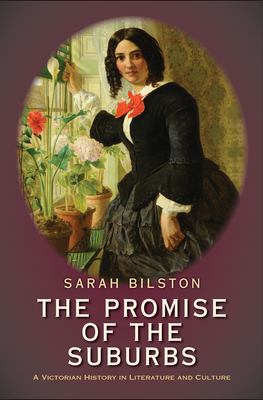 Bilston (literature, Trinity College) is interested in the understanding of space by women professionals, particularly writers, in the Victorian era. Until the 19th century, most literary settings were either rural or urban. But around 1820, suburban literature began to flourish. In the introduction Bilston identifies two strands of this literature. One depicted the suburb as "a dangerous landscape the visitor must escape." The other showed suburbs as "scenes of possibility, community, agency, and choice." Women writers in London's suburbs highlighted "the vibrancy of Victorian suburban living" that was always present though infrequently acknowledged. Bilston surveys the various facets of the role of suburbia by tracing the development of plot, explicating the way gardens functioned as emblems of creative capacity, and unpacking the efforts of suburban writers such as Mary Elizabeth Braddon, Jane Ellen Panton, and Julia Frankau. Women challenged the representation of the suburbs as "places of tedium, cultural aridity, and baffling anonymity" in favor of a view of the suburbs as facilitating "new possibilities" and new social involvement. The mounting of the Loan Exhibition of Women's Industries, an exhibition of women's professional achievements, in 1885 testified to the impact of women's professional and industrial contributions, which were largely fostered in suburban space.Summing Up: Highly recommended. Upper-division undergraduates through faculty. |
| The Value Of Herman Melville |
| | ISBN: 9781108471442 | Price: 51.00 | | |
| Volume: | Dewey: 813.3 | Grade Min: | Publication Date: 2018-09-06 | |
| LCC: 2018-012843 | LCN: PS2387.S196 2018 | Grade Max: | Version: | |
| Contributor: Sanborn, Geoffrey | Series: Value Of Ser. | Publisher: Cambridge University Press | Extent: 168 | |
| Contributor: | Reviewer: Randy T. Prus | Affiliation: Southeastern Oklahoma State University | Issue Date: April 2019 | |
| Contributor: | | | | |
 Sanborn (Amherst College) is an accomplished Melville scholar as well as a scholar of 19th-century American literary culture in general. The 12 brief chapters in this volume cover a range of Melville's work, but Sanborn focuses on Moby-Dick, "Bartleby, the Scrivener," "Benito Cereno," and Billy Budd. But this is no ordinary scholarly study of Melville. Rather it is an homage to the activity of reading Melville. It is one thing to read and understand Melville, but it is another to get Melville, and Sanborn certainly gets Melville. Those who are Melville fanatics will likely remember the tumultuous joy that their first reading of Melville brought to their lives--before the ornaments of academic training. Sanborn certainly remembers, and he shares that delight, yet through a refracted prism of academic training. Sanborn recalls the love of reading Melville, nay, of the act of reading itself, that first brought lovers of Melville (and literature itself) to the profession of literary studies. Sanborn's insights are conversational, reminding one that reading is a conversation with the dead (or if not the dead, the distant). This reader found himself conversing with Sanborn conversing with Melville about experiencing this thing called "life." Everyone who loves literature, not to mention Melville, should read this book.Summing Up: Essential. Upper-division undergraduates through faculty. |
| Uncle Tom : From Martyr To Traitor |
| | ISBN: 9780804799157 | Price: 40.00 | | |
| Volume: | Dewey: 813.3 | Grade Min: | Publication Date: 2018-06-05 | |
| LCC: 2017-045103 | LCN: PS2954.U6S67 2018 | Grade Max: | Version: | |
| Contributor: Spingarn, Adena | Series: | Publisher: Stanford University Press | Extent: 272 | |
| Contributor: Gates, Henry Louis, Jr. | Reviewer: Marcia L. Robertson | Affiliation: emerita, Sweet Briar College | Issue Date: April 2019 | |
| Contributor: | | | | |
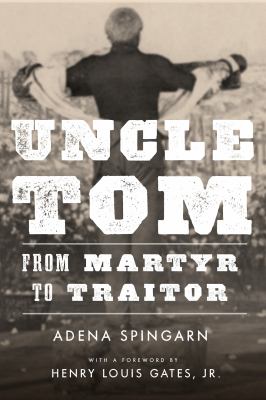 Spingarn's ambitious volume traces how "Uncle Tom," first seen as a revolutionary exemplar of black dignity and spiritual power, became a potent racial slur. Spingarn (Stanford) asserts that the myriad versions of Stowe's 1852 novel/character were the sites of foundational debates about slavery and African American identity/rights during the 19th and 20th centuries. Drawing on her extensive research in digitized archives of periodicals and adaptations of Uncle Tom's Cabin, Spingarn unfolds ambivalent responses to the Uncle Tom figure by both white and African Americans. Stagings of happy, singing slaves notwithstanding, these plays consistently conveyed both an antislavery message and Tom's spiritual dignity, both of which were anathema to Southern audiences, who feared that blacks would link the play's revolutionary implications to post-Reconstruction debt peonage, convict labor, and Jim Crow laws. By the early 20th century, race leaders such as Booker T. Washington, who had distanced themselves from the slave past and the prototypical "old Negro" Uncle Tom, were themselves characterized as "old Negroes" by a generation demanding less accommodating leadership. Deep into the 20th century, Uncle Tom's Cabin remained a "key text" in the Richard Wright/James Baldwin debate over replicating the "traumas of slavery and racism" in fiction.Summing Up: Essential. Upper-division undergraduates through faculty. |
| Virginia Woolf, The War Without, The War Within : Her Final Diaries & The Diaries She Read |
| | ISBN: 9780813056937 | Price: 84.95 | | |
| Volume: | Dewey: | Grade Min: | Publication Date: 2018-08-21 | |
| LCC: 2017-055317 | LCN: PR6045.O72 Z8118 201 | Grade Max: | Version: | |
| Contributor: Lounsberry, Barbara | Series: | Publisher: University Press of Florida | Extent: 416 | |
| Contributor: | Reviewer: Valerie Ann Murrenus Pilmaier | Affiliation: University of Wisconsin-Sheboygan | Issue Date: February 2019 | |
| Contributor: | | | | |
 Is there a clue to Woolf's suicide in her reading of others' diaries and in the writing of her own? Though this is not Lounsberry's only purview, this volume and the two others in her three-part set on Woolf's diaries certainly suggest that diaries may be the key to the most important identity decisions of Woolf's life--and death. In the first two volumes--respectively Becoming Virginia Woolf (CH, Dec'14, 52-1843) and Virginia Woolf's Modernist Path (CH, Jun'17, 54-4612)--Lounsberry (emer., Univ. of Northern Iowa) argued that reading and writing diaries enabled Woolf first to find her writing voice and then refine it to become a dominant force in modernism. This final volume details a woman at the height of her fame and literary genius reacting to personal and societal chaos by seeking solace via diaries (writing and reading) in a world gone mad, yet finding only varying stories of destruction. Between 1929 and 1941, Woolf read 19 diaries, ranging from the infamous (those of Tolstoy, Gide, Dorothy Wordsworth) to the inconsequential (James Woodforde, Ellen Wheeton, Francis Kilvert). Lounsberry uses these to demonstrate that as fascism flourished and dear friends died, diaries--as a lifeline and a path forward--became integral to both Woolf's doing and her undoing.Summing Up: Essential. Lower-division undergraduates through faculty; general readers. |
| When Fiction Feels Real : Representation And The Reading Mind |
| | ISBN: 9780190845476 | Price: 115.00 | | |
| Volume: | Dewey: 808.3 | Grade Min: | Publication Date: 2018-11-21 | |
| LCC: 2018-011608 | LCN: PN3352.P7A99 2018 | Grade Max: | Version: | |
| Contributor: Auyoung, Elaine | Series: | Publisher: Oxford University Press, Incorporated | Extent: 184 | |
| Contributor: | Reviewer: Lesley Goodman | Affiliation: Albright College | Issue Date: September 2019 | |
| Contributor: | | | | |
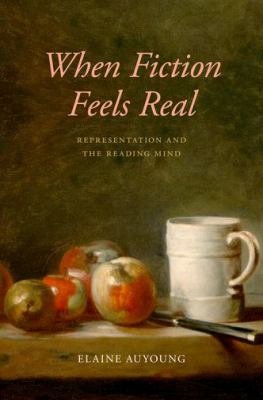 Taking seriously the idea that novels often "feel real" to readers, Auyoung (Univ. of Minnesota) joins formal analysis of the 19th-century realist tradition with insights from cognitive science and the psychology of reading. Nineteenth-century novelists like Tolstoy and Austen used a set of techniques that capitalized on ordinary aspects of cognition, such as embodied knowledge and social intelligence, in order to render nonexistent persons and events knowable. Auyoung argues that the feeling of vitality or vivacity that many readers have reported is not a result of naivete or confusion about the difference between fiction and reality. Rather, the discontinuities between reading fiction and firsthand sensory and social experience are part of the realist aesthetic, as authors like Dickens, Eliot, and Hardy emphasize the mediated nature of literary representation. The nonexistence of fictional persons and events renders them more deeply and intimately knowable than the real, leading to the particular enchantment and delights involved in reading realist fiction. When Fiction Feels Real is required reading for those interested in cognitive approaches to literature, theories of reading, realism, and the 19th-century novel.Summing Up: Essential. Upper-division undergraduates through faculty. |