| A Dark Inheritance : Blood, Race, And Sex In Colonial Jamaica |
| | ISBN: 9780300225556 | Price: 40.00 | | |
| Volume: | Dewey: 325.341097292 | Grade Min: | Publication Date: 2018-08-28 | |
| LCC: 2017-964207 | LCN: F1896.A1N49 2018 | Grade Max: | Version: | |
| Contributor: Newman, Brooke N. | Series: | Publisher: Yale University Press | Extent: 352 | |
| Contributor: | Reviewer: Frederick H. Smith | Affiliation: North Carolina A & T State University | Issue Date: January 2019 | |
| Contributor: | | | | |
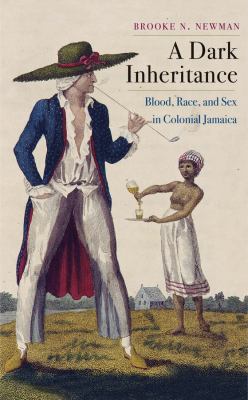 Social constructs of race shaped the hereditary privileges of colonial subjects in the early British Atlantic world. This insightful book challenges the understanding of racial classifications and the birthrights of imperial subjects in the slave societies of the British Caribbean, especially Jamaica. Newman (Virginia Commonwealth) explores racialized concepts of blood lineage and genealogical structures of whiteness to highlight the challenges free people of mixed African and European ancestry faced in early colonial Jamaica. Although mixed ancestry elevated the standing of some in the social and sexual arenas of Jamaica, colonial rule, rooted in fictitious notions of blood purity, denied them the hereditary rights and liberties of British subjects. Newman explores the historical antecedents and localized nuances of racial classification in Jamaica and highlights the efforts of marginalized free people of color to achieve the hereditary rights of British subjects. This book draws on numerous documentary sources and includes a provocative chapter on the sexualized depictions of enslaved Caribbean women in British comedic illustrations to understand metropolitan fears of imperial debauchery and threats to blood purity. A must-read for all scholars of Caribbean studies, race, and the African diaspora.Summing Up: Essential. Upper-division undergraduates through faculty. |
| Making An Urban Public : Popular Claims To The City In Mexico, 1879-1932 |
| | ISBN: 9780822945505 | Price: 60.00 | | |
| Volume: | Dewey: 972/.37 | Grade Min: | Publication Date: 2019-05-14 | |
| LCC: 2019-287097 | LCN: F1391.M8J55 2019 | Grade Max: | Version: | |
| Contributor: Jimnez, Christina M. | Series: Pitt Latin American Ser. | Publisher: University of Pittsburgh Press | Extent: 416 | |
| Contributor: | Reviewer: Melvin Duane Davis | Affiliation: Coastal Carolina University | Issue Date: October 2019 | |
| Contributor: | | | | |
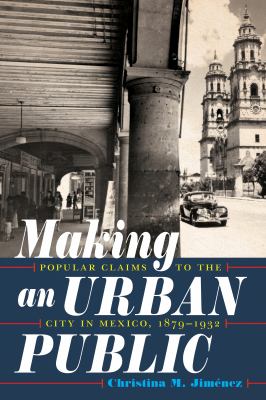 Jimenez illuminates the development of the urban experience during turn of the century Mexico. Her work focuses on events in Morelia, the capital of the State of Michoacan. As the country moved to modernization in the years leading up to the Mexican Revolution, its citizens, especially those in larger urban areas, created paths of advocacy for the trappings of modern society such as public works and other such elements of 19th-century liberalism. Jimenez uncovers the stories of activism through petitions and other primary documents to illustrate the level of public interests. This resulted in an emerging urban citizenry actively involved in the progressive growth of Morelia. As in other larger Mexican cities, public works such as plazas, parks, and paved streets eventually became part of Mexico's national identity. The author's strong research, solid historiographical perspective, and concise narrative contributes to the understanding of the development of urban history in Latin America and provides new ways of looking at citizen involvement in pre-Revolutionary Mexico. Overall a required work for scholars and students of 19th-century Mexico and Latin America.Summing Up: Essential. Upper-division undergraduates through faculty. |
| Making Machu Picchu : The Politics Of Tourism In Twentieth-century Peru |
| | ISBN: 9781469643526 | Price: 99.00 | | |
| Volume: | Dewey: | Grade Min: | Publication Date: 2018-10-08 | |
| LCC: 2018-013222 | LCN: F3429.1.M3R524 2018 | Grade Max: | Version: | |
| Contributor: Rice, Mark | Series: | Publisher: University of North Carolina Press | Extent: 252 | |
| Contributor: | Reviewer: Erin E. O'Connor | Affiliation: Bridgewater State University | Issue Date: October 2019 | |
| Contributor: | | | | |
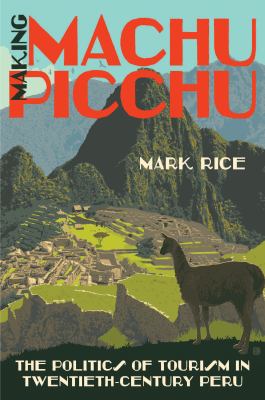 Rice (Baruch College, CUNY) explores historical processes through which Machu Picchu became a renowned tourist destination and a symbol of Peruvian national identity. Machu Picchu's prominence was not inevitable, nor was Hiram Bingham (who brought Machu Picchu to world attention in 1911) key to its promotion. Rice provides a chronological treatment of Machu Picchu's 20th-century "discovery" and rise to prominence. He recounts how in the 1930s Cusco elites joined forces with other international actors to advance tourism in the region; their goal was to develop the local economy and dispel racist stereotypes about the region's backwardness. The 1934 quadricentennial celebration of the Spanish foundation of Cusco provided a key moment to create a narrative in which the Cusco region was central to national culture, and the US's Good Neighbor Policy bolstered tourism to the Inca site. Subsequent natural disasters, economic crises, and civil war threatened the tourism industry, but Cusco elites found creative ways to reimagine and expand tourism. Machu Picchu's fame, however, rested on an idealized view of the Inca past that obfuscated exploitation of indigenous peoples in the 20th century, and tourism's benefits rarely went to those most in need. This engaging book offers sophisticated insights into how local and international forces influenced tourism and nation-state formation in Peru.Summing Up: Essential. Upper-division undergraduates through faculty; general readers. |
| The Cuba Reader : History, Culture, Politics |
| | ISBN: 9781478003649 | Price: 134.95 | | |
| Volume: | Dewey: 972.91 | Grade Min: | Publication Date: 2019-05-17 | |
| LCC: 2018-041251 | LCN: F1776.C85 2019 | Grade Max: | Version: | |
| Contributor: Chomsky, Aviva | Series: Latin America Readers Ser. | Publisher: Duke University Press | Extent: 744 | |
| Contributor: Carr, Barry | Reviewer: Lisa K. Miller | Affiliation: formerly, Western Kentucky University Libraries | Issue Date: December 2019 | |
| Contributor: Prieto, Alfredo | | | | |
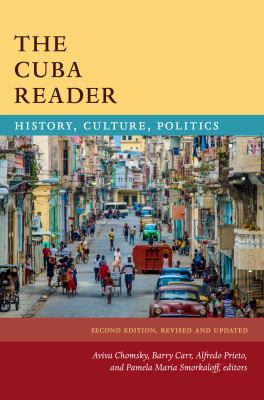 In its second edition, this volume from Duke University Press's "The Latin America Readers" series features offerings from a broad range of contributors, including poets, essayists, historians, cartoonists, artists, photographers, and academics. Sharing "a commitment to social justice," they have sought to produce a reader that offers a balanced view of Cuba's complex past and uncertain future. Chronologically arranged, the book's first four parts cover the pre-1959 era, dating back to the conquest, with some attention to the 1959 revolution, though that is not the main focus. The text is structured around three main themes: history, culture, and politics, with topics touching on the enduring legacies of slavery and colonialism, globalization and economics, and revolutionary action in different forms, among other topics that aim to illuminate the social changes at play in Cuba. This is a balanced, far-ranging, equitable, and insightful book, and the suggestions for further reading list and comprehensive index add to its usability. Altogether an essential addition to any Latin American studies collection.Summing Up: Highly recommended. Lower-division undergraduates through faculty. |