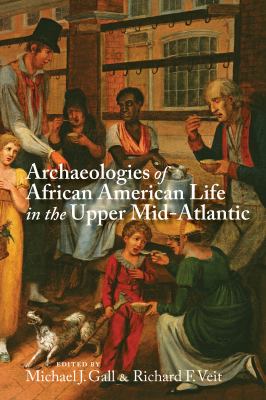
| Archaeologies Of African American Life In The Upper Mid-atlantic |
| | ISBN: 9780817319656 | Price: 69.95 | | |
| Volume: | Dewey: 973.0496073 | Grade Min: | Publication Date: 2017-09-30 | |
| LCC: 2017-004052 | LCN: E185.9.A73 2017 | Grade Max: | Version: | |
| Contributor: Gall, Michael J. | Series: | Publisher: University of Alabama Press | Extent: 288 | |
| Contributor: Veit, Richard F. | Reviewer: Kelly Christine McCallister | Affiliation: Appalachian State University | Issue Date: May 2018 | |
| Contributor: Barton, Christopher | | | | |
Editor's Gall (RGA, Inc.) and Veit (Monmouth Univ.) offer a fascinating historical spectrum of regionally specific sites within African American archaeology. The collected works go above and beyond the initial goal of simply "call[ing] attention to the historical contexts in which enslaved and free blacks lived, the obstacles they faced in daily life, and the ongoing power struggles within white dominated or controlled communities." Despite its regionally specific analysis of the "borderland" area between New York City and Philadelphia, the included works reveal the unwritten story of the religious, social, and cultural lives of both free and enslaved African Americans over time through artifacts left behind. Analysis of sites from slave quarters to cemeteries to free communities show the eventful and poignant transition from slavery to freedom. A terrific addition to the study of African American archaeology.Summing Up: Highly recommended. All levels/libraries. |
| Living Politics In South Africa's Urban Shacklands |
| | ISBN: 9780226519524 | Price: 99.00 | | |
| Volume: | Dewey: | Grade Min: | Publication Date: 2018-06-05 | |
| LCC: 2017-039629 | LCN: HV4162.A5C43 2018 | Grade Max: | Version: | |
| Contributor: Chance, Kerry Ryan | Series: | Publisher: University of Chicago Press | Extent: 224 | |
| Contributor: | Reviewer: Robert I. Rotberg | Affiliation: Harvard University | Issue Date: November 2018 | |
| Contributor: | | | | |
 When Cyril Ramaphosa succeeded the corrupt Jacob Zuma as South Africa's president in early 2017, he inherited many formidable political, economic, and social problems, not least the marginalized living conditions and human prospects of its myriad slum dwellers--the residents of what Chance (geography and anthropology, Louisiana State Univ.) smartly calls South Africa's urban "shacklands." Nelson Mandela's modern state, as Chance writes in the introduction, is one of incomplete liberation and new forms of citizenship and identity "congealed at the intersections of race, gender, and poverty." This important, well-executed book is about the poor, the mostly disenfranchised, and the least well-off urbanites in a country disabled by low economic and job growth, limited educational opportunities, and frequent attacks by the state and its agents on the arrangements that slum dwellers concoct for themselves. Chance's discussion of "living politics" in these communities, of protest movements and other attempts to organize against authority, is much needed, especially as a great deal of published research about Africa and South Africa is about institutions and politics at the level of the state; too few researchers have managed effectively to capture, as Chance has done, the pursuits and existential being of those millions who live on the urban fringe.Summing Up: Essential. Upper-division undergraduates through faculty. |
| Modern Humans : Their African Origin And Global Dispersal |
| | ISBN: 9780231160766 | Price: 105.00 | | |
| Volume: | Dewey: | Grade Min: 17 | Publication Date: 2017-10-31 | |
| LCC: 2016-058573 | LCN: GN281.H625 2017 | Grade Max: | Version: | |
| Contributor: Hoffecker, John | Series: | Publisher: Columbia University Press | Extent: 520 | |
| Contributor: | Reviewer: Michael J. O'Brien | Affiliation: Texas A&M University-San Antonio | Issue Date: May 2018 | |
| Contributor: | | | | |
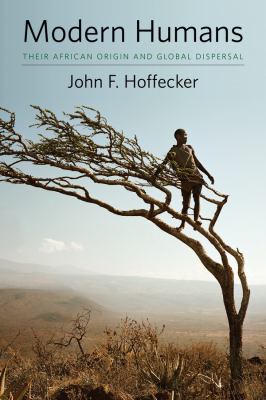 Every so often, a book comes along that makes the reader a little jealous that somebody out there has all that knowledge and can present it so effortlessly. This reviewer pleads guilty after reading Hoffecker's book on the origin and dispersal out of Africa of anatomically modern humans some 200,000 years ago. Paleoanthropology is a field that changes on seemingly a weekly basis, what with new archaeological finds, increasing precision in dating techniques, and new ways of extracting ancient DNA, and even for experts it is maddening to try to keep abreast of new developments. Hoffecker (Univ. of Colorado, Boulder) has come to the rescue, compiling a wealth of information about human ancestors and their contemporaries, such as the Neanderthals. He would be the first to tell readers that some of the information in the book was outdated the second he wrote it, but that is the way a fast-paced science operates. Every so often, a benchmark volume is needed to slow things down a bit and walk readers through the evidence, reminding them of what it all means. This is just such a volume, and, happily, Hoffecker's writing style makes the evidence come alive for almost all levels of readers, from the lay public to seasoned professionals.Summing Up: Essential. All levels/libraries. |
| Saamaka Dreaming |
| | ISBN: 9780822369660 | Price: 139.95 | | |
| Volume: | Dewey: 988.33 | Grade Min: | Publication Date: 2017-08-04 | |
| LCC: 2016-059668 | LCN: F2431.S27P753 2017 | Grade Max: | Version: | |
| Contributor: Price, Richard | Series: | Publisher: Duke University Press | Extent: 277 | |
| Contributor: Price, Sally | Reviewer: Phyllis Passariello | Affiliation: Centre College | Issue Date: April 2018 | |
| Contributor: | | | | |
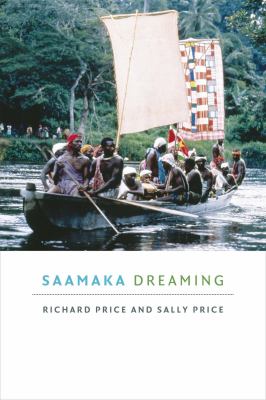 Career anthropologists both (emer., College of William and Mary), the Prices have written a compelling narrative on their early times "in the field" during the 1960s among the Samaaka Maroons of Surinam--people descended from self-liberated slaves known colloquially as "Bush Negroes." The vividness and surprising relevance of their reflections on the history of anthropology demonstrate how the Prices experienced life "most viscerally" when in the field. In the 1960s the Samaaka were seen as a bastardized, "non-primitive" culture and therefore less desirable as a locus of anthropological research, requiring the Prices to fight to practice ethnography among them. The Prices' ethnographic work is both solidly traditional and groundbreakingly personal in its impact on the reader. The thoroughness of their detailed descriptions and immersion, particularly in Samaaka ritual life, are often startling in their depth and originality, especially Sally's hard-won acceptance into Samaakan female life--her personal adaptation to the daily "dress code" of bare-chestedness and to the monthly rigors of required menstrual seclusion. With a sharp cross-cultural view, the Prices wryly note how the Samaakans understood anthropology as "they just keep looking at paper...." Beautifully written, this book presents a satisfying commentary on the anthropological enterprise, to be enjoyed by a wide variety of readers.Summing Up: Essential. All public and academic levels/libraries. |