| Adam Smith : Systematic Philosopher And Public Thinker |
| | ISBN: 9780190690120 | Price: 130.00 | | |
| Volume: | Dewey: 192 | Grade Min: | Publication Date: 2017-10-06 | |
| LCC: 2016-059217 | LCN: B1545.Z7S35 2017 | Grade Max: | Version: | |
| Contributor: Schliesser, Eric | Series: | Publisher: Oxford University Press, Incorporated | Extent: 424 | |
| Contributor: | Reviewer: James H. Spence | Affiliation: Adrian College | Issue Date: July 2018 | |
| Contributor: | | | | |
 This is an ambitious project. Described by Schliesser (political theory, Univ. of Amsterdam, Netherlands) in the introduction as a "sympathetic exposition of Smith's views," the book explores connections among wide-ranging aspects of Smith's thought and, to a lesser extent, his life. Schliesser divides the book into three sections: "Propensities and Passions," i.e., Smith's account of human nature and how it provides a foundation for morality; "Society," Smith's views on philosophy of science and social sciences; and "Philosophers" (a significantly briefer section), religion and Smith's relationship with Hume. Schliesser maintains that Smith was a public thinker--insofar as he wrote primarily for the public--and a much more systematic philosopher than previously recognized, one interested in providing a comprehensive, coherent account of the social sciences. Among Schliesser's interesting conclusions: Smith believed that social institutions should be evaluated according to their impact on the working poor, and his views on taxation reveal a progressive bias. This book is required reading for anyone hoping to understand Smith's thought.Summing Up: Highly recommended. Upper-division undergraduates through faculty. |
| Bergson : Thinking Beyond The Human Condition |
| | ISBN: 9781350043947 | Price: 120.00 | | |
| Volume: | Dewey: | Grade Min: | Publication Date: 2018-02-22 | |
| LCC: 2017-042660 | LCN: B2430.B43 | Grade Max: | Version: | |
| Contributor: Ansell Pearson, Keith | Series: | Publisher: Bloomsbury Publishing Plc | Extent: 208 | |
| Contributor: | Reviewer: Mark William Westmoreland | Affiliation: Villanova University | Issue Date: October 2018 | |
| Contributor: | | | | |
 Ansell-Pearson (Univ. of Warwick, UK) has written the best introduction to Henri Bergson (1859-1941) now on the market. An eminent early-20th-century philosopher, Bergson contributed to the League of Nations, where--as the first chair of the International Commission on Intellectual Cooperation (the forerunner of UNESCO)--he highlighted the need for international intellectual collaboration. Ansell-Pearson touches on most of Bergson's major works and clearly articulates the most crucial Bergsonian concepts. Interest in Bergson is suddenly on the rise, and this volume, which is both spirited and rigorous, will more than meet the needs of newcomers to Bergson's corpus. But the book is much more than an introduction. It will offer clarity and support to those already immersed in Bergsonian philosophy. In sum, this book demonstrates that Bergson readily addresses 21st-century questions about the human condition. Readers of all stripes will appreciate this volume because it speaks to concerns about freedom and self; time and memory; politics, ethics, and religion; the nature of science and philosophy; and, ultimately, how to live well.Summing Up: Essential. Lower-division undergraduates through faculty; general readers. |
| Essays On The Foundations Of Ethics |
| | ISBN: 9781438464930 | Price: 99.00 | | |
| Volume: | Dewey: | Grade Min: | Publication Date: 2017-08-01 | |
| LCC: 2016-031426 | LCN: B945.L451L36 2017 | Grade Max: | Version: | |
| Contributor: Lewis, C. I. | Series: | Publisher: State University of New York Press | Extent: 266 | |
| Contributor: | Reviewer: John R. Shook | Affiliation: University of Buffalo | Issue Date: January 2018 | |
| Contributor: | | | | |
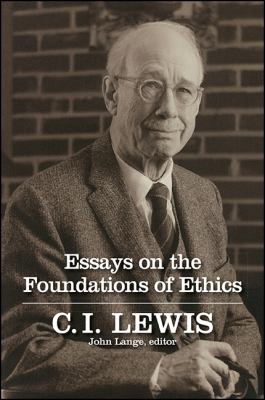 Harvard philosopher Clarence Lewis (1883-1964) is remembered more for his pragmatist theory of knowledge and its powerful influence on analytic philosophy than for his explorations into value theory and moral philosophy. Fifty years after his death, Lewis's last book on those topics now appears. The editorial care of Lange (Queens College, CUNY), who picked through and assembled unfinished drafts, has resulted in a coherent and readable text. The essays cover vital questions that still animate ethical theory. "The Good and Bad in Experience" locates something's value in its effect on conscious life; "Semantics of the Imperative" argues that valid imperatives presume some relevant context of fact for their reasons; "Ethics and the Logical" explores how the rightness or wrongness of one's beliefs depends only on available evidence and that non-cognitivism and apriorism in ethics are unfounded; "Deliberate Acts" argues against subjectivism in ethics; "Right Acts and Good Acts" grounds the right in the good, thereby elevating naturalism over perfectionism in ethics. The other essays examine questions about moral objectivity and consistency. This volume will be invaluable for those interested in value theory and ethics.Summing Up: Essential. Lower-division undergraduates through faculty. |
| Expectation : Philosophy, Literature |
| | ISBN: 9780823277599 | Price: 138.00 | | |
| Volume: | Dewey: | Grade Min: | Publication Date: 2017-10-03 | |
| LCC: | LCN: | Grade Max: | Version: | |
| Contributor: Nancy, Jean-Luc | Series: | Publisher: Fordham University Press | Extent: 296 | |
| Contributor: Bononno, Robert | Reviewer: Ned Lukacher | Affiliation: emeritus, University of Illinois at Chicago | Issue Date: April 2018 | |
| Contributor: Rabat, Jean-Michel | | | | |
 "Blind oblivion laden with theory," wrote Nancy in 1979, describing his effort to use poetic language to come into "the proximity of the absolutely distant" and to make sense of that which lies beyond sense. First published in French in 2015, this complex, relentlessly engaging series of two dozen essays, interviews, and poems garnered from the past three decades (most translated here into English for the first time) stages in myriad ways the crossings and impasses of literature and philosophy. "Reason demands poetry" is Nancy's leitmotif throughout his exigent readings of Friedrich Schlegel, Friedrich Holderlin, Antonin Artaud, the future of tragedy, the senses of narrative, and the "irreversibly atheological" writing of Maurice Blanchot. Nancy's perennial concern is with chronicling the inventive interruptions of "sense" (as both meaning and as the echo of sensory experience) in a world bereft of the solace of "absolute sense." Nancy's rewritings of Paul Valery's Mon Faust and La Jeune Parque are remarkable. Expectation is a major work comparable to such recent critical landmarks as George Steiner's The Poetry of Thought (2011) and J. Hillis Miller's On Literature (2002). Among Nancy's many distinguished writings, Expectation demands recognition.Summing Up: Essential. Upper-division undergraduates through faculty. |
| Experiencing William James : Belief In A Pluralistic World |
| | ISBN: 9780813940472 | Price: 75.00 | | |
| Volume: | Dewey: | Grade Min: 17 | Publication Date: 2017-11-17 | |
| LCC: 2017-022071 | LCN: B945.J24C28 2017 | Grade Max: | Version: | |
| Contributor: Campbell, James T. | Series: | Publisher: University of Virginia Press | Extent: 398 | |
| Contributor: | Reviewer: Roger Ward | Affiliation: Georgetown College | Issue Date: July 2018 | |
| Contributor: | | | | |
 In this one book Campbell (Univ. of Toledo) provides a comprehensive, concise, and balanced treatment of the full breadth of James's writings. He avoids hagiography while providing charitable evaluation of James's philosophy as more a matter of "passionate vision than logic," as he writes in chapter 2, "Psychology and Philosophy." Following this are chapters on rationality and belief, pragmatism, radical empiricism and pluralism, ethics and social thought, and religion, and in these Campbell examines key texts and the dualisms of James's reflections: materialism/theism, free/determined, recording/contributing, and monism/pluralism (the last James considered the "most central of all philosophical problems"). Campbell sees James on truth as a problem of overemphasis on "saving" the particular individual, and Campbell elevates James's criticism of the "conceptual primacy" of philosophy that ignores lived experience and openness. Evil is that which one should work to reduce in the world rather than theorize about, but Campbell considers James's response as a social reformer inadequate in light of war and lynchings. The "more" of religion, for James, is the sense of reality and perception that can "make us whole." In this reviewer's opinion, this is the best available resource on the work of William James.Summing Up: Essential. Lower-division undergraduates through faculty; general readers. |
| Explaining Knowledge : New Essays On The Gettier Problem |
| | ISBN: 9780198724551 | Price: 150.00 | | |
| Volume: | Dewey: 121 | Grade Min: | Publication Date: 2018-01-30 | |
| LCC: 2017-942398 | LCN: BD161 | Grade Max: | Version: | |
| Contributor: Borges, Rodrigo | Series: | Publisher: Oxford University Press, Incorporated | Extent: 400 | |
| Contributor: De Almeida, Claudio | Reviewer: James McBain | Affiliation: Pittsburg State University | Issue Date: August 2018 | |
| Contributor: Klein, Peter D. | | | | |
 Edmund Gettier's 1963 paper "Is Justified True Belief Knowledge?" (published in the journal Analysis) and what became known as the Gettier problem are studied by everyone working in or taking a course on epistemology. Perhaps no other three pages (the essay runs to fewer than 1,000 words) have done more to change an area of philosophy. The resulting literature on whether justified true belief is an adequate analysis of knowledge completely overhauled epistemological theories and methodologies to account for the Gettier problem. What makes this book special is the originality of the essays--which are by those at the forefront of epistemology--all of which advance knowledge and show how the Gettier problem is still relevant. The 23 essays are divided into five parts: "Solving the Gettier Problem," "The Gettier Legacy," "Gettier and Philosophical Methodology," "Gettier and Inferential Knowledge," and "Dissolving the Gettier Problem." Opening with an 11-page introduction and a facsimile of the original Gettier paper, this book will become a staple for coursework and a must for those interested in epistemology.Summing Up: Essential. Upper-division undergraduates through faculty. |
| Forms, Souls, And Embryos : Neoplatonists On Human Reproduction |
| | ISBN: 9781138955271 | Price: 165.00 | | |
| Volume: | Dewey: | Grade Min: | Publication Date: 2016-07-19 | |
| LCC: 2015-046525 | LCN: QL953.W55 2016 | Grade Max: | Version: | |
| Contributor: Wilberding, James | Series: Issues in Ancient Philosophy Ser. | Publisher: Routledge | Extent: 232 | |
| Contributor: | Reviewer: Aaron P. Johnson | Affiliation: Lee University | Issue Date: February 2018 | |
| Contributor: | | | | |
 This superb book on a relatively untouched area of ancient philosophical thought delineates the Neoplatonists' "core theory" of embryology: that a single male seed required the mother's activation of an assemblage of form-principles to bring the embryo into actualization (contrary to ancient theories that denied the female any role)--with some effects from external sources--but the soul did not arrive until the moment of birth. In the two preliminary chapters, Wilberding (ancient and medieval philosophy, Ruhr Univ., Germany) provides a lucid account of Plato's contribution to ancient embryology and the Platonic metaphysical framework that would shape the later reception of that embryology. Next, two central chapters focus on various Neoplatonic formulations of the core theory (with an appendix on late antique exceptions to the core theory) and articulations of the timing of both the irrational and rational soul's attachment to the embryo--all with special attention to Porphyry of Tyre. A fascinating chapter on Neoplatonist explanations of "monstrous births" (teratogenesis) and disabilities fills out Wilberding's discussion. The only book of its kind in English, this volume will be required reading for students and scholars of ancient philosophy and history of biology.Summing Up: Highly recommended. Upper-division undergraduates through faculty; general readers. |
| Pain, Pleasure, And The Greater Good : From The Panopticon To The Skinner Box And Beyond |
| | ISBN: 9780226501857 | Price: 32.00 | | |
| Volume: | Dewey: | Grade Min: | Publication Date: 2017-10-19 | |
| LCC: 2017-009044 | LCN: B843.G46 2017 | Grade Max: | Version: | |
| Contributor: Gere, Cathy | Series: | Publisher: University of Chicago Press | Extent: 304 | |
| Contributor: | Reviewer: Paul A. Streveler | Affiliation: emeritus, West Chester University of Pennsylvania | Issue Date: June 2018 | |
| Contributor: | | | | |
 This engaging, well-written book covers roughly the same material as Bart Schultz's The Happiness Philosophers: The Lives and Works of the Great Utilitarians(CH, Nov'17, 55-0990), namely, the philosophers and philosophies of 19th-century utilitarianism. The two books, however, could not be more different. Whereas Schultz presents a relatively positive account, Gere's history of utilitarianism is relentlessly critical, as she illustrates how utilitarianism's conception of the "moral good," i.e., the "end justifies the means," became the source of scientific, psychological, medical, and social experimentation on human subjects for almost two centuries, all with the goal of the "greatest happiness to the greatest number" at the expense of respect for human autonomy. Gere (history, Univ. of California, San Diego) makes her case most convincingly with numerous examples from the time of Jeremy Bentham through Skinnerian behaviorism, to the neurological stimulation experiments of Robert Heath and the Tuskegee Study and beyond. Although she does not dismiss the appeal of utilitarian consequentialism, she is forceful in suggesting that there is a "good" beyond the measures of pain and pleasure, namely, respect for the autonomy of the individual human being.Summing Up: Essential. All readers. |
| Physics Avoidance : Essays In Conceptual Strategy |
| | ISBN: 9780198803478 | Price: 130.00 | | |
| Volume: | Dewey: 501 | Grade Min: | Publication Date: 2018-02-03 | |
| LCC: 2017-942155 | LCN: Q175 | Grade Max: | Version: | |
| Contributor: Wilson, Mark | Series: | Publisher: Oxford University Press, Incorporated | Extent: 448 | |
| Contributor: | Reviewer: Lee C. Archie | Affiliation: emeritus, Lander University | Issue Date: August 2018 | |
| Contributor: | | | | |
 Writing with the same dazzling originality and captivating prose he did in Wandering Significance: An Essay on Conceptual Behavior (CH, Feb'07, 44-3238), distinguished philosopher Mark Wilson here extends his primary research interest in the conceptual confusions present in some scientific endeavors. Physics Avoidance comprises a series of self-contained, interrelated papers, knitted together and describing strategies (on occasion, even kludges) for circumventing theoretical difficulties in scientific practice. The simplification and effective implementation of these conceptual strategies will enable researchers to reduce computational complexity by shifting a given study of nature to a different scale of investigation in what Wilson terms a "strategy of physics avoidance." Even so, the success of these multi-scalar modeling stratagems depends on their conformation with the architecture of nature. Surprisingly, the practical but ingenious evasive techniques illustrated throughout Wilson's book are not conventionally studied in philosophy of science. The plentiful, ingenious, and varied examples, ranging from film criticism to mathematical physics, permit anyone interested in the philosophy of science to grasp the thread of these essays.Summing Up: Essential. Lower-division undergraduates through faculty and professionals. |
| Post-truth |
| | ISBN: 9780262535045 | Price: 16.95 | | |
| Volume: | Dewey: | Grade Min: | Publication Date: 2018-02-16 | |
| LCC: 2017-034497 | LCN: BD171.M39 2018 | Grade Max: | Version: | |
| Contributor: Mcintyre, Lee | Series: MIT Press Essential Knowledge Ser. | Publisher: MIT Press | Extent: 236 | |
| Contributor: | Reviewer: Bernard G. Murchland | Affiliation: emeritus, Ohio Wesleyan University | Issue Date: October 2018 | |
| Contributor: | | | | |
 McIntyre (Center for Philosophy and History of Science, Boston Univ; ethics, Harvard Extension School) addresses three questions about "post-truth": What is it? What is its genesis? What can one do about it? To the first he answers, in chapter 1, "post-truth is a form of ideological supremacy, whereby its practitioners are trying to compel someone to believe in something whether there is good evidence for it or not." A form of virulent propaganda, post-truth manipulates evidence, misconstrues facts, and confuses the distinction between facts and reality by appealing to emotions and prejudices. In addressing the genesis of post-truth, McIntrye makes a good point when he says it is nothing new. In chapter 5 he writes that throughout history governments abetted by religion have always been able "to get the 'little people' to think what they wanted." The author cites psychological evidence for "cognitive biases" that run deep in evolutionary history and are exacerbated by the proliferation of social media and the influence of postmodernism, which holds that there is no right answer to any question, only conflicting narratives. What can one do about this? McIntrye does not have any good answer. No one does. We are caught in a cultural muddle with no clear way to break free.Summing Up: Essential. All readers. |
| The Omnibus Homo Sacer |
| | ISBN: 9781503603059 | Price: 105.00 | | |
| Volume: | Dewey: | Grade Min: | Publication Date: 2017-08-15 | |
| LCC: 2017-028136 | LCN: B3611.A42E5 2017 | Grade Max: | Version: | |
| Contributor: Agamben, Giorgio | Series: Meridian: Crossing Aesthetics Ser. | Publisher: Stanford University Press | Extent: 1336 | |
| Contributor: | Reviewer: Steve A. Young | Affiliation: McHenry County College | Issue Date: June 2018 | |
| Contributor: | | | | |
 Starting with Homo Sacer and concluding with The Use of Bodies, Italian philosopher Giorgio Agamben (b. 1942) wrote the nine books gathered in this volume over two decades. Taken together they constitute a historically rich political philosophy for the present moment. Agamben traces political sovereignty to the exceptional sacred/cursed person in Roman law, a person who could be neither sacrificed nor murdered. This homo sacer is the model for any state of exception to the force of law. Agamben's deeply informed and wide-ranging biopolitical analyses of key concepts--duty, bare life, violence, oath, glory, and so on--astutely and persuasively weave political philosophy with medieval theology, aesthetics, and monastic forms of life, creating an epic opus. Reading Agamben is insightful and rewarding at every turn; he writes with a clarity uncommon in Continental thought. And the stakes are high for the issues he raises: from Guantanamo to the micro-details in people's Internet identity profiles, the present moment requires that one attend to the watchful warning that is the political philosophy of Agamben. OCR errors in the earlier works mar the text, but the inclusion of a comprehensive index makes the omnibus valuable even to those who have the individual volumes.Summing Up: Essential. Upper-division undergraduates through faculty; general readers. |
| The Palgrave Kant Handbook |
| | ISBN: 9781137546555 | Price: 379.99 | | |
| Volume: | Dewey: 193 | Grade Min: | Publication Date: 2018-01-23 | |
| LCC: 2017-947736 | LCN: B1-5802 | Grade Max: | Version: | |
| Contributor: Altman, Matthew C. | Series: Palgrave Handbooks in German Idealism Ser. | Publisher: Palgrave Macmillan Limited | Extent: xliv, 851 | |
| Contributor: | Reviewer: John G. Moore | Affiliation: Lander University | Issue Date: August 2018 | |
| Contributor: | | | | |
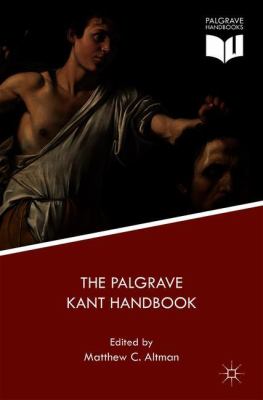 A new generation of Kant scholars is on the rise, and this beautifully printed and consummately edited scholarly collection announces their ascendancy with distinctive fanfare. Hardly a "handbook," this hefty volume comes in at a surprisingly generous 851 pages yet delivers an eminently useful compendium of synoptic overviews and cutting-edge scholarship. The essays are extremely readable, impeccably annotated, and abundantly resourceful, so they will be useful both for novice readers finding their way through Kant's notoriously difficult thicket of concepts and for established scholars seeking reference points sure to spark renewed debate. In addition to Paul Guyer and Allen Wood--the twin marble lions staring down from their honorific position at the head of North American Kant studies--Altman (Central Washington Univ.) offers an exciting and impressive selection of new voices, showcasing diverse perspectives in the current rediscovery of Kant. Is a message being sent in the curious choice of cover art? Caravaggio's riveting depiction, in blood-red tones, of the biblical David bearing aloft the severed head of Goliath is striking. For established Kant scholars, the meaning is clear: warning is hereby served. Researchers in particular will find this book a critical touchstone.Summing Up: Essential. Lower-division undergraduates and above. |
| True Enough |
| | ISBN: 9780262036535 | Price: 35.00 | | |
| Volume: | Dewey: 121.6 | Grade Min: | Publication Date: 2017-09-29 | |
| LCC: 2016-057890 | LCN: BD161.E445 2017 | Grade Max: | Version: | |
| Contributor: Elgin, Catherine Z. | Series: | Publisher: MIT Press | Extent: 352 | |
| Contributor: | Reviewer: David B. Boersema | Affiliation: emeritus, Pacific University | Issue Date: September 2018 | |
| Contributor: | | | | |
 This book is a careful, thoughtful proposal of a sweeping reconsideration of the content, methods, and goals of epistemology. Elgin (Harvard Graduate School of Education) draws on her previous works, especially Considered Judgment (Princeton University Press, 1996) and more recent essays, but goes beyond them to explicate a reorienting from truth to understanding as the fundamental value of epistemology. Truth, she argues, is a knowledge of individual facts, but it is only one epistemic value among a constellation of values. Understanding, the capacity and ability to engage successfully in the world, necessarily involves a broad, more encompassing range of phenomena. Detailing the actual practices of good science, including aspects of experimentation, model construction, and testing; idealizations in both exploratory and explanatory contexts; fecund accounts of objectivity; and inherent social and moral values in good science, Elgin presents a strong case for acknowledging and embracing understanding as the core of epistemic concerns. Along the way, she demonstrates close, fruitful analogies to and connections between the sciences and the arts; both can and do promote genuine understanding. This provocative, substantive book deserves a wide reading. Highly recommended.Summing Up: Highly recommended. Graduate students, faculty, and professionals. |
| Understanding Ignorance : The Surprising Impact Of What We Don't Know |
| | ISBN: 9780262036443 | Price: 27.95 | | |
| Volume: | Dewey: 153.4 | Grade Min: | Publication Date: 2017-08-18 | |
| LCC: 2016-053943 | LCN: BD221.D46 2017 | Grade Max: | Version: | |
| Contributor: Denicola, Daniel R. | Series: | Publisher: MIT Press | Extent: 264 | |
| Contributor: | Reviewer: Scott E. Forschler | Affiliation: independent scholar | Issue Date: February 2018 | |
| Contributor: | | | | |
To philosophers used to unending analyses of knowledge as the core topic of epistemology, DeNicola's Understanding Ignorance will come as a breath of fresh air. It is a lively, wide-ranging, yet systematic study of the interrelationships between knowledge and ignorance and the agents involved with both. DeNicola (Gettysburg College) shows that ignorance consists of more than an absence of knowledge, that there are many different kinds of ignorance, that it affects societies as well as individuals, and that its management comes in myriad forms beyond merely overcoming it through new knowledge. The coverage is masterly; no single subtopic dominates the book, yet none seems underdeveloped or out of place. Detailed footnotes, index, and bibliography will please scholars, but nonspecialists--including nonphilosophers--will also find the work of interest.Summing Up: Highly recommended. Lower-division undergraduates through faculty; general readers. |
| What A Philosopher Is : Becoming Nietzsche |
| | ISBN: 9780226488110 | Price: 59.00 | | |
| Volume: | Dewey: 193 | Grade Min: | Publication Date: 2018-01-19 | |
| LCC: 2017-031739 | LCN: B3317.L256 2017 | Grade Max: | Version: | |
| Contributor: Lampert, Laurence | Series: | Publisher: University of Chicago Press | Extent: 352 | |
| Contributor: | Reviewer: Mark Blitz | Affiliation: Claremont McKenna College | Issue Date: December 2018 | |
| Contributor: | | | | |
 In What a Philosopher Is, Lampert (emer., Indiana Univ.-Purdue Univ., Indianapolis) discusses at length Friedrich Nietzsche's The Birth of Tragedy; Arthur Schopenhauer as educator; Richard Wagner in Bayreuth; Nietzsche's Human, All too Human; "Sanctus Januarius," the fourth book of The Gay Science; and the forewords Nietzsche wrote to his works in 1886. Several of Lampert's analyses are as extensive and thoughtful as one will find in the academic literature. Lampert's scholarship is broad, and he makes good use of Nietzsche's workbooks. He does not depart from the view that Thus Spake Zarathustra and Beyond Good and Evil are central among Nietzsche's mature writings, but he does deepen knowledge of all of Nietzsche's work by displaying its foundation in his developing understanding and exemplification of the activity of the philosopher and the artist. Philosophers seek to know but also to create or legislate: will to power is Nietzsche's great discovery about the being of beings; eternal return is his great poetic affirmation. Whether readers agree with the details or even the basic direction of Lampert's interpretation, none will want to ignore this impressive book.Summing Up: Highly recommended. Upper-division undergraduates through faculty. |