| A Literary Tour De France : The World Of Books On The Eve Of The French Revolution |
| | ISBN: 9780195144512 | Price: 45.99 | | |
| Volume: | Dewey: | Grade Min: | Publication Date: 2018-02-01 | |
| LCC: 2017-015375 | LCN: Z305.D34 2018 | Grade Max: | Version: | |
| Contributor: Darnton, Robert | Series: | Publisher: Oxford University Press, Incorporated | Extent: 288 | |
| Contributor: | Reviewer: Douglas Lane Patey | Affiliation: Smith College | Issue Date: September 2018 | |
| Contributor: | | | | |
 The appearance of a new work by Darnton (Harvard), the foremost historian of the book in 18th-century France, is always an important event. Here Darnton returns to material he has spent half a century studying--the archives of the Societe typographique de Neuchatel (STN), the most complete publisher's archive to survive from the period--to trace a five-month tour of French bookstores made in 1778 by Jean-Francois Favarger, one of STN's sales representatives. The result is the most detailed account ever made of the provincial book trade on the eve of the French Revolution, along with a preliminary list of the period's bestsellers. The STN records (including Favarger's diary) enable richly detailed and fascinating accounts of the methods and routes of smuggling books into France, especially pirated editions and livres philosophiques (illegal works of pornography, irreligion, and political libel for which France's hundreds of book police were always on the lookout); of the always and increasingly unstable economy of printing and bookselling; and even of the itinerant peddlers who, to use Darnton's word, formed the "capillaries" of the system.Summing Up: Highly recommended. Lower-division undergraduates through faculty; general readers. |
| Grasping Shadows : The Dark Side Of Literature, Painting, Photography, And Film |
| | ISBN: 9780190675271 | Price: 125.00 | | |
| Volume: | Dewey: 701.82 | Grade Min: | Publication Date: 2017-09-06 | |
| LCC: 2017-025180 | LCN: NX650.S55S53 2017 | Grade Max: | Version: | |
| Contributor: Sharpe, William Chapman | Series: | Publisher: Oxford University Press, Incorporated | Extent: 440 | |
| Contributor: | Reviewer: David Schuyler | Affiliation: Franklin & Marshall College | Issue Date: June 2018 | |
| Contributor: | | | | |
 In New York Nocturne: The City after Dark in Literature, Painting, and Photography, 1850-1950 (CH, May'09, 46-4825), Sharpe (English, Barnard College) analyzed how light transforms the way one experiences the city--from streetlights that made being outdoors after dark safer to the Great White Way of Broadway. In Grasping Shadows Sharpe turns to a different manifestation of light, the shadows people and objects cast. He traces writings about shadows from Plato and Pliny in antiquity through the Renaissance and into the modern world. Using literature, art, films, and photographs, Sharpe elucidates why shadows are important, their meanings and how they have changed over time, and why shadows have continued to play such a crucial role in how humans interpret what they see. He presents a typology for shadows and illustrates it with skill. This is a brilliant book. It ranges in inquiry from literature to art--from cave paintings to modern and contemporary works--presenting what one sees and why it is meaningful. Sharpe's analysis of these various art forms is always satisfying. The writing is dense and scholarly, but the result is a book that will prevent readers from ever again taking a shadow for granted. Handsomely illustrated, with many images in color.Summing Up: Essential. Lower-division undergraduates through faculty and professionals; general readers. |
| Pietro Bembo And The Intellectual Pleasures Of A Renaissance Writer And Art Collector |
| | ISBN: 9780300219197 | Price: 85.00 | | |
| Volume: | Dewey: 708.45/09031 | Grade Min: | Publication Date: 2017-07-11 | |
| LCC: 2016-038499 | LCN: N5273.2.B45N35 2017 | Grade Max: | Version: | |
| Contributor: Nalezyty, Susan | Series: | Publisher: Yale University Press | Extent: 288 | |
| Contributor: | Reviewer: Eugene D. Hill | Affiliation: Mount Holyoke College | Issue Date: January 2018 | |
| Contributor: | | | | |
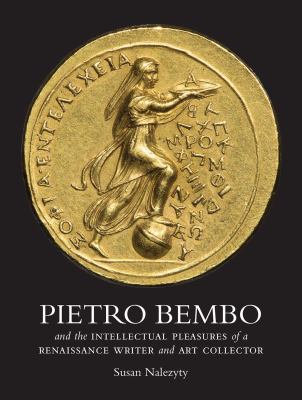 Art historian Susan Nalezyty (Georgetown Univ.) offers an innovative exploration of the collection and the collecting of Bembo in the first four decades of the 16th century. Poet, historian, classical scholar, and general intellectual facilitator throughout Italy, Bembo (1470-1547) knew--and exchanged favors, objects, and ideas with--an extraordinary range of cultural figures, including popes, architects, archaeologists, men and women of letters, numismatists, printers, and artists, including such masters as Cellini, Raphael, and Titian. Nalezyty expertly traces the objects (many but not all survive) Bembo is known to have shared in his private studio--which served as a virtual museum of ancient culture and its modern reflexes--with students, art vendors and historians, even imitators and (amusingly) counterfeiters. She demonstrates in fruitful new ways what rediscovering and following ancient models meant in the period. Richly and handsomely illustrated throughout (mostly in color), the study offers rewards to cultured browsers of splendid period picture books. But the book's primary readership will be advanced students and scholars. All who work on 16th-century artistic, literary, or general cultural history will find an abundance of welcome fresh material and analysis.Summing Up: Highly recommended. Upper-division undergraduates through faculty. |
| The Last Utopians : Four Late Nineteenth-century Visionaries And Their Legacy |
| | ISBN: 9780691154169 | Price: 42.00 | | |
| Volume: | Dewey: | Grade Min: | Publication Date: 2018-05-29 | |
| LCC: 2018-931636 | LCN: PN56.U8R58 2018 | Grade Max: | Version: | |
| Contributor: Robertson, Michael | Series: | Publisher: Princeton University Press | Extent: 336 | |
| Contributor: | Reviewer: Denise C. Greenwood | Affiliation: Albright College | Issue Date: December 2018 | |
| Contributor: | | | | |
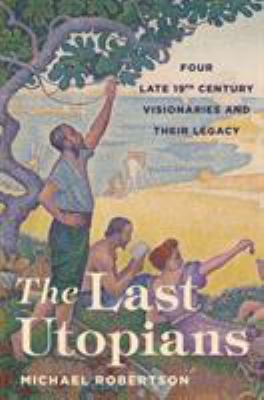 This exceptionally readable guide to the big names among 19th-century utopian visionaries--Edward Bellamy, William Morris, Edward Carpenter, and Charlotte Perkins Gilman--neatly blends biographical and historical background with useful references to authoritative critical responses to the works. Readers familiar and unfamiliar with the territory Robertson (English, College of New Jersey) covers will find the book absorbing because of the well-researched material on the private and public influences on these writers and the sometimes surprising links among them. One learns that all the utopians had extraordinary confidence in their convictions, were devoted to "world service," and relied on personal journeys to create practical paths. One also learns that their distinct ambitions as well as their political and spiritual perspectives differentiate them (not to mention fun facts such as Allen Ginsberg's claim of a carnal connection to Walt Whitman via Edward Carpenter). This fascinating study explores contemporary ideas of utopia in theory and practice in light of the past, ultimately revealing why the title is perfect.Summing Up: Essential. Lower-division undergraduates through faculty; general readers. |