| Big Dreams : The Science Of Dreaming And The Origins Of Religion |
| | ISBN: 9780199351534 | Price: 75.00 | | |
| Volume: | Dewey: 154.6/3 | Grade Min: | Publication Date: 2016-04-04 | |
| LCC: 2015-034057 | LCN: BF1078.B779 2016 | Grade Max: | Version: | |
| Contributor: Bulkeley, Kelly | Series: | Publisher: Oxford University Press, Incorporated | Extent: 352 | |
| Contributor: | Reviewer: Stanley C. Krippner | Affiliation: Saybrook University | Issue Date: October 2016 | |
| Contributor: | | | | |
 Bulkeley is a visiting scholar at the Graduate Theological Union in Berkeley and author of several important books on dreams and dreaming, among themDreaming in the World's Religions (CH, Jan'09, 46-2600) andVisions of the Night (CH, Apr'00, 37-4563). In Big Dreams Bulkeley observes that conventional approaches to the scientific study of dreams use dream reports gleaned from surveys and sleep laboratories. What Jung referred to as memorable "big dreams" are seen as exceptions. Bulkeley asks what would happen if these unusual dreams were made the center of inquiry, and he devotes his book to answering that question. Drawing on multidisciplinary sources as well as his own data bank of more than 5,000 dream reports, the author finds that "big dreams" fall into four major categories: aggressive, sexual, mystical, and gravitational (e.g., flying, falling). Bulkeley further determines that "big dreams," like ordinary dreams, served an adaptive evolutionary function, the difference being that big dreams helped humans develop greater self-awareness and creative problem-solving. Moreover he sees dreaming as a hardwired capacity of humans that served as a wellspring for religious experience.Big Dreams is well written and provocative. Because Bulkeley backs up all his theses with ancillary material, the book immediately earns classic status.Summing Up: Essential. Lower-division undergraduates through faculty and professionals; general readers. |
| Jacques Lacan : A Critical Introduction |
| | ISBN: 9780745315959 | Price: 115.00 | | |
| Volume: | Dewey: | Grade Min: | Publication Date: 2015-12-15 | |
| LCC: 2017-288246 | LCN: BF109.L28M87 2016 | Grade Max: | Version: | |
| Contributor: Murray, Martin | Series: Modern European Thinkers Ser. | Publisher: Pluto Press | Extent: 224 | |
| Contributor: | Reviewer: Michael Uebel | Affiliation: University of Texas | Issue Date: August 2016 | |
| Contributor: | | | | |
 Murray (humanities, London Metropolitan Univ., UK) has written a fine introduction to psychoanalyst Jacques Lacan (1901-81) and his challenges (intellectual and personal) to modern notions of how to define and approach such things as human agency, desire, perception, and creativity. Among the many, and continually proliferating, introductions to Lacan's often abstruse and dense work, this book stands out for its clarity and range: Murray combines the historical, the biographical, and the conceptual with an adroitness not often exemplified in introductory treatments. Particularly compelling is Murray's attention to the early period of Lacan's personal and intellectual life, as revealed in discussion of the formative relationship to Lacan's work of surrealism and the thought of philosopher Georges Bataille. Useful for anyone interested in 20th-century thought, French intellectual history, or psychoanalysis, this book deserves a space on the shelves of even those who have already amassed a significant number of introductions to Lacanian thought.Summing Up: Essential. Lower-division undergraduates and above. |
| Neurotribes : The Legacy Of Autism And The Future Of Neurodiversity |
| | ISBN: 9781583334676 | Price: 29.95 | | |
| Volume: | Dewey: 616.85/882 | Grade Min: 12 | Publication Date: 2015-08-25 | |
| LCC: 2015-006545 | LCN: RC553.A88S54 2015 | Grade Max: | Version: | |
| Contributor: Silberman, Steve | Series: | Publisher: Penguin Publishing Group | Extent: 544 | |
| Contributor: Sacks, Oliver | Reviewer: Kerry C. Michael | Affiliation: University of Minnesota - Morris | Issue Date: April 2016 | |
| Contributor: | | | | |
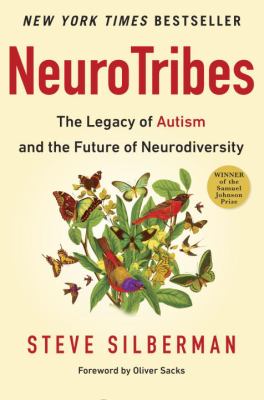 A respected freelance writer, Silberman provides a detailed, compassionate history of the research, politics, and culture surrounding autism. He begins with the stories of two researchers, Leo Kanner (1894-1981) and Hans Asperger (1906-80), independently working toward understanding a confusing childhood disorder under the shadow of the then-popular eugenics movement. He then puts autism in historical context starting in WW I and continuing into the present. Though written in readable, engaging, story-like prose, the book is not short on facts. Silberman describes the genesis of the variety of opinions on autism and autism treatments, and the diverging social movements that stem from them--prevention and cures versus acceptance and even celebration. The book is sympathetic to all views but does not fall into the trap of giving equal credence to unsubstantiated claims. This is a book for those new to the topic, those who work with people on the autism spectrum or are themselves on the spectrum, and those who want to make sense of the storm and strife surrounding the diagnosis.Summing Up: Essential. Lower- and upper-division undergraduates; professionals; general readers. |
| The Conceptual Representation Of Consciousness |
| | ISBN: 9781107022270 | Price: 160.00 | | |
| Volume: | Dewey: 153 | Grade Min: | Publication Date: 2015-09-11 | |
| LCC: 2015-011598 | LCN: BF311 .N3378 2015 | Grade Max: | Version: | |
| Contributor: Natsoulas, Thomas | Series: | Publisher: Cambridge University Press | Extent: 476 | |
| Contributor: | Reviewer: Stanley C. Krippner | Affiliation: Saybrook University | Issue Date: June 2016 | |
| Contributor: | | | | |
 Natsoulas (emer., Univ. of California, Davis) has written some of the best-informed and most insightful articles on consciousness over the past few decades. Hence,The Conceptual Representation of Consciousnessis the book his readers have been waiting for. Each of his six basic concepts ofconsciousness (as the word is defined in theOxford English Dictionary)--interpersonal meaning, personal meaning, awareness meaning, inner-awareness meaning, unitive meaning, and general-state meaning--is given its own chapter. Natsoulas explains why he prefers "concept" to "construct" as a descriptor, and how the proper discussion of the term has wide-reaching effects beyond the boundaries of psychological science. He is critical of writers who deny that they have "conscious" experiences, and then undergo the very experiences that they deny having. Natsoulas takes a commonsense approach to the topic. There are several historical surprises: John Dewey also based his discussion of consciousness on theOxford definitions; William James was skeptical regarding whether the "stream of consciousness" is directly apprehended; Freud wrote about a part of the brain he called the "psychical apparatus." And these are only a few of the gems that readers will discover in this truly foundational work.Summing Up: Essential. Upper-division undergraduates through faculty and professionals. |